


DIGITAL CAMERA

If you are looking for another unit, don't hesitate to ask us. Our staff will help you find the units you are looking for. Because sometimes not all units enter the website.
Sort By:  
Leica M11 Monochrom Rangefinder Camera
$3,950.00
Leica Q3 Digital Camera
$2,200.00
Leica Q2 "Dawn" by Seal Digital Camera
$2,200.00
Nikon Z9 Mirrorless Camera
$2,100.00
Nikon Z8 Mirrorless Camera
$1,950.00
Leica SL2-S Mirrorless Camera
$2,850.00
Canon EOS 5D Mark IV DSLR Camera
$1,550.00
Canon EOS R5 Mirrorless Camera
$1,950.00
Canon EOS R5 C Mirrorless Cinema Camera
$2,150.00
Hasselblad X1D II 50C Medium Format Mirrorless Camera
$3,200.00
Nikon D850 DSLR Camera
$1,450.00
Nikon D780 DSLR Camera
$1,250.00
Sony a1 II Mirrorless Camera
$3,625.00
Olympus OM-D E-M1 Mark III Mirrorless Camera with 7-14mm, 40-150mm, and 300mm Lenses Kit

A comprehensive bundle, the Olympus OM-D E-M1 Mark III Mirrorless Camera with 7-14mm, 40-150mm, and 300mm Lenses Kit from B&H pairs the capable Micro Four Thirds camera body with the M.Zuiko Digital ED 7-14mm f/2.8 PRO wide-angle zoom, M.Zuiko Digital ED 40-150mm f/2.8 PRO telephoto zoom, and M.Zuiko Digital ED 300mm f/4 IS PRO super-telephoto prime lens.

Olympus OM-D E-M1 Mark III Mirrorless Camera

A camera designed with speed, versatility, and portability in mind, the Olympus OM-D E-M1 Mark III is a well-rounded Micro Four Thirds mirrorless camera suitable for a variety of stills and video needs. Featuring a 20.4MP Live MOS sensor and an updated TruePic IX image processor, the camera is characterized by its quick continuous shooting, up to 60 fps with an electronic shutter and 15 fps with a mechanical shutter, as well as DCI and UHD 4K video recording. The sensor and processor also offer a sensitivity range up to ISO 25600 while a sophisticated 5-axis sensor-shift image stabilization system compensates for up to 7.5 stops of camera shake for sharper handheld shooting. Beyond imaging, the sensor's design also incorporates 121 on-chip phase-detection points, all of which are cross-type, along with 121 contrast-detection areas for fast and precise focusing and subject tracking performance.

In regard to the E-M1 III's physical design, it features a durable magnesium alloy body along with extensive weather-sealing to support working in harsh climates. Both a 2.36m-dot, 0.74x-magnification electronic viewfinder and 3.0" 1.037m-dot vari-angle LCD touchscreen are featured, too, for intuitive control and working from a variety of angles. Additionally, built-in Wi-Fi and Bluetooth further expand sharing and remote shooting capabilities, and dual SD card slots afford greater file saving flexibility.

20.4MP Live MOS Sensor and TruePic IX Image Processor
A high-resolution 20.4MP Live MOS sensor and updated TruePic IX image processor work in concert to provide notably fast shooting performance, expanded sensitivity range up to ISO 25600, and versatile 4K video recording capabilities. Ideal for sports and wildlife shooting, the sensor and processor combination avail a full-resolution continuous shooting rate of 15 fps for up to 101 consecutive raw files when working with the mechanical shutter. When shooting with the silent electronic shutter, this shooting rate can be boosted up to 60 fps with single-shot AF for up to 50 consecutive raw frames or 18 fps shooting with continuous AF for up to 90 consecutive raw frames.
DCI and UHD 4K Video Recording and OM-Log
The sensor and processor also support recording both DCI (4096 x 2160) and UHD (3840 x 2160) 4K movies. When working in DCI, a true 24.00 fps frame rate is used, along with IPB compression and a 237 Mb/s bit-rate, and UHD 4K is available in frame rates up to 30p and a 102 Mb/s bit-rate. Full HD 1080p and HD 720p recording is also supported. Audio recording is possible using the built-in stereo microphone, and both an external mic jack and headphone jack are available for improved audio recording and monitoring.

Benefitting recording in varying light conditions, an integrated OM-Log setting can be used to extend the effective dynamic range and afford a greater range of control during post-production color grading when used with the accompanying LUT file. Use of an external recording monitor is also possible, via HDMI output, which supports 4:2:2 8-bit color for a greater color correction range.

Additionally, a Time-lapse Movie mode is also available for recording up to 4K UHD resolution with a 5 fps shooting rate to highlight subject changes or movement over a longer period of time. Full HD and HD time-lapse settings are available, too, as well as a high-speed Full HD setting with 120 fps frame rate.
121-Point All Cross-Type Phase-Detection AF
An advanced autofocus system combines both 121 on-chip phase-detection points and 121 contrast detection areas for focusing performance that is both quick and accurate. All 121 phase-detection points are cross-type, too, for improved precision in mixed lighting conditions, as well as enhanced subject tracking capabilities. Different focusing modes are available to suit working in various shooting conditions, including 121-point, for general use; Group 25-point, for moving subjects, such as birds and wildlife, and when 121-point is too wide; Group 9-Point, for smaller and more distant subjects; Group 5-Point, for when 9-point is too wide or to suit working with nearer moving subjects; Single, for working with still or small subjects that are not moving; and Small AF, for working with close-up subjects. Custom AF targets can also be set, for working with specific numbers of focus points within the 121-point grid, and an AF limiter function allows you to constrain the focusing distance within a specified range for more responsive performance. Additionally, continuous autofocus sensitivity can be set, to benefit its use while recording video, within five levels for more pleasing focus movements.

Suiting portraiture, Face Priority and Eye Priority AF are also available to prioritize the face and eyes of your subject. And for working in low-light conditions, focusing sensitivity is available down to -3.5 EV, and a dedicated Starry Sky AF mode can be used for focusing on stars and other nighttime sky subjects. Converse to the autofocus capabilities, manual focus users are also benefitted by live view magnification and focus peaking controls for greater accuracy.
5-Axis Sensor-Shift Image Stabilization
In-body, sensor-shift image stabilization helps to minimize the appearance of camera shake by up to 7 stops with any lens in use and compensates for camera movements that become especially noticeable when working with telephoto shots, macro imagery, and long exposures. Furthermore, this unique image stabilization system works across five axes to compensate for vertical angle rotation, horizontal angle rotation, horizontal shift, vertical shift, and rolling camera shake movement. This range of detected movements serves to benefit traditional still image shooting as well as movie recording and working with moving subjects more effectively. Additionally, when paired with select lenses featuring optical image stabilization, shake compensation up to 7.5 stops is possible.
Body Design and Connectivity
  • High-resolution 2.36m-dot electronic viewfinder is available for eye-level monitoring, and it offers a high 0.74x maximum magnification for clear, distortion-free viewing.
  • Rear 3.0" 1.037m-dot LCD monitor features a vari-angle design to support working from a variety of angles, and it is also a touchscreen for intuitive menu navigation and image playback. Additionally, an LV Boost mode can be used to optimize the screen's brightness and prioritize the frame rate when working in dark locations.
  • Included BLH-1 rechargeable lithium-ion battery provides approximately 420 shots per charge with normal settings or up to an impressive 900 shots per charge with the quick sleep mode activated.
  • The USB Type-C port can be used for quick in-camera battery charging.
  • Built-in Wi-Fi and Bluetooth permits wireless image sharing and remote camera control from a linked smartphone or tablet when using the dedicated O.I.Share app for iOS and Android.
  • Dual SD memory card slots offer improved flexibility for image storage, allowing you to segregate raw and JPEG files to different cards, save duplicate files to both cards, or simply double your storage space with overflow recording. Additionally, one of the card slots is UHS-II compatible for faster read/write speeds when used with a compatible UHS-II card.
  • Wide accessory compatibility provided with the incorporation of 3.5mm headphone and microphone ports, a PC sync flash terminal and top hot shoe, USB Type-C and micro-HDMI ports, and a 2.5mm port for optional remotes.
  • Rugged splash, dust, and freezeproof construction incorporates extensive sealing throughout the magnesium alloy body to accommodate working in harsh weather conditions and trying environments, even when a cable, microphone, or a set of headphones are attached.
  • Supersonic Wave Filter and a dust-resistant coating are used to greatly reduce the likelihood of dust reaching the sensor.
  • Durable shutter unit is rated to perform for over 400,000 actuations.
Shooting Modes
  • Tripod High Res Shot mode offers the equivalent output of an 80MP image by combining eight sequentially recorded frames into a single, larger image. In between each of the exposures, the sensor-shift stabilization mechanism moves slightly in order to acquire more information than in a single exposure and these frames are then composited into a final image with greater resolution and color detail. The TruePic IX processor aids this process by compensating for any subject movement blur and this feature can also be configured to record 50MP or 25MP images for file size flexibility.
  • Handheld High Res Shot mode, like the Tripod mode, produces a 50MP JPEG or raw file by compositing sequentially recorded files into a single image. The Handheld High Res Shot mode differs from the Tripod mode by recording 16 independent frames, opposed to eight, and the slight movement caused by hand-holding provides the range of movement needed to produce the larger final image.
  • Simulating the effects of a neutral density filter, Live ND results in blurred subject movement by compositing exposures to replicate the look of a single image taken at a slower shutter speed. Particularly suitable for photographing moving water, five modes are available—ND2, ND4, ND8, ND16, and ND32—to vary how movement is portrayed.
  • Live Composite is a unique long exposure mode that allows you to gradually build up an exposure over time without overexposing key elements within the frame. This mode works to only record newly detected light sources over time, and allows you to watch as an image develops, making it ideally suited for photographing star trails or other moving light sources.
  • Live Bulb and Live Time settings can be used to produce creative long exposure imagery. Live Bulb lets you hold the shutter open for up to one minute and Live Time lets you press the shutter button once to open the shutter and then press again within a minute to end the exposure.
  • Pro Capture Mode is a unique setting that starts recording and buffering full-resolution JPEG or raw images prior to fully depressing the shutter. As soon as you press the shutter button halfway, frames will begin to be recorded, and once you fully press the shutter, the image will be saved in addition to the previous 35 frames. Additionally, you can hold the shutter button in this mode to keep shooting continuously using the silent electronic shutter function.
  • Interval shooting is supported for up to 9999 frames with 1 second to 24-hour exposure intervals.
  • Anti-flicker shooting automatically detects the frequency/flicker of artificial lighting and activates the shutter at peak brightness moments to render exposures with consistent exposure and color.
  • In-Camera Focus Stacking will automatically record eight images of a subject while shifting the plane of focus slightly, then composite these exposures into a single frame to exhibit an extended depth of field. Alternatively, Focus Bracketing allows you to record between 3-999 frames with adjustable focus steps in a 1-10 range for manual compositing during post-production. These modes are only available when working with M.Zuiko Digital ED 60mm f/2.8 Macro, 12-40mm f/2.8 PRO, 40-150mm f/2.8 PRO, 30mm f/3.5 Macro, 7-14mm f/2.8 PRO, 8mm f/1.8 Fisheye PRO, 300mm f/4 IS PRO, 12-100mm f/4 IS PRO, and 12-45mm f/4 PRO lenses, as well as the M.Zuiko Digital MC-14 1.4x and MC-20 2.0x Teleconverters.
  • Keystone Compensation allows you to correct for convergence when working in live view. Similarly, Fisheye Compensation allows you to use the M.Zuiko Digital ED 8mm f/1.8 Fisheye PRO lens as a rectilinear wide-angle lens by correcting and eliminating distortion.
UPC: 050332192713
Olympus M.Zuiko Digital ED 7-14mm f/2.8 PRO Lens

A versatile wide-angle zoom for Micro Four Thirds mirrorless cameras, the M.Zuiko Digital ED 7-14mm f/2.8 PRO from Olympus is a 14-28mm equivalent lens featuring a constant f/2.8 maximum aperture for consistent performance throughout the zoom range. A suite of aspherical, extra-low dispersion, and high-refractive index elements are featured within the optical design, and help to minimize spherical and chromatic aberrations throughout the zoom range for increased clarity and sharpness. Additionally, a ZERO coating has been applied to control flare and ghosting for improved contrast and color fidelity. A weather-resistant design benefits handling in trying conditions while an L-Fn button offers lens-based control over various settings. Additionally, a Movie & Still Compatible autofocus system achieves fast, smooth, and silent focusing performance to benefit both photo and video applications. As a fast, high-performance wide-angle zoom, this Micro Four Thirds lens pairs an optimized optical layout with refined physical details to excel in a variety of working conditions.

Wide-angle 7-14mm zoom lens offers a 14-28mm equivalent focal length range for Micro Four Thirds digital cameras.
Constant f/2.8 maximum aperture maintains consistent performance throughout the zoom range and benefits working in difficult lighting situations.
The lens construction incorporates two aspherical ED (extra-low dispersion) elements, one DSA (Dual Super Aspherical) element, one aspherical element, three Super ED elements, one ED element, and two HR (high-refractive index) elements into its design to minimize aberrations, distortion, and color fringing while also contributing to overall image sharpness, clarity, and color fidelity.
A ZERO (Zuiko Extra-low Reflection Optical) coating has been applied to individual elements to minimize lens flare and ghosting for improved contrast and color fidelity when working in strong lighting conditions.
Movie & Still Compatible (MSC) autofocus system benefits both photo and video applications due to its smooth, quiet, and fast performance.
Programmable L-Fn (lens function) button for easily accessible settings adjustment.
Dust, splash, and freezeproof construction ensures this lens' performance in inclement conditions and harsh environments.
Built-in petal-type lens hood helps to alleviate stray light from causing flare and also adds some protection from accidental impacts to the front element.
Rounded seven-blade diaphragm produces a smooth bokeh quality.
UPC: 050332188853
Olympus M.Zuiko Digital ED 40-150mm f/2.8 PRO Lens

Offering long reach with an advanced feature-set and optical design, the M.Zuiko Digital ED 40-150mm f/2.8 PRO from Olympus is a versatile 80-300mm equivalent telephoto zoom for Micro Four Thirds mirrorless cameras. As part of the PRO series of advanced lenses, this zoom distinguishes itself with a bright f/2.8 constant maximum aperture for consistent illumination throughout the zoom range to suit working in a variety of lighting conditions. Its optical design makes use of a series of aspherical and low dispersion glass elements to suppress chromatic and spherical aberrations for notable sharpness and clarity, and a ZERO coating is also used to reduce flare and ghosting for high contrast, color-accurate imaging.

Complementing the optics, a dual VCM autofocus system offers fast and near-silent focusing performance to suit both stills and movie recording applications. A manual focus clutch permits quick switching between AF and MF, and a programmable L-Fn button avails lens-based control over shooting settings. The lens is also weather-sealed for working in trying conditions, and a removable rotating tripod collar is included for improved balance and support when working atop a tripod or monopod.

Telephoto zoom is designed for Micro Four Thirds mirrorless cameras and provides an 80-300mm equivalent focal length range.
Bright f/2.8 constant maximum aperture suits working in a variety of lighting conditions throughout the zoom range.
One aspherical ED (extra-low dispersion) element, two aspherical elements, one Super ED element, three ED elements, and one HD element are featured within the optical design to minimize both spherical and chromatic aberrations, distortion, and color fringing throughout the zoom range while also contributing to overall image sharpness, clarity, and color accuracy.
A ZERO (Zuiko Extra-low Reflection Optical) coating has been applied to individual elements to minimize lens flare and ghosting for improved contrast and color fidelity when working in strong lighting conditions.
A Dual VCM (voice coil motor) system is used for quick and near-silent autofocus performance. By separating the focusing mechanism into two groups controlled by separate linear AF motors, focus speeds are faster and the friction-free movement is notably quieter to benefit video recording.
Manual focus clutch lets you quickly pull the focusing ring into place for direct, intuitive focus control.
Programmable L-Fn (lens function) button for easily accessible settings adjustment.
Dust-, freeze-, and splash-proof design uses 11 separate seals to ensure the lens's performance in inclement and harsh conditions.
Rounded nine-blade diaphragm produces a smooth bokeh quality.
Removable rotating tripod collar offers a stable platform for working with this lens atop a tripod or monopod.
Included lens hood collapses back onto the lens for a more compact profile when stored.
Compatible with the optional M.Zuiko Digital MC-14 1.4x Teleconverter to further extend the reach to a 112-420mm equivalent focal length range.
UPC: 050332188778
Olympus M.Zuiko Digital ED 300mm f/4 IS PRO Lens

A long-reaching super telephoto for Micro Four Thirds mirrorless cameras, the M.Zuiko Digital ED 300mm f/4 IS PRO from Olympus is a 600mm equivalent lens that balances refined optics with a hand-holdable design. Super ED, E-HR, and HR glass elements are combined to control both chromatic and spherical aberrations to provide a high degree of clarity and sharpness, and a Z Coating Nano has been applied to individual elements to suppress lens flare and ghosting for high contrast, color-accurate imaging.

Complementing the optical attributes, this lens is also characterized by its optical image stabilization system, which can be used in conjunction with camera-based sensor-shift IS to realize a six-stop effective reduction in the appearance of camera shake for sharper handheld shooting. A Movie & Still Compatible (MSC) autofocus system is also employed to realize quick and quiet focusing performance, and a manual focus clutch enables seamless switching between focusing methods for more intuitive use. The lens is also fitted with a removable rotating tripod collar for improved balance and support, and the lens is weather-sealed to guard against dust, moisture, and freezing temperatures to benefit working in harsh climates.

Super telephoto prime is designed for Micro Four Thirds mirrorless cameras and provides a 600mm equivalent focal length.
Three Super ED (extra-low dispersion) elements are used to control color fringing and chromatic aberrations for improved clarity and color accuracy.
Three high refractive index elements and one E-HR (extra-high refractive index) element help to minimize spherical aberrations and distortion for greater sharpness and accurate rendering.
A Z Coating Nano has been applied to individual elements to significantly reduce lens flare and ghosting to improve contrast and color fidelity when working in strong lighting conditions.
Lens-based image stabilization helps to minimize the appearance of camera shake to benefit shooting handheld with this lens in difficult lighting conditions. Additionally, this lens supports Synchronized IS, which pairs the optical IS system with select Olympus cameras' 5-axis sensor-shift image stabilization to control up to six stops of camera shake.
Movie & Still Compatible (MSC) autofocus system benefits both photo and video applications due to its smooth, quiet, and fast performance.
Manual focus clutch lets you quickly pull the focusing ring into place for direct, intuitive focus control.
Programmable L-Fn (lens function) button for easily accessible settings adjustment.
Dust, splash, and freezeproof construction incorporates 17 separate seals to ensure this lens's performance in inclement conditions and harsh environments.
Removable rotating tripod collar offers a stable platform for working with this lens atop a tripod or monopod. The included DR-79 Decoration Ring can also be used on the lens when shooting handheld to take the place of the removed tripod collar.
Built-in retractable lens hood shields the front lens element to reduce surface reflections and flare.
Compatible with the optional M.Zuiko Digital MC-14 1.4x Teleconverter to further extend the reach to a 840mm equivalent focal length.
$2,550.00
Leica SL2-S Mirrorless Camera with 24-70mm f/2.8 Lens

Bundling an advanced camera body with a versatile zoom lens, the SL2-S Mirrorless Camera with 24-70mm f/2.8 Lens from Leica pairs the full-frame SL2-S camera body with the fast Vario-Elmarit-SL 24-70mm f/2.8 ASPH. lens.

Leica SL2-S Mirrorless Camera

Mixing Leica's traditional aesthetic with contemporary, hybrid functionality, the SL2-S is a well-rounded full-frame mirrorless camera with apt photo and video capabilities. Revolving around Leica's first BSI CMOS sensor, the 24.6MP sensor offers DCI/UHD 4K 10-bit video recording, broad sensitivity from ISO 50-100,000, and vivid image quality with low noise.

The sensor is complemented by the refined Maestro III image processor, which avails high-speed performance and versatility throughout the camera system. Full-res DNG continuous shooting at up to 25 fps is possible along with 4K video at up to 60p or Full HD at up to 180 fps. And, emphasizing the hybrid ethos, Leica has also implemented separate Photo and Video menu systems for more intuitive navigation and settings control when working in either mode.

Complementing both photo and video applications, a 5-axis sensor-shift image stabilization system minimizes the appearance of camera shake for sharper handheld shooting. Also, the sensor's design incorporates a Leica Object Detection AF system, which uses 225 selectable AF areas for fast and accurate performance.

Beyond updated imaging, the SL2-S also features durable, weather-sealed body design that includes a 5.76m-dot EyeRes OLED EVF and a large 3.2" 2.1m-dot touchscreen LCD. A top status LCD is also featured for quick recognition of shooting settings and dual UHS-II-compatible SD memory card slots offer file-saving flexibility. Additionally, built-in Wi-Fi and Bluetooth work in conjunction with the Leica FOTOs app for wireless file transferring and remote camera control.

24.6MP Full-Frame BSI CMOS Sensor and Maestro III Processor
Featuring a highly versatile full-frame 24.6MP BSI CMOS sensor, the SL2-S has apt imaging capabilities for both stills and video applications. Coupled with the Maestro III image processor, fast performance is ensured along with a wide ISO 50-100,000 sensitivity range. The sensor's BSI design also promotes especially clean and smooth color and tonal rendering, along with reduced noise when working at higher ISO settings. The sensor's design also omits a low-pass filter in order to maintain the highest degree of sharpness and resolution. Additionally, beyond sheer image quality, the processing power affords quick continuous shooting, up to 25 fps with an electronic shutter or 9 fps with a mechanical shutter, and a 4GB buffer enables near limitless burst shooting of full-resolution DNG or JPEG files.
DCI/UHD 4K 10-Bit Video Recording
An immensely capable video camera, the SL2-S offers both DCI and UHD 4K recording at up to 60p using either the full-frame sensor area or an APS-C/Super 35mm crop. Internal 10-bit 4:2:2 recording is supported for frame rates up to 30p, and 60p is available at 8-bit 4:2:0. When recording externally via the full-size HDMI port, 10-bit output is available at all frame rates for DCI and UHD 4K. Full HD recording is also supported with high-speed frame rates up to 180 fps for slow-motion playback. Additionally, there is no imposed recording limit at any resolution or frame rate, allowing for extended recording times.

Complementing the video quality, a dedicated Hybrid Log Gamma (HLG) mode and L-Log gamma profile can be used to for in-camera HDR output or for expand highlight and shadow detail and greater flexibility when color grading during post-production. There are also integrated viewing LUTs for improved color control and accuracy. Video recording can be split into 1-minute segments to avoid data loss, and a color bar provides reference for correct color grading and sound control in postproduction. Additionally, benefitting audio quality, support for an external microphone and headphones are also available via dedicated 3.5mm jacks. Video recording can be split into 1-minute segments to avoid data loss.
Body Design
  • Used in conjunction with other members of the L-Mount Alliance, the L lens mount is a versatile interface with a mount diameter of 51.6mm and a flange distance of 20mm for working with a broad range of optics.
  • The impressive EyeRes EVF is a high-resolution 5.76m-dot OLED finder offering a clear 0.78x configurable viewing magnification along with a smooth 120 fps refresh rate and 0.005 sec lag.
  • Large 3.2" 2.1m-dot touchscreen LCD is a bright, clear means for live view shooting as well as playback and menu navigation. This screen also uses Gorilla Glass for a highly durable design.
  • Separate photo and video menu systems eliminate the need to readjust settings when switching from photo to video modes, resulting in a more intuitive workflow, especially when mixing content types in a single shoot.
  • In addition to the rear LCD, a 1.28" top status LCD can also be used for quickly reviewing shooting settings, even when the camera is powered off.
  • Durable, weather-sealed magnesium-alloy construction is splash, dust, and freezeproof (IP54-rated) to accommodate working in harsh weather conditions and trying environments.
  • Dual UHS-II-compatible SD memory card slots offer flexible image storage, allowing you to segregate raw and JPEG files to different cards, save duplicate files to both cards, or simply double your storage space with overflow recording.
  • A USB Type-C port allows for fast file transferring; tethering, with full support for Capture One 21 and Adobe Photoshop Lightroom; and high-speed in-camera battery charging. Additionally, a full-size HDMI Type-A port benefits video applications, and 3.5mm microphone and headphone jacks suit advanced audio recording needs.
  • BP-SCL4 rechargeable lithium-ion battery is rated for approximately 510 shots per charge.
  • Built-in Wi-Fi, when used in conjunction with the Leica FOTOS app for iOS and Android, permits sharing imagery directly to a linked mobile device and also enables remote control over the camera and remote shooting via a live view image. Additionally, Bluetooth LE helps to maintain a permanent connection between the mobile device and the camera, enabling remote waking of the camera and automatic connection anytime within range.
Sensor-Shift Image Stabilization
Helping to achieve the utmost sharpness when photographing handheld, 5-axis sensor-shift image stabilization compensates for a broad range of movement types to render sharper, clearer imagery.

Using sensor-shift stabilization technology, the SL2-S also features a Multishot mode to capture and compile eight separate exposure to create a single 96MP file. Suitable for static subjects and when working on a tripod, this mode creates a more highly detailed and color accurate image than a single shot alone can produce and produces an image with a 12000 x 8000-pixel resolution.
Object Detection Autofocus System
For accelerated autofocus performance, a Leica Object Detection AF system quickly calculates the distance to subjects and adjusts the focusing position with sensor and lens communication occurring at rates up to 480 fps. This contrast-detection type focus method benefits both still and video recording modes, as well as subject tracking applications through the use of a Body Detection mode. It also features 225 selectable AF areas, which provide excellent control over where the camera will focus, and Automatic Follow Focus offers three focus points for automatic focus shift during video recording.
Leica Vario-Elmarit-SL 24-70mm f/2.8 ASPH. Lens

Spanning a popular and versatile range of focal lengths, the Vario-Elmarit-SL 24-70mm f/2.8 ASPH. Lens from Leica is designed for full-frame L-mount mirrorless cameras. Ranging from wide-angle to portrait length, this lens provides excellent sharpness across all f-stops and focus distances, and three aspherical elements greatly reduce chromatic aberrations and distortions for notable image sharpness and clarity. The lens's f/2.8 maximum aperture benefits working in a variety of lighting conditions while offering precise control over focus position for working with shallow depth of field techniques, and a quiet and precise autofocus motor benefits both stills and video capture. Well-suited for nearly any photographic application, the lens offers lighter weight thanks to the omission of OIS, and this compact workhorse is constructed with a metal body and weather-sealing for durability and protection in harsh environments and inclement weather conditions.

  • Wide-angle to short-telephoto 24-70mm L-mount zoom designed for full-frame mirrorless cameras
  • Fast internal focusing with a single, lightweight lens element
  • Consistent f/2.8 maximum aperture through full zoom range for working in difficult lighting conditions
  • Excellent sharpness across all f-stops and focus distances with creamy bokeh
  • Three aspherical elements reduce chromatic and spherical aberrations for increased image sharpness and clarity
  • Compact dimensions and lighter weight thanks to omission of OIS
  • Weather-sealed design protects against dust and moisture
$2,350.00
Nikon D6 DSLR Camera (Body Only) (D6 DSLR Camera)

The peak of Nikon's DSLR lineup, the D6 is a no-holds-barred camera with a focus on speed, performance, reliability, and precision. Adept in both photo and video realms, the D6 revolves around a 20.8MP FX-format sensor and an EXPEED 6 image processor that enables an impressive 14 fps continuous shooting rate, a native sensitivity range from ISO 100-102400 (expandable up to ISO 3280000), and UHD 4K video recording at 30 fps. When working with stills, a revised high-density Multi-CAM 37K autofocus system features 105 cross-type points that improve focusing precision and speed, and with 1.6x greater frame coverage, the need to recompose while shooting is greatly reduced. This focusing system also works with 17 customizable Group Area AF patterns to suit working in cluttered or busy scenarios or with fast-moving subjects.

As Nikon's flagship DSLR, the D6 is, of course, a tough camera, too. Its magnesium alloy construction pairs with extensive weather sealing to resist dust and moisture, and a reinforced shutter mechanism has been tested for 400,000 shutter cycles. For viewing, there is a large pentaprism optical viewfinder with 0.72x-magnification as well as a rear 3.2" 2.36m-dot touchscreen LCD. Additionally, the body design incorporates dual CFexpress Type B memory card slots, which offer flexible file saving capabilities, and internal Wi-Fi and Bluetooth also benefit file saving needs as well as afford remote shooting control. For more robust connectivity, the D6 supports wired and wireless LAN connections, too. And, built-in GPS is featured, as well, for in-camera geotagging applications. In familiar form, too, the D6 also has a variety of configurable Function buttons across the body and an integrated vertical grip supports working in both horizontal and vertical shooting orientations.

20.8MP FX-Format CMOS Sensor and EXPEED 6 Image Processor
The FX-format 20.8MP CMOS sensor is paired with the EXPEED 6 image processor to offer a proven mixture of high sensitivity, nuanced image quality, and fast overall performance. At native values, a sensitivity range from ISO 100-102400 permits working in a broad array of lighting conditions, an can be further expanded to ISO 50-3280000 (Lo 1 to Hi 5) to handle the most challenging of situations. The mixture of resolution and sensor size also contributes to clean image quality and smooth color transitions with reduced noise throughout the sensitivity range.

In addition to benefitting image quality, the EXPEED 6 processor also affords a wealth of speed throughout the camera system, including a top continuous shooting rate of 14 fps for up to 200 consecutive frames. For sound-sensitive situations, a silent 10.5 fps rate can be used for discreet shooting and, if choosing to work in a lower resolution and in live view, up to 60 fps shooting is possible at 2MP or 30 fps shooting at 8MP.
105-Point All Cross-Type Multi-CAM 37K Autofocus System
Dubbed "the most powerful AF in Nikon's history," the Multi-CAM 37K autofocus system uses an intelligent array of 105 all cross-type points to quickly and accurately achieve focus across the frame and in a variety of lighting conditions. This high-density system allows photographers to set focus almost anywhere within the frame in order to avoid recomposing. This unique design reduces the area of non-AF-sensitive areas in order to make the effective coverage 1.6x greater than in previous models, which allows for more accurate and faster focusing across the frame, with both still and moving subjects. When working with moving subjects, 17 custom Group Area AF settings can be used to set and maintain focus on subjects featuring busy backgrounds or fast subject movement. Benefitting the use of super telephoto lenses and teleconverters, 15 of the points are compatible with an effective aperture of f/8 and all 1053 points support working with effective apertures of f/5.6 or brighter.

Complementing the abundance of focusing points is a dedicated AF engine, which offers quick response times to benefit tracking fast and randomly moving subjects, even at the top 14 fps shooting rate. The AF engine also contributes to enhanced focusing sensitivity, with the ability to focus at -4.5 EV for working in very dark, low-contrast situations.

Furthering the versatility of the focusing system, seven different AF-area modes can be selected to support varying types of subject matter:
  • Single-Point AF: The camera uses a single point to find focus.
  • Dynamic-Area AF: Available with 9, 25, 49, or 105-point selections, this mode uses a primary single focus point to lock onto focus, and then makes use of the surrounding points for maintaining focus while tracking erratically- moving subjects.
  • Group-Area AF: This mode treats smaller groups of AF points as a single point for a wider field of recognition and is well-suited to tracking faces or other detailed subjects.
  • 3D-Tracking: Using a subject's color information, this mode utilizes all 105 points to maintain focus on a moving subject while half-pressing the shutter button.
  • Auto-Area AF: This mode makes use of all 105 points to quickly identify the main subject, and then prioritizes recognized faces as portrait subjects in any AF servo mode.

In addition to the range of AF-area modes, an AF lock-on function can also be used to improve subject tracking performance and can be adjusted by two parameters—quick or delayed blocked shot AF response and erratic or steady subject movement. By configuring these settings, the AF performance can be optimized to handle a wide variety of subject movement types.

Lastly, a unique auto AF fine-tune function can be employed to ensure the best possible focus for each mounted lens. Rather than relying on photographing distance charts, this function lets you achieve precise focus manually in live view, and then have the AF system calibrate itself to the fine-tuned focus position in order to alleviate front- and back-focusing issues.


4K UHD Video Recording
Taking notice of multimedia image-maker's needs, the D6 incorporates adept video recording capabilities. Able to record UHD 4K at 30, 25, and 24 fps frame rates, Full HD and HD recording is also supported, along with the ability to save movie files to the in-camera memory cards or as an uncompressed file to an optional external recorder via HDMI out.

As with still shooting, the wide range of sensitivities is available for recording in low- and bright-light conditions, ranging from expanded ISO 100-3280000, and sensitivity values are manually adjustable via the dedicated movie-shooting menu. Also, a video-optimized Flat Picture Control mode can be used during recording to flatten the overall contrast curve for more control during post-production and color grading.

In regard to handling, a dedicated power aperture button (Pv) makes it possible to achieve smooth, continuous exposure transitions when switching from light to dark areas, and Auto ISO can also be used to maintain consistent brightness when working in changing light situations. Audio recording can be handled using the built-in stereo microphone or an optional external mic can be added via the 3.5mm stereo jack for greater control over quality. Regardless if using the in-camera mic or an external mic, audio levels can be adjusted in 20 increments and live monitoring is possible via the headphone jack, which afford 30 different volume levels for playback.

In addition to straight movie recording, time-lapse recording, for up to 9999 consecutive frames shot over the course of up to one week, is also possible with up to UHD 4K at 30 fps output from the camera.
Body Design and Connectivity
  • A large 3.2" rear LCD monitor features a high 2.36m-dot resolution for clear, vivid playback and live view shooting. The monitor is also a touchscreen for more intuitive menu navigation and settings control. The touchscreen is also usable while shooting, giving you the ability to choose a focus point or an area to set the white balance from. The screen can also be used as a keyboard for quickly entering notes, copyright info, or IPTC metadata.
  • The bright 0.72x optical pentaprism viewfinder covers 100% of the FX frame for framing accuracy. A detachable DK-27 Eyepiece Adapter also lets you attach a rain cover directly to the viewfinder for more comfortable shooting in wet conditions.
  • Configured with two CFexpress Type B/XQD memory card slots, allowing you to extend file saving capabilities by permitting overflow recording, in-camera file duplicating, or the ability to segregate raw and JPEG files between the two cards.
  • The familiar body design incorporates a vertical grip that is designed to be equally as comfortable and efficient when shooting in the vertical or horizontal orientation.
  • Advanced customization options help to create an intuitive and efficient way of working with the camera, including configuring re-callable preset camera settings, such as distinct AF settings, for immediate use and quick switching depending on the shooting situation. There are 14 different buttons that can be personalized with up to 46 different functions for easier access to the settings you need and an intuitive i Menu, accessible via the i button, provides a shortcut to the most oft-used camera settings, which can be configured to your own needs. Additionally, save up to four custom shooting combinations from the Custom Settings Menu and up to four from the Photo Shooting Menu for faster switching between shooting settings.
  • A robust magnesium alloy chassis is both dust- and weather-resistant to benefit working in harsh climates and inclement conditions.
  • The ergonomic grip and overall form factor are shaped to benefit handling for extended periods of time and are further accentuated by anti-slip, textured joysticks and easy-to-open card slot covers. Additionally, most of the rear buttons on the rear of the camera are illuminated for greater visibility when working in dim lighting conditions.
  • An electronic front-curtain shutter helps to minimize mechanical vibrations in order to better ensure sharpness during long exposures.
  • The high-precision shutter mechanism has been tested for a long lifespan of 400,000 actuations.
  • The included EN-EL18c rechargeable lithium-ion battery is CIPA-rated to last for approximately 3580 shots per charge in single-frame release modes.
  • Built-in Wi-Fi and Bluetooth work in conjunction with Snapbridge for seamless wireless file transferring and remote camera control from a mobile device.
  • Integrated GPS module enables in-camera file geotagging.
  • The built-in wired LAN function of 1000 Base-T (Gigabit) standard enables high-speed, seamless transferring of still imagery and movie files for expediting an entire post-production workflow. For more robust wireless file transferring, the D6 is also compatible with the optional WT-6A Wireless Transmitter.
Scene Recognition System and Exposure Metering
The intelligent Scene Recognition System with 3D Color Matrix Metering III utilizes a 180,000-pixel RGB sensor to evaluate and analyze all aspects within a scene, including brightness, contrast, subject distance, and the scene colors, to quickly determine an accurate exposure and white balance setting to best render the scene at hand. The information gathered is also checked against onboard reference images to ensure consistency from image to image in regard to exposure, white balance, i-TTL flash settings, and subject-tracking AF performance.
Other Camera Features
  • Focus Shift Mode benefits working with focus stacking techniques by automatically recording a series of images at different focus steps. Up to 300 individual frames can be recorded within these steps, with the D6 automatically shifting focus between each shot to achieve an extended depth of field. The sequential images will be saved within a unique folder on the memory card in order to keep each series of exposures segregated for a faster and easier post-production workflow.
  • For long exposure shooting, specific exposure times longer than 30 seconds can be set for more accurate results. Configured in the custom settings menu, and usable in the M mode, selectable times are available from 60 sec up to 900 sec.
  • To reduce post-production times, there are 20 unique Creative Picture Controls, which can be previewed in real time, and used with both photos and videos, to adjust the look and feel of imagery.
  • Multiple exposures can be made in the traditional sense, of sequentially shooting consecutive frames over one another, or can be made using any photo previously shot with the camera via the Retouch menu.
$2,550.00
Hasselblad 907X 50C Medium Format Mirrorless Camera (907X 50C)

Uniquely modular, the Hasselblad 907X 50C is a medium format camera system meshing design elements from their classic film cameras with contemporary imaging capabilities from their digital era. The 907X 50C platform comprises the matched CFV II 50C digital back and 907X camera body, which work in tandem as a distinct and versatile camera system.

The 907X has the distinction of being the smallest medium format camera Hasselblad has ever created, measuring just over an inch thick, as well as the lightest, at 7 oz. Recalling the form of the famed 500-series V-system cameras, though, this simple camera body mainly serves as the interface between the V interface of the CFV II 50C digital back and the X-mount for working with XCD lenses or adapted lenses from other mounts.

The CFV II 50C is an updated and refined digital back featuring a classic V-system interface for use on the included 907X as well as virtually any Hasselblad V camera from 1957 onward. Designed with the classic A12 and A16 film backs in mind, this digital back has been outfitted with versatile digital capabilities, revolving around a 43.8 x 32.9mm 50MP CMOS sensor, which yields high-resolution imagery with a wide 14-stop dynamic range, 16-bit color depth, and an ISO 100-25600 sensitivity range. This sensor utilizes Hasselblad's Natural Color Solution, too, which delivers realistic, pleasing color tones for great consistency and smooth tonal transitions. The back's design also incorporates a rear 3.2" 2.4m-dot tilting touchscreen LCD, to recall the experience of working with a waist-level finder, and it now houses the rechargeable lithium-ion battery internally for a sleeker overall profile. Additionally, built-in Wi-Fi permits wireless remote control and file transferring via Phocus Mobile 2.

907X Camera Body
Characterized by its impressively compact, lightweight design, the 907X is Hasselblad's smallest medium format camera body and serves as the inconspicuous interface between the V-system interface CFV II 50C digital back and the range of X-system mirrorless lenses. By providing an X-system lens mount, this opens up the opportunity to pair the CFV II with the autofocus and leaf shutter-enabled XCD lenses, as well as HC, HCD, V, XPan, and other third-party lenses via optional adapters. Use of the 907X also enables greater access to wide-angle lens options, compared to the V system, when using XCD lenses.
CFV II 50C Digital Back
50MP CMOS Sensor and Hasselblad Natural Color Solution
Revolving around a large 50MP CMOS sensor, measuring 43.8 x 32.9mm, the CFV II 50C is capable of capturing an extremely wide dynamic range of up to 14 stops along with vivid 16-bit color depth. When combined with the Hasselblad Natural Color Solution, tonal transitions and skin tones show immense depth, detail, and clarity for lifelike image quality, even in dark shadow and bright highlight regions. To suit working in a variety of lighting conditions, a sensitivity range of ISO 100-25600 is available, and still files are saved in the Hasselblad 3FR raw file format or as JPEGs.

Working with the spectacular image quality of the 50MP CMOS sensor, the Hasselblad Natural Color Solution is designed to deliver images with the most natural color without needing to delve into a variety of presets. This system is also capable of creating imagery with exceptionally smooth tonal transitions that are reminiscent of analog film capture, which is thanks in part to the CFV II's 16-bit color depth.

In addition to capturing breathtaking still images, the CFV II 50C is also capable of capturing high resolution video, shooting at 2.7K (2720 x 1530) and HD (1920 x 1080), using the full sensor width in a 16:9 ratio. The video is recorded using an H.264 compressed codec at 29,97 fps, for up to 29 minutes, 59 seconds. A 3.5mm mini-phono input port allows the use of an external microphone while recording video.

Back Design
  • Using a V-system interface, this digital back can be used in conjunction with the included 907X camera body, with virtually any Hasselblad V system film camera from 1957 or later, or with technical and view cameras featuring a V-system mounting interface.
  • Integrated 3.2" 2.4m-dot tilting LCD features a touchscreen design for intuitive control, menu navigation, and playback. The updated screen also has a fast 60 fps refresh rate for more fluid playback and the screen also supports autofocus point drag and drop placement and autofocus point size changes with pinch/spread finger movement. The screen's tilting design also reinforces a top-down viewing position, akin to working with an optical waist-level finder.
  • Accepts one rechargeable lithium-ion battery internally in order to maintain the overall svelte profile reminiscent of A12 and A16 film backs. This battery can be charged in-back, too, via the USB Type-C port.
  • Dual SD memory card slots both support the UHS-II protocol for faster read/write speeds.
  • Built-in Wi-Fi permits wireless sharing of files as well as remote camera control. Additionally, Phocus Mobile 2 allows for a rich tethered shooting experience from an iPad Pro or iPad Air (2019).
  • USB 3.0 Type-C connector can be used for file transfer, tethered shooting from an iPad, or for in-camera battery charging via a computer, charger, or power bank.
  • Optimized for use with XCD series of lenses, which offer an integrated central shutter system, capable of sync speeds up to 1/2000 sec.
  • Phocus Mobile 2, available for select iPad models, permits importing, editing, and rating of raw images as well as importing and rating full-resolution JPEG images directly on a tablet. Additionally, Phocus Mobile 2 supports full-resolution image export, tethered shooting, and direct camera control.
  • Conventional computer-based tethered shooting is supported via the desktop version of Phocus.
$2,450.00
Leica M11 Monochrom Rangefinder Camera (Leica M11 Monochrom Rangefinder Camera)
M11 Monochrom: Dedicated to Black & White Photography
Leica is committed to black & white photography with the M11 Monochrom, the fourth-generation model in their series of unique black & white-only digital rangefinder cameras. Taking the fundamental elements of the M11 platform, including the timeless M camera design, heightened resolution and Triple Resolution Technology, and updated connectivity, the M11 Monochrom adds a modified 60MP sensor that exclusively records black & white imagery.
60MP Full-Frame Black & White BSI CMOS Sensor
Based on the M11's high-resolution back-illuminated sensor design, the M11 Monochrom has modified the 60MP full-frame CMOS sensor by removing the color filter array (CFA), which offers the ability to solely record monochromatic imagery using only luminance values for enhanced clarity, depth, and resolution. By omitting this CFA, the camera also achieves a higher sensitivity range (compared to color-enabled M11 cameras) of ISO 125-200000.
Triple Resolution Technology
The M11 Monochrom also retains the Triple Resolution Technology first debuted in the M11— this unique pixel binning process allows photographers to select 60MP, 36MP, or 18MP output, with each resolution making use of the full sensor area and the lower resolutions seeing an improvement in dynamic range and noise levels.
Maestro III Image Processor
The Maestro III processor contributes to fast processing, continuous shooting up to 4.5 fps, and the Triple Resolution Technology of the M11 Monochrom, as well as helps achieve a wider sensitivity range than in previous M cameras. This ISO 125-200000 range has a lower base ISO than past M Monochrom models, for improved detail, along with a higher top end for greater flexibility when working in low-light conditions. And, due to the monochrome design of the sensor, noise levels and quality at ISO 200000 remains usable with a broad dynamic range and fine detail rendering.
M11 Series Imaging Improvements
The M11 Monochrom is a photo-only camera that prioritizes manual operation, but a variety of improvements and functional updates have been made to make the M11 platform the most contemporary M camera yet:
  • An electronic shutter function permits shooting at shutter speeds up to 1/16,000 sec, which is perfect for working with faster f/0.95 lenses without the need for ND filters. A mechanical shutter still offers shutter speed support up to 1/4000 sec and flash sync at 1/180 sec.
  • Two digital zoom steps can simulate working with longer focal length lenses by cropping into the image slightly, at 1.3x (39MP) and 1.8x (18MP) levels. These are reversible crops when recording a DNG or permanent crops if shooting straight to JPG.
  • Multi-field exposure metering is available in addition to spot and center-weighted average, which helps reduce the need to meter and then re-compose before shooting.
  • Long Exposure Noise Reduction helps to reduce the appearance of noise but can also be disabled for faster saving times.
Monochrom Updates to a Traditional Rangefinder Design
  • The M11 platform features a timeless design inspired by the original M camera, the M3, from 1954. This classic and recognizable form prioritizes intuitive handling and shooting along with a sleek and minimalist appearance.
  • Lightweight aluminum top plate features a scratch-resistant black paint finish.
  • The Monochrom version of the M11 has a revised appearance that, fittingly, removes all color from the body design in favor of a stealth-like monochromatic aesthetic. The Leica Red Dot has been removed from the camera, the coating of the viewfinder has a dark chrome tint, the dial engravings are filled with white and gray paint, shutter and bayonet lock buttons are black, and there is a discreet MONOCHROM engraving on the top plate.
Optical Viewfinder and Rear LCD
  • The optical viewfinder is a large and bright 0.73x-magnification rangefinder with automatic parallax compensation and bright-line frame lines, which are set to match the image sensor size at a focusing distance of 6.6'.
  • On the front of the camera, a viewfinder frame selector can be used to manually change the apparent image field to help visualize the scene with varying focal lengths; options are available in 35mm/135mm, 28mm/90mm, and 50mm/75mm focal length pairs.
  • Rear 2.95" 2.3m-dot touchscreen LCD features an updated design that is brighter for for improved visibility in sunny conditions. The LCD also features a durable, scratch-resistant sapphire glass cover.
  • Revised menu layout matches the Q and SL systems for more intuitive navigation and faster settings changes right from the first menu page.
  • Live view stabilization helps reduce the appearance of camera shake on the rear LCD or optional Visoflex 2; this electronic stabilization makes it easier to manually focus longer focal length lenses with greater accuracy.
Updated Body Design and Handling
Despite the M11 platform's similarity to past M cameras, it features a variety of notable changes to its body design:
  • First M camera to not feature a removable baseplate; instead, the M11 series borrows a design from the Q and SL systems and uses the BP-SCL7 battery, which is inserted directly into the base of the camera body.
  • BP-SCL7 lithium-ion battery has a greater capacity than the previous generation's battery and is CIPA-rated for 700 shots per charge. However, if working with the optical viewfinder only, approximately 1700 shots per charge is possible.
  • Revised design also incorporates a single UHS-II SD memory card slot within the battery compartment.
  • Built-in 256GB memory means you can forgo using a memory card altogether, or use the internal memory in conjunction with an SD card to simulate having dual card slots for splitting file types or for overflow storage. Image files can also be transferred from the internal memory to the SD card for easy backup.
  • USB-C port on the base permits in-camera battery charging and file transferring.
Wired and Wireless Connectivity
  • The USB-C port can be used in conjunction with the included FOTOS Cable, which allows direct attachment to a mobile device via the Leica FOTOS app for easy file management and sharing.
  • Wi-Fi and Bluetooth can also be used for wireless connecting the camera to an iOS or Android device using the FOTOS app.
  • In-app geotagging is possible along with the ability to select favorites and apply ratings to images via your mobile device.
Leica M11 Monochrom Rangefinder Camera
$3,950.00
Sony a1 Mirrorless Camera (Body Only) (a1)

The Sony Alpha 1 (a1) is a high-end full-frame mirrorless camera with a 50MP Stacked BSI-CMOS sensor and in-body image stabilization. The a1 offers blackout-free shooting on its giant 9.44M-dot (240 fps) EVF at burst rates of up to 30 fps. It has Sony's latest autofocus system, with fast processing and face/eye/animal detection. The electronic shutter is designed to eliminate flicker and offers a flash sync of 1/200 sec (it's an impressive 1/400 sec with the mechanical shutter).

A 'Pixel Shift Multi Shooting' mode combines 16 exposures into a 199MP image, which must be processed on a PC. Speaking of which, the camera can be controlled over dual band Wi-Fi, or tethered to a PC via USB or Ethernet. In addition to supporting the standard HEIF format, Sony has added a 'Light HIEF/JPEG' option for smaller file sizes.

The a1 captures oversampled 8K/30p at a bit rate of 400Mbps as well as oversampled 4K at up to 120 fps. The camera can record 10-bit 4:2:2 video, and supports S-Cinetone, S-Log2/3, and HLG Log formats. 16-bit Raw recording to compatible external recorders is also available. The a1's body is designed to allow 30 minutes of continuous 8K recording.

The a1 uses the NP-FZ100 battery with up to 530 shots/charge with the LCD and 430 with the EVF. A battery grip is optional.

Sony A1 Specs

Imaging
Lens MountSony E
Sensor ResolutionActual: 50.5 Megapixel
Effective: 50.1 Megapixel (8640 x 5760)
Sensor Type35.9 x 24 mm (Full-Frame) CMOS
Image StabilizationSensor-Shift, 5-Axis
Built-In ND FilterNone
Capture TypeStills & Video
Exposure Control
Shutter TypeElectronic Shutter, Mechanical Focal Plane Shutter
Shutter SpeedMechanical Shutter
1/8000 to 30 Seconds in Bulb Mode
Electronic Shutter
1/32000 to 30 Seconds
1/8000 to 1/4 Second in Movie Mode
Bulb/Time ModeBulb Mode
ISO SensitivityPhoto
100 to 32,000 (Extended: 50 to 102,400)
Video
100 to 32,000
Metering MethodCenter-Weighted Average, Highlight Weighted, Multiple, Spot
Exposure ModesAperture Priority, Manual, Program, Shutter Priority
Exposure Compensation-5 to +5 EV (1/3 EV Steps)
Metering Range-3 to 20 EV
White Balance2500 to 9900K
Presets: Auto, Cloudy, Custom, Daylight, Flash, Fluorescent, Incandescent, Shade, Underwater
Continuous ShootingElectronic Shutter
Up to 30 fps at 50.1 MP for up to 155 Frames (Raw) / 165 Frames (JPEG)
Up to 20 fps at 50.1 MP for up to 238 Frames (Raw) / 400 Frames (JPEG)
Up to 15 fps at 50.1 MP
Up to 5 fps at 50.1 MP
Mechanical Shutter
Up to 10 fps at 50.1 MP (Raw) / (JPEG)
Up to 8 fps at 50.1 MP
Up to 6 fps at 50.1 MP
Up to 3 fps at 50.1 MP
Interval RecordingYes
Self-Timer2/5/10-Second Delay
Still Image Capture
Image Sizes16:9
42 MP (8760 x 4864)
4:3
44.2 MP (7680 x 5760)
18.6 MP (4992 x 3744)
11 MP (3840 x 2880)
3:2
49.7 MP (8640 x 5760)
21 MP (5616 x 3744)
12.4 MP (4320 x 2880)
1:1
44.2 MP (5760 x 5760)
14 MP (3744 x 3744)
8.2 MP (2880 x 2880)
Aspect Ratio1:1, 3:2, 4:3, 16:9
Image File FormatHEIF, JPEG, Raw
Bit Depth14-Bit
Internal Recording ModesH.265/XAVC HS 4:2:2 10-Bit
UHD 8K (7680 x 4320) at 23.98/25/29.97 fps [260 to 520 Mb/s]
UHD 4K (3840 x 2160) at 23.98/25/29.97/50/59.94/100/119.88 fps [50 to 280 Mb/s]
H.265/XAVC HS 4:2:0 10-Bit
UHD 8K (7680 x 4320) at 23.98/25/29.97 fps [200 to 400 Mb/s]
UHD 4K (3840 x 2160) at 23.98/25/29.97/50/59.94/100/119.88 fps [30 to 200 Mb/s]
H.264/XAVC S-I 4:2:2 10-Bit
UHD 4K (3840 x 2160) at 23.98/25/29.97/50/59.94 fps [240 to 600 Mb/s]
1920 x 1080p at 23.98/25/29.97/50/59.94 fps [89 to 222 Mb/s]
H.264/XAVC S 4:2:2 10-Bit
UHD 4K (3840 x 2160) at 23.98/25/29.97/50/59.94/100/119.88 fps [100 to 280 Mb/s]
1920 x 1080p at 23.98/25/29.97/50/59.94/100/119.88/200/239.76 fps [50 Mb/s]
H.264/XAVC S 4:2:0 8-Bit
UHD 4K (3840 x 2160) at 23.98/25/29.97/50/59.94/100/119.88 fps [60 to 200 Mb/s]
1920 x 1080p at 23.98/25/29.97/50/59.94/100/119.88/200/239.76 fps [16 to 100 Mb/s]
External Recording Modes4:2:2 10-Bit via HDMI
UHD 4K (3840 x 2160) at 23.98/25/29.97/50/59.94 fps
1920 x 1080p at 23.98/50/59.94 fps
1920 x 1080i at 50/59.94 fps
4:2:0 8-Bit via HDMI
UHD 8K (7680 x 4320) at 29.97 fps
UHD 4K (3840 x 2160) at 23.98/25/29.97/50/59.94 fps
1920 x 1080p at 23.98/50/59.94 fps
1920 x 1080i at 50/59.94 fps
Raw 16-Bit via HDMI
4332 x 2248 at 59.94 fps
Sensor Crop ModesSuper35 / APS-C
4K (3840 x 2160)
1080p (1920 x 1080)
Gamma CurveHDR-HLG, Sony S-Log 2, Sony S-Log 3
Recording LimitNone
Broadcast OutputNTSC/PAL
IP StreamingNone
Built-In Microphone TypeStereo
Audio Recording2-Channel 16-Bit 48 kHz LPCM Audio
2/4-Channel 24-Bit 48 kHz LPCM Audio
2-Channel AAC Audio
Interface
Media/Memory Card SlotDual Slot: CFexpress Type A / SD (UHS-II)
Video I/O1 x HDMI Output
Audio I/O1 x 1/8" / 3.5 mm TRS Stereo Headphone Output
1 x 1/8" / 3.5 mm TRS Stereo Microphone Input
Power I/O1 x USB-C Input
Other I/O1 x USB-C Data Output (Shared with Power Input)
1 x PC Sync Socket Output
1 x RJ45
1 x Sony Multi/Micro-USB
Wireless2.4 / 5 GHz Wi-Fi 5 (802.11ac), Wi-Fi 4 (802.11n), Wi-Fi (802.11b/g) Control
Bluetooth
Global Positioning (GPS, GLONASS, etc.)None
Monitor
Size3.0"
Resolution1,440,000 Dot
Display TypeTilting Touchscreen LCD
Viewfinder
TypeBuilt-In Electronic (OLED)
Size0.64"
Resolution9,437,184 Dot
Eye Point25 mm
Coverage100%
MagnificationApprox. 0.9x
Diopter Adjustment-4 to +3
Focus
Focus TypeAuto and Manual Focus
Focus ModeContinuous-Servo AF, Direct Manual Focus, Manual Focus, Single-Servo AF
Autofocus PointsPhase Detection: 759
Contrast Detection: 425
Autofocus Sensitivity-4 to +20 EV
Flash
Built-In FlashNo
Flash ModesAuto, Fill Flash, Hi-Speed Sync, Off, Rear Sync, Red-Eye Reduction, Slow Sync
Maximum Sync Speed1/400 Second
Flash Compensation-3 to +3 EV (1/3, 1/2 EV Steps)
Dedicated Flash SystemTTL
External Flash ConnectionHot Shoe
Environmental
Operating Temperature32 to 104°F / 0 to 40°C
General
Battery Type1 x NP-FZ100 Rechargeable Lithium-Ion, 7.2 VDC, 2280 mAh (Approx. 430 Shots)
Power Consumption≤6.8 W
Tripod Mounting Thread1 x 1/4"-20 Female (Bottom)
Accessory Mount1 x Intelligent Hot Shoe on Camera Body
Material of ConstructionMagnesium Alloy
Dimensions (W x H x D)5.07 x 3.81 x 2.74" / 128.9 x 96.9 x 69.7 mm
Weight1.6 lb / 737 g (With Battery, Recording Media)
Packaging Info
Package Weight3.22 lb
Box Dimensions (LxWxH)11.8 x 6.3 x 5.4"
$3,250.00
Sony a1 Mirrorless Camera with 12-24mm Lens and Vertical Grip Kit
Sony a1 Mirrorless Camera
Alpha Flagship
A flagship in the truest sense, the Sony a1 is the one camera designed to do it all. Built without compromise, this full-frame mirrorless offers high-resolution for stills shooting, impressive 8K video recording, speed and sensitivity, and connectivity for the most demanding professional workflows.
Exmor RS Stacked Sensor and BIONZ XR Processor
50.1MP Full-Frame BSI CMOS Sensor and BIONZ XR
Newly developed 50.1MP Exmor RS full-frame sensor features a stacked back-illuminated design with integrated memory that maintains high image clarity, expandable sensitivity up to ISO 102400, and a 15-stop dynamic range while also enabling fast 30 fps shooting and and phase-detection AF. The sensor also enables recording lossless compressed raw files for flexible editing during post-production while maintaining a relatively lightweight file size. Additionally, the 50.1MP resolution not only benefits stills shooters as it also offers full-frame 8.6K oversampling for 8K video recording.

A revised BIONZ XR engine greatly benefits image processing capabilities throughout the camera system, including up to 8x faster processing, greatly reduced rolling shutter, and more fluent interface and file management handling speeds.
Up to 30 fps Shooting and Updated Shutter
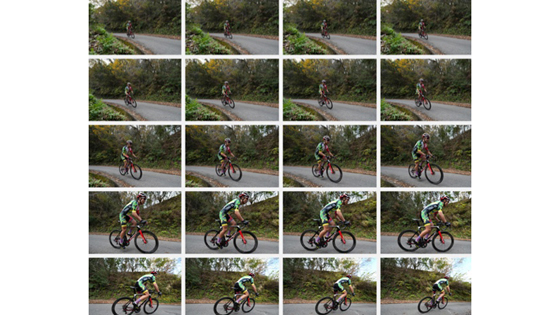
  • Efficient sensor design and processing enables high-speed shooting up to 30 fps at full 50.1MP resolution, with full AF and AE capabilities, when working with an electronic shutter. When working with the mechanical shutter, speeds are still kept high at 10 fps. Also, a large buffer memory permits recording up to 155 compressed raw frames, or 165 JPEGs, in one single burst at 30 fps.
  • Suiting fast-paced continuous shooting is a blackout-free viewfinder experience, which makes use of a 240 fps refresh rate for fluent eye-level viewing.
  • Updated electronic shutter offers silent, vibration-free performance and also supports anti-flicker shooting for working under fluorescent, LED, or other flicker-prone types of artificial light, even while shooting at 30 fps with 120 fps AF speeds.
  • Due to quickened readout speeds, electronic shutter flash sync is possible up to 1/200 sec. Even faster flash sync speeds are available when using the updated mechanical shutter, too, which can sync at 1/400 sec in full-frame or 1/500 secwith an APS-C crop.
8K 30p and 4K 120p Support
  • Making use of the high-resolution sensor and fast processing capabilities, UHD 8K 30p XAVC HS 10-bit 4:2:2 video recording is possible using the full width of the sensor, offering 8.6K oversampling for impressive sharpness and realism. For easy handling of this high-res recording mode, low bit-rate proxy files with HD resolution can be simultaneously recorded faster for playback. Also, 8K video at 400 Mb/s can be written to a V90-rated UHS-II SD card, or 200 Mb/s to a V60 card, and 8K can be output over HDMI in 8-bit 4:2:0 format.
  • Recording up to UHD 4K is possible with frame rates up to 120p; when recording up to 60p the a1 offers full pixel readout and at 120p it uses a 10% crop. Oversampled 4K recording is also possible, via a 5.8K capture area, with a Super 35 crop. Internal 10-bit 4:2:2 sampling is also possible in all recording modes and, if recording externally via the full-size HDMI A port, 16-bit raw output is also possible from a 4.3K capture for even greater tonal reproduction and post-production flexibility.
Recording Flexibility
  • The a1 employs a pair of codecs to suit different workflows: XAVC HS, which uses HEVC/H.265 encoding to retain more detail at smaller bitrates and XAVC S-I, which is an intraframe codec for consistent performance and quality at bitrates up to 600 Mb/s.
  • High-speed, 120 fps recording also enables 4x and 5x slow-motion movie recording with the frame rate playback set to either 30p or 24p or, if moving down to Full HD resolution, an effective 240p frame rate is also available for even greater motion control.
  • No recording time limit allows for unlimited clip lengths and the camera's physical design features an improved heat-dissipating structure to promote longer possible recording times; longer than 30 minutes for 8K 30p or 4K 60p videos, or recordings done at 10-bit 4:2:0.
Advanced Color Control
  • S-Cinetone can be used to deliver distinct colors and healthy-looking skin tone rendering that matches the FX9 and FX6 cameras and is based on technology from the professional Cinema Line cameras, such as the VENICE. This color profile offers natural mid-tones, soft colors, and especially well-controlled highlights.
  • Affording extensive customizable color and gamma controls, the you can adjust the gamma, black level, knee, color level, and more. Also, users can use the same S-Log2 Gamma Curve that is found on high end Sony Cinema cameras that squeezes up to 1300% more dynamic range into the video signal then traditional REC709, for increased post-production flexibility.
  • HLG (Hybrid Log-Gamma) support is also available, along with the BT.2020 color space, for recording within a wide color gamut and, in addition to S-Log2, S-Log3 is also available for producing a 15+-stop dynamic range with increased grading control in the shadow to mid-tone regions of the image.
Fast Hybrid AF System
  • Covering 92% of the image area, a Fast Hybrid AF system incorporates 759 phase-detection points along with 425 contrast-detection areas for quick and precise focusing in a variety of lighting conditions with sensitivity down to -6 EV. This focusing system is available for use in all recording modes, to benefit both video and stills applications.
  • Fast sensor readout and improved processing also enables up to 120 AF and AE calculations to be performed per second for faster, more responsive tracking and accurate results.
  • Lock onto subjects quickly using Real-time Tracking for AI-based tracking on moving subjects or touch tracking for manual selection of the subject.
  • Real-time Eye AF, suitable for both humans and animals, also ensures critical sharpness when shooting portraits.
  • Dedicated Real-time Eye AF Bird Mode lets you select the bird to be tracked and the camera will automatically detect the bird's eye and track it, regardless if the bird is in flight or still. This mode even works once a sitting bird takes flight.
  • Helping to fine-tune how the focusing system performs, seven-step AF transition speed and five-step AF subject shift sensitivity controls let you refine how quickly focus shifts from point to point and how smoothly focusing shifts occur.
  • Lock onto subjects quickly using Real-time Tracking for AI-based tracking on moving subjects or touch tracking for manual selection of the subject.
  • Real-time Eye AF, suitable for both humans and animals, also ensures critical sharpness when shooting portraits.
  • Dedicated Real-time Eye AF Bird Mode lets you select the bird to be tracked and the camera will automatically detect the bird's eye and track it, regardless if the bird is in flight or still. This mode even works once a sitting bird takes flight.
  • Helping to fine-tune how the focusing system performs, seven-step AF transition speed and five-step AF subject shift sensitivity controls let you refine how quickly focus shifts from point to point and how smoothly focusing shifts occur.

Sony A1 Mirrorless Camera Specs

Imaging
Lens MountSony E
Sensor ResolutionActual: 50.5 Megapixel
Effective: 50.1 Megapixel (8640 x 5760)
Sensor Type35.9 x 24 mm (Full-Frame) CMOS
Image StabilizationSensor-Shift, 5-Axis
Built-In ND FilterNone
Capture TypeStills & Video
Exposure Control
Shutter TypeElectronic Shutter, Mechanical Focal Plane Shutter
Shutter SpeedMechanical Shutter
1/8000 to 30 Seconds in Bulb Mode
Electronic Shutter
1/32000 to 30 Seconds
1/8000 to 1/4 Second in Movie Mode
Bulb/Time ModeBulb Mode
ISO SensitivityPhoto
100 to 32,000 (Extended: 50 to 102,400)
Video
100 to 32,000
Metering MethodCenter-Weighted Average, Highlight Weighted, Multiple, Spot
Exposure ModesAperture Priority, Manual, Program, Shutter Priority
Exposure Compensation-5 to +5 EV (1/3 EV Steps)
Metering Range-3 to 20 EV
White Balance2500 to 9900K
Presets: Auto, Cloudy, Custom, Daylight, Flash, Fluorescent, Incandescent, Shade, Underwater
Continuous ShootingElectronic Shutter
Up to 30 fps at 50.1 MP for up to 155 Frames (Raw) / 165 Frames (JPEG)
Up to 20 fps at 50.1 MP for up to 238 Frames (Raw) / 400 Frames (JPEG)
Up to 15 fps at 50.1 MP
Up to 5 fps at 50.1 MP
Mechanical Shutter
Up to 10 fps at 50.1 MP (Raw) / (JPEG)
Up to 8 fps at 50.1 MP
Up to 6 fps at 50.1 MP
Up to 3 fps at 50.1 MP
Interval RecordingYes
Self-Timer2/5/10-Second Delay
Still Image Capture
Image Sizes16:9
42 MP (8760 x 4864)
4:3
44.2 MP (7680 x 5760)
18.6 MP (4992 x 3744)
11 MP (3840 x 2880)
3:2
49.7 MP (8640 x 5760)
21 MP (5616 x 3744)
12.4 MP (4320 x 2880)
1:1
44.2 MP (5760 x 5760)
14 MP (3744 x 3744)
8.2 MP (2880 x 2880)
Aspect Ratio1:1, 3:2, 4:3, 16:9
Image File FormatHEIF, JPEG, Raw
Bit Depth14-Bit
Internal Video Capture
Recording ModesH.265/XAVC HS 4:2:2 10-Bit
UHD 8K (7680 x 4320) at 23.98p/25p/29.97p [260 to 520 Mb/s]
UHD 4K (3840 x 2160) at 23.98p/25p/29.97p/50p/59.94p/100p/119.88p [50 to 280 Mb/s]
H.265/XAVC HS 4:2:0 10-Bit
UHD 8K (7680 x 4320) at 23.98p/25p/29.97p [200 to 400 Mb/s]
UHD 4K (3840 x 2160) at 23.98p/25p/29.97p/50p/59.94p/100p/119.88p [30 to 200 Mb/s]
H.264/XAVC S-I 4:2:2 10-Bit
UHD 4K (3840 x 2160) at 23.98p/25p/29.97p/50p/59.94p [240 to 600 Mb/s]
Full HD (1920 x 1080) at 23.98p/25p/29.97p/50p/59.94p [89 to 222 Mb/s]
H.264/XAVC S 4:2:2 10-Bit
UHD 4K (3840 x 2160) at 23.98p/25p/29.97p/50p/59.94p/100p/119.88p [100 to 280 Mb/s]
Full HD (1920 x 1080) at 23.98p/25p/29.97p/50p/59.94p/100p/119.88p/200p/239.76p [50 Mb/s]
H.264/XAVC S 4:2:0 8-Bit
UHD 4K (3840 x 2160) at 23.98p/25p/29.97p/50p/59.94p/100p/119.88p [60 to 200 Mb/s]
Full HD (1920 x 1080) at 23.98p/25p/29.97p/50p/59.94p/100p/119.88p/200p/239.76p [16 to 100 Mb/s]
Sensor Crop ModesSuper35 / APS-C
4K (3840 x 2160)
1080p (1920 x 1080)
Gamma CurveHDR-HLG, Sony S-Log 2, Sony S-Log 3
Recording LimitUnlimited
Broadcast OutputNTSC/PAL
Built-In Microphone TypeStereo
Audio Recording2-Channel 16-Bit 48 kHz LPCM Audio
2/4-Channel 24-Bit 48 kHz LPCM Audio
2-Channel AAC Audio
External Video Capture
Raw OutputHDMI In Raw Mode:
4332 x 2248 16-Bit at 59.94 fps 
External Recording Modes4:2:2 10-Bit via HDMI
UHD 4K (3840 x 2160) at 23.98p/25p/29.97p/50p/59.94p
Full HD (1920 x 1080) at 23.98p/50p/59.94p
Full HD (1920 x 1080) at 50i/59.94i
4:2:0 8-Bit via HDMI
UHD 8K (7680 x 4320) at 29.97p
UHD 4K (3840 x 2160) at 23.98p/25p/29.97p/50p/59.94p
Full HD (1920 x 1080) at 23.98p/50p/59.94p
Full HD (1920 x 1080) at 50i/59.94i
IP StreamingNone
Interface
Media/Memory Card SlotDual Slot: CFexpress Type A / SD (UHS-II)
Video I/O1 x HDMI Output
Audio I/O1 x 1/8" / 3.5 mm TRS Stereo Headphone Output
1 x 1/8" / 3.5 mm TRS Stereo Microphone Input
Other I/O1 x USB Type-C Data Output (Shared with Power Input)
1 x PC Sync Socket Output
1 x RJ45
1 x Sony Multi/USB Micro-B
Power I/O1 x USB Type-C Input
Wireless2.4 / 5 GHz Wi-Fi 5 (802.11ac), Wi-Fi 4 (802.11n), Wi-Fi (802.11b/g) Control
Bluetooth
Global Positioning (GPS, GLONASS, etc.)None
Monitor
Size3.0"
Resolution1,440,000 Dot
Display TypeTilting Touchscreen LCD
Viewfinder
TypeBuilt-In Electronic (OLED)
Size0.64"
Resolution9,437,184 Dot
Eye Point25 mm
Coverage100%
MagnificationApprox. 0.9x
Diopter Adjustment-4 to +3
Focus
Focus TypeAuto and Manual Focus
Focus ModeContinuous-Servo AF, Direct Manual Focus, Manual Focus, Single-Servo AF
Autofocus PointsPhase Detection: 759
Contrast Detection: 425
Autofocus Sensitivity-4 to +20 EV
Flash
Built-In FlashNo
Flash ModesAuto, Fill Flash, Hi-Speed Sync, Off, Rear Sync, Red-Eye Reduction, Slow Sync
Maximum Sync Speed1/400 Second
Flash Compensation-3 to +3 EV (1/3, 1/2 EV Steps)
Dedicated Flash SystemTTL
External Flash ConnectionHot Shoe
Environmental
Operating Temperature32 to 104°F / 0 to 40°C
General
Battery Type1 x NP-FZ100 Rechargeable Lithium-Ion, 7.2 VDC, 2280 mAh (Approx. 430 Shots)
Power Consumption≤6.8 W
Tripod Mounting Thread1 x 1/4"-20 Female (Bottom)
Accessory Mount1 x Intelligent Hot Shoe on Camera Body
Material of ConstructionMagnesium Alloy
Dimensions (W x H x D)5.07 x 3.81 x 2.74" / 128.9 x 96.9 x 69.7 mm
Weight1.6 lb / 737 g (With Battery, Recording Media)
Packaging Info
Package Weight3.22 lb
Box Dimensions (LxWxH)11.8 x 6.3 x 5.4"

Sony FE 12-24mm F/2.8 GM Lens Specs

Focal Length12 to 24mm
Maximum Aperturef/2.8
Minimum Aperturef/22
Lens MountSony E
Lens Format CoverageFull-Frame
Angle of View122° to 84°
Minimum Focus Distance11.02" / 28 cm
Maximum Magnification0.14x
Optical Design17 Elements in 14 Groups
Diaphragm Blades9, Rounded
Focus TypeAutofocus
Image StabilizationNo
Filter SizeGel Filter (Rear)
Dimensions (ø x L)3.84 x 5.39" / 97.6 x 137 mm
Length at Maximum Extension5.39" / 137 mm
Weight1.86 lb / 847 g
Packaging Info
Package Weight2.94 lb
Box Dimensions (LxWxH)8.9 x 5.7 x 5.1"

Sony 80GB CFexpress Type A TOUGH Memory Card Specs

Quantity1
Card TypeCFexpress Type A
Storage Capacity80 GB
Bus TypePCI-Express 3.0
Read SpeedMaximum: 800 MB/s
Write SpeedMaximum: 700 MB/s
DurabilityShockproof, Temperature Extremes, UV Light Resistant, X-Ray Proof
Operating Temperature-13 to 158°F / -25 to 70°C
Storage Temperature-40 to 185°F / -40 to 85°C
Error CorrectionYes
Wireless CapabilityNone
Packaging Info
Package Weight0.105 lb
Box Dimensions (LxWxH)5 x 4 x 0.625"

Sony VG-C4EM Vertical Grip Specs

Battery Type2 x Battery Pack (NP-FZ100)
Tripod Mounting Thread1/4"-20 Female
Dimensions (L x W x H)5.1 x 4.3 x 2.6" / 128.8 x 108.9 x 67.0 mm
Weight10.23 oz / 290 g
Packaging Info
Package Weight1.05 lb
Box Dimensions (LxWxH)6.5 x 5 x 4"
$3,900.00
Leica Q3 Digital Camera (Leica Q3 Digital Camera)
Q3: Uniquely Powerful
Powerful and portable, the Leica Q3 mixes both classic and modern with a timeless design and a bevy of new-to-Q technologies. The third generation in Q cameras, the Q3 uses the same fixed focal length full-frame design proven in the Q and Q2 cameras but ups the performance with a 60MP sensor, a new hybrid AF system, 8K video recording, and revised EVF and LCD designs.
Full-Frame Sensor and Maestro IV Processor
60MP BSI CMOS Sensor
Taken from the M11, the Q3 features the same 60MP full-frame CMOS sensor as the flagship rangefinder camera. This high-resolution sensor features a back-illuminated (BSI) design that offers improved noise performance and faster readout speeds, which benefits both photo and video applications. The higher resolution suits more detail-oriented applications, like landscape and architectural subjects, and the noise-reduction benefits of the BSI design improves clarity and color accuracy when working in low-light conditions with higher ISOs.

The added resolution of the 60MP sensor also enables unique digital zoom capabilities to simulate working with different focal length lenses: a 1.25x crop simulates a 35mm focal length, a 1.8x crop simulates a 50mm focal length, a 2.7x crop simulates a 75mm focal length, and a 3.2x crop simulates a 90mm focal length.
Triple Resolution Technology
Another technology from the M11 now debuting in a Q, this 60MP sensor enables the use of Triple Resolution Technology. This unique pixel binning process allows photographers to select 60MP, 36MP, or 18MP output, with each resolution making use of the full sensor area and providing rich 14-bit color and a 14-stop dynamic range.
Maestro IV
Jumping past the M11, the Q3 introduces a new generation of processing with the Maestro IV. This processor, along with 8GB of buffer memory, suits the more multimedia-intended use of the Q3 and enables speedy performance when shooting stills or recording video. The faster processing also benefits using Triple Resolution Technology, helps achieve a wider sensitivity range from ISO 50-100000, allows continuous shooting up to an impressive 15 fps, and facilitates smooth operation when working with the EVF and LCD.
Summilux 28mm f/1.7 ASPH. Lens and Hybrid AF
Summilux Optics
Using the proven design from the past Qs, the Q3 inherits the Summilux 28mm f/1.7 wide-angle prime lens that provides a broad field of view and fast performance to suit working in a variety of environments and lighting conditions. As a lens designed specifically for the Q cameras, the optical design has been refined for high sharpness and low distortion along with a compact, functional profile that's discreet while providing room to make tactile adjustments to focus, aperture, and to switch to the dedicated macro focusing range for working with subjects as close as 6.7" away. Additionally, optical image stabilization helps to compensate for the effects of camera shake for sharper handheld shooting.
Hybrid Autofocus and Subject Tracking
Leveraging the powerful processing and updated sensor design, one of the key upgrades in the Q3 is the inclusion of a hybrid AF system that utilizes phase-detection focusing along with contrast-detection and depth from defocus (DFD) AF for faster, more accurate focusing when working with moving subjects or in mixed lighting conditions. The addition of phase-detection focusing also enables an intelligent subject recognition system that can detect and track eyes, faces, bodies, and animals in the frame.
8K Video and ProRes Recording
With more attention given to video recording, the Q3 is a well-rounded multimedia camera with video performance that rivals the exceptional stills capabilities.
  • DCI 8K recording is supported at up to 30p with 4:2:0 10-bit color when recording internally or at 8-bit when recording externally via the micro-HDMI port.
  • 4K recording is also possible, with 4:2:2 10-bit color, at up to 60p with support for recording internally or externally. When shooting Full HD, the frame rate can be pushed to 120p for slow motion playback and all resolutions also support a true 24p frame rate for cinematic rendering.
  • ProRes 422 HQ recording can be done internally with a Full HD resolution at frame rates up to 60p.
  • Micro-HDMI and USB-C ports provide greater access to accessories like external recorders, gimbals, power banks, and more to benefit using the Q3 as a tool for video creators.
Camera Design
Updated EVF and New Tilting LCD
Two of the key physical improvements to the Q3 include an updated electronic viewfinder and a newly designed rear LCD:
  • 5.76m-dot OLED EVF offers a high-resolution eye-level means for composing and features a 120 fps refresh rate for more realistic motion rendering. This finder has a 0.79x magnification, an adjustable diopter, and an eye sensor for automatic switching between the EVF and LCD.
  • For the first time in a Q, the Q3 sports a tilting LCD design that can face both upward and downward to suit working from a variety of shooting positions. This 3" 1.84m-dot LCD is also a touchscreen for more intuitive settings control.
Portable, Weather-Sealed Design
The Q3 is a compact camera meant for everyday shooting and its design remains similar to previous generations, but with some notable updates for improved usability:
  • New higher capacity BP-SCL6 lithium-ion battery is rated to provide 350 shots per charge and uses the same physical design as its predecessor, the BP-SCL4, which can also be used with this camera.
  • Magnesium alloy body is sealed to protect against dust and moisture (IP52-rated) for use in harsh environmental conditions.
  • New USB-C 3.1 Gen 2 port can be used for transferring, tethering, power delivery, and in-camera battery charging. The Q3 is also Made for iPhone certified to enable a direct, wired connection to an iPhone.
  • Micro-HDMI port facilitates working with an external monitor and recorder as well as previewing footage from the camera directly on a TV.
  • Accepts one SD-type memory card and supports the UHS II protocol.
Expanded Connectivity and Wireless Charging Accessories
  • Improved wireless connectivity (Wi-Fi 2.4 & 5 GHz and Bluetooth 5.0) and an updated Leica FOTOS app enable wireless transfer speeds up to 10x faster than the previous generation; transfer speeds up to 35MB/s are now possible, enabling moving a full-resolution DNG from the camera to your mobile device in just 2 seconds.
  • Upgraded Leica FOTOS app enables transferring new Leica Looks to your camera, including Contemporary, Classic, Blue, Selenium, Sepia, and more.
  • FOTOS app also supports adding GPS information to your files using locational data from your mobile device.
  • When paired with the optional HG-DC1 Wireless Charging Handgrip, the Q3 supports wireless battery charging via Qi-compatible charging mats, like the Drop XL Wireless Charger.
Leica Q3 Digital Camera
$2,200.00
Leica Q2 "Dawn" by Seal Digital Camera (Leica Q2 "Dawn" by Seal Digital Camera)
  • 47.3MP Full-Frame CMOS Sensor
  • Maestro II Image Processor
  • Summilux 28mm f/1.7 ASPH. Lens
  • 3.68MP OLED Electronic Viewfinder
  • 3.0" 1.04m-Dot Touchscreen LCD
  • DCI 4K24p, UHD 4K30p, Full HD 120p Video
  • ISO 50-50000, up to 10-fps Shooting
  • 35mm, 50mm, and 75mm Crop Modes
  • Bluetooth LE and Wi-Fi
  • Limited Edition of 500 Units


Paying tribute to the soulful lyrics of the artist's songs, the Leica Q2 "Dawn" by Seal Digital Camera celebrates the human connection to the art of making photographs. It is the elegant cover fabric that makes each Q2 "Dawn" by Seal unique. The particular mood during morning twilight, the interplay of dark and light, is captured in the mysterious, iridescent material. The Japanese term "komorebi" inspired the fabric, describing the transparency and light play that occurs when sunbeams fall through a tree canopy. Limited to 500 units, each special edition camera is one of a kind.

In addition to the iridescent fabric, this special edition camera features a black Leica logo, and Seal's signature is engraved on the display glass with an edition number from 001 to 500. An exclusive scarf featuring Seal's song lyrics and an engraved rope strap are also included.

Leica Q2: Limitless Potential
Redeveloped while retaining impressive imaging and optical attributes, the Leica Q2 is an advanced compact camera characterized by its updated sensor design and intuitive operation. Revolving around a revised full-frame 47.3MP CMOS sensor and Maestro II image processor, high-resolution stills shooting is possible as well as both DCI and UHD 4K video recording. The image processor also contributes to a broad ISO 50-50000 sensitivity range plus quick 10-fps full-resolution continuous shooting. The added resolution also affords a series of unique Crop Modes, which simulate working with longer focal length lenses, including 35mm, 50mm, and 75mm fields of view.

Complementing the imaging and optical assets, the Q2 remains an especially compact and intuitive camera, well-suited for street and travel photography. Its sleek magnesium alloy body is weather sealed for working in trying environments and it has adopted the same battery featured in the flagship SL mirrorless camera for longer battery life. A high-resolution 3.68MP OLED electronic viewfinder is featured for fluid and clear eye-level monitoring and a rear 3.0" 1.04m-dot touchscreen LCD also affords straightforward playback and settings control. Built-in Bluetooth LE and Wi-Fi permit wireless sharing and remote camera control from a linked mobile device via the Leica FOTOS app.
47.3MP Full-Frame CMOS Sensor and Maestro II Processor
Featuring a redeveloped imaging system, the Q2 incorporates a high-resolution 47.3MP full-frame CMOS sensor as well as an updated Maestro II image processor, which lends more flexible image creation, offers smooth color and tonal rendering, a broad 13-stop dynamic range, low noise, and a wide sensitivity range from ISO 50-50000. Processing capabilities also afford fast shooting performance, up to 10 fps at full-resolution with a mechanical shutter, plus an especially quick 49-area autofocus system. Stills can be recorded as 14-bit DNG files and JPEGs. The added resolution also enables unique digital zoom capabilities to simulate working with different focal length lenses: 30MP images can be created using a 35mm field of view, 15MP images with a 50mm field of view, and 7MP with a 75mm field of view.

In addition to stills, the Q2 features improved video recording with the ability to shoot both DCI 4K24p and UHD 4K30p video, with high-speed Full HD recording at up to 120p.
Summilux 28mm f/1.7 ASPH. Lens
Key to the popularity of the Q-series is the incorporation of a fixed Summilux 28mm f/1.7 wide-angle prime lens. Blending Leica's optical know-how with a design perfectly matched to the image sensor, this lens incorporates three aspherical elements to control distortion and spherical aberrations for sharp and accurate rendering. Its fast f/1.7 maximum aperture also excels in low-light conditions and offers improved control over depth of field. Extending its versatility, a dedicated macro focusing position can also be used for working with subjects as close as 6.7" away. Additionally, optical image stabilization helps to compensate for the effects of camera shake for sharper handheld shooting.
Body Design
  • The high-resolution 3.68MP (1280 x 960) OLED electronic viewfinder provides a clear and realistic means for eye-level viewing. Its high refresh rate virtually eliminates lag, and an updated eye sensor provides faster automatic switching between the EVF and the rear LCD.
  • The rear 3.0" 1.04m-dot LCD features a touchscreen design for intuitive navigation and playback, as well as the ability to touch to focus.
  • The lightweight magnesium alloy body is sealed to protect against dust and moisture (IP52-rated) for use in harsh environmental conditions.
  • Adoption of the BP-SCL4 battery, as used with the SL (Typ 601) mirrorless camera, affords an improved 370 shots per charge and the battery's physical design incorporates a rubber gasket to further reinforce the overall weather sealing.
  • Enhanced haptics, following suit of the M10 and CL-series cameras, emphasize a simpler interface, including a single-stage On/Off button, a three-button rear control set, a programmable button within the thumb-wheel dial, a push-button diopter adjustment, and a distinctive thumb grip.
  • The mechanical shutter affords flash sync speeds up to 1/500 sec.
  • The lens features a 49mm filter thread diameter for attaching optional filters.
  • Accepts one SD-type memory card and supports the UHS II protocol.
  • Built-in Wi-Fi, when used in conjunction with the Leica FOTOS app for iOS and Android, permits sharing imagery directly to a linked mobile device and also enables remote control over the Q2 and remote shooting via a live view image. Additionally, Bluetooth LE helps to maintain a permanent connection between the mobile device and the camera, enabling remote waking of the camera and automatic connection anytime within range.
Leica Q2 "Dawn" by Seal Digital Camera
$2,200.00
Nikon Z9 Mirrorless Camera (Nikon Z9 Mirrorless Camera)

Nikon Z9 Specs

Imaging
Lens MountNikon Z
Sensor ResolutionActual: 52.37 Megapixel
Effective: 45.7 Megapixel (8256 x 5504)
Image Sensor35.9 x 23.9 mm (Full-Frame) CMOS
Image StabilizationSensor-Shift, 5-Axis
Built-In ND FilterNone
Capture TypeStills & Video
Exposure Control
Shutter TypeElectronic Shutter
Shutter SpeedElectronic Shutter
1/32000 to 30 Seconds
0 to 900 Seconds in Manual Mode
Bulb/Time ModeBulb Mode
ISO SensitivityPhoto/Video
64 to 25,600 (Extended: 32 to 102,400)
Metering MethodCenter-Weighted Average, Highlight Weighted, Matrix, Spot
Exposure ModesAperture Priority, Manual, Program, Shutter Priority
Exposure Compensation-5 to +5 EV (1/3, 1/2 EV Steps)
Metering Range-3 to 17 EV
White Balance2500 to 10,000K
Presets: Auto, Cloudy, Custom, Direct Sunlight, Flash, Fluorescent, Incandescent, Preset Manual, Shade
Continuous ShootingElectronic Shutter
Up to 20 fps at 45.7 MP for up to 1000 Frames (Raw)
Up to 30 fps at 45.7 MP
Up to 120 fps at 11 MP
Interval RecordingYes
Self-Timer2/5/10/20-Second Delay
Still Image Capture
Image Sizes3:2
8256 x 5504
6192 x 4128
4128 x 2752
Aspect Ratio1:1, 3:2, 16:9
Image File FormatJPEG, Raw
Bit Depth14-Bit
Video Capture
Internal Recording ModesH.265 4:2:2 10-Bit
UHD 8K (7680 x 4320) at 23.98/25/29.97 fps
UHD 4K (3840 x 2160) at 23.98/25/29.97/50/59.94/100 fps
ProRes 422 HQ 4:2:2 10-Bit
UHD 4K (3840 x 2160) at 23.98/25/29.97 fps
H.265 4:2:0 8-Bit
UHD 4K (3840 x 2160) at 23.98/25/29.97 fps
H.264 4:2:0 8-Bit
UHD 4K (3840 x 2160) at 23.98/25/29.97 fps
1920 x 1080p at 23.98/25/29.97/50/59.94/100 fps
Raw 12-Bit
7680 x 4320 at 59.94 fps
External Recording ModesHDMI
UHD 8K (7680 x 4320) up to 29.97 fps
UHD 4K (3840 x 2160)
Sensor Crop ModesSuper35 / APS-C
4K (3840 x 2160)
1080p (1920 x 1080)
Gamma CurveHDR-HLG
Recording LimitNone
Broadcast OutputNTSC/PAL
IP StreamingNone
Built-In Microphone TypeStereo
Audio Recording2-Channel LPCM Audio
2-Channel AAC Audio
Interface
Media/Memory Card SlotDual Slot: CFexpress Type B / XQD
Video I/O1 x HDMI Output
Audio I/O1 x 1/8" / 3.5 mm TRS Stereo Headphone Input
1 x 1/8" / 3.5 mm TRS Stereo Microphone Input/Output
Power I/O1 x USB-C Input
Other I/O1 x USB-C Data Output (Shared with Power Input)
1 x RJ45
1 x Nikon 10-Pin Control Input
1 x PC Sync Socket Output
Wireless2.4 / 5 GHz Wi-Fi (802.11b/g), Wi-Fi 4 (802.11n), Wi-Fi 5 (802.11ac)
Bluetooth
Global Positioning (GPS, GLONASS, etc.)GLONASS, GPS, QZSS
Monitor
Size3.2"
Resolution2,100,000 Dot
Display Type4-Axis Tilting Touchscreen LCD
Secondary DisplayTop: Status Display
Viewfinder
TypeBuilt-In Electronic (OLED)
Size0.5"
Resolution3,690,000 Dot
Eye Point21 mm
Coverage100%
MagnificationApprox. 0.8x
Diopter Adjustment-4 to +3
Focus
Focus TypeAuto and Manual Focus
Focus ModeContinuous-Servo AF, Manual Focus, Single-Servo AF
Autofocus PointsPhase Detection: 493
Autofocus Sensitivity-8.5 to +20 EV
Flash
Built-In FlashNo
Flash ModesFirst-Curtain Sync, Off, Rear Sync, Red-Eye Reduction, Slow Sync, Slow Sync/Red-Eye Reduction
Maximum Sync Speed1/200 Second
Flash Compensation-3 to +1 EV (1/3, 1/2 EV Steps)
Dedicated Flash SystemiTTL
External Flash ConnectionHot Shoe, PC Terminal
Environmental
Operating Temperature14 to 104°F / -10 to 40°C
Operating Humidity0 to 85%
General
Battery Type1 x EN-EL18d Rechargeable Lithium-Ion, 10.8 VDC, 3300 mAh (Approx. 700 Shots)
Tripod Mounting Thread1 x 1/4"-20 Female (Bottom)
Accessory Mount1 x Hot Shoe Mount
Material of ConstructionMagnesium Alloy
Dimensions (W x H x D)5.9 x 5.9 x 3.6" / 149 x 149.5 x 90.5 mm
Weight2.9 lb / 1340 g (With Battery, Recording Media)
2.6 lb / 1160 g (Body Only)
Packaging Info
Package Weight5.255 lb
Box Dimensions (LxWxH)13 x 7.7 x 5.8"


Nikon Z9: Unstoppable
Delivering speed, image quality, and connectivity, the Nikon Z9 is a professional-grade camera characterized by its newly developed sensor, advanced AF performance, and high-resolution 8K video recording. Their first mirrorless flagship camera, the Z9 stands out as a camera that appeals to photographers and filmmakers working across a wide variety of applications.
Stacked Sensor and Powerful Processing Engine
45.7MP Stacked BSI CMOS Sensor
The core of the Z9 is the newly developed FX-format 45.7MP BSI stacked CMOS sensor. Its stacked design offers fast readout speeds and helps to reduce rolling shutter, and the BSI design contributes to impressive clarity and minimal noise when working at higher sensitivities. At 45.7MP, it's also a high-resolution chip that benefits landscape, portraiture, and other detail-oriented genres, as well as enables recording video at resolutions up to 8K. The full-frame BSI design is known for exquisite color and detail rendering, too, and this sensor offers a native ISO 64-25600 range, that can be expanded to ISO 32-102400.
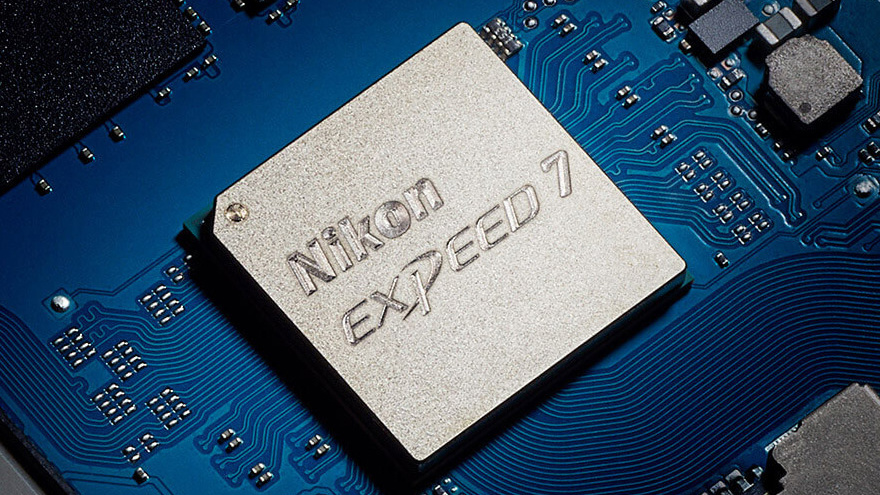
expeed-7
EXPEED 7 Image Processor
Complementing the sensor is an advanced processing engine, the EXPEED 7, which offers speeds approximately 10x faster than a Z 7II. This engine works in conjunction with the stacked sensor design to realize impressively fast AF speeds, burst shooting rates, a high buffer capacity, fluid video performance, and quick all-around handling.

  • Top continuous shooting speeds of 20 fps when shooting in raw, 30 fps when shooting in JPEG, and an impressive 120 fps shooting rate when recording 11MP stills, with all rates supporting full AF/AE performance.
  • Able to buffer over 1000 raw images in a burst, meaning raw image sequences can be recorded for approximately 50 seconds continuously. Also, during playback, you can skip to the first shot of a given burst to expedite the on-camera review process.
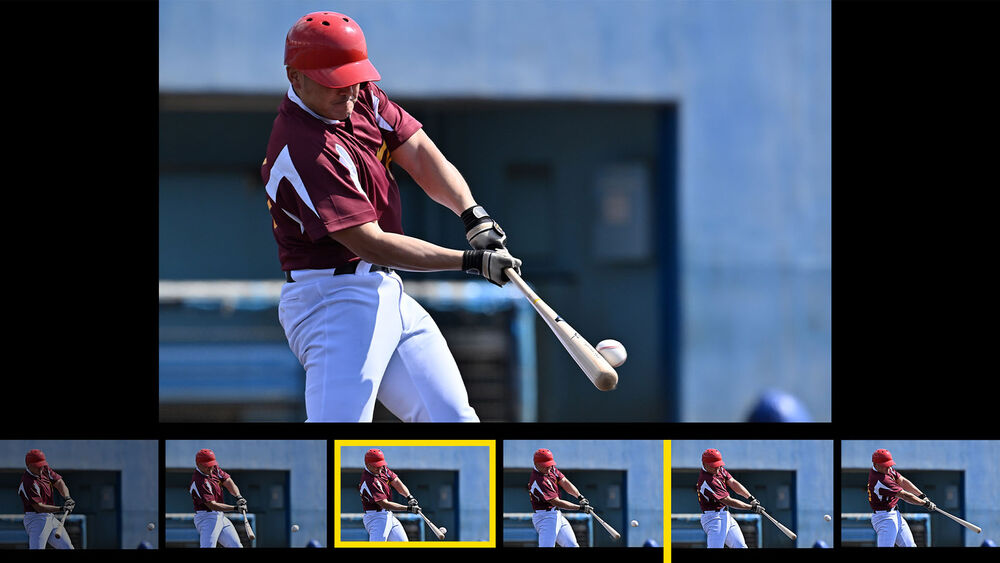
Nikon Z9 Pre-Release Capture
  • Pre-Release Capture helps make decisive moment shots easier by recording frames in a burst for up a second prior to actually releasing the shutter. When this feature is activated, burst shooting will commence when the shutter is half-pressed and the buffer will retain up to a second's worth of frames prior to fully pressing the shutter.

Sample Photo
  • Electronic shutter affords a top shutter speed of 1/32,000 sec for working in the brightest conditions with wider apertures.
  • Stacked sensor design reduces rolling shutter distortion so fast-moving subjects, like a golf club, tennis racket, or baseball bat, do not appear distorted when working with shutter speeds up to 1/32,000 sec.
  • AF calculations are done at a 120 fps rate to keep up with fast continuous shooting speeds.

Nikon Z9 Motion Burst
  • New High Efficiency RAW file format maintains image quality akin to uncompressed raw files but with file sizes approximately 30% smaller for faster reading/writing to the memory card.
  • Motion Blend Retouch feature can be used to produce an in-camera composite that depicts a series of subject movements within a single frame.
  • Added with Firmware 2.0, an enhanced Long Exposure display includes a live exposure timer on the rear LCD, along with the ability to dim the viewfinder to better preserve your night-adjusted vision.

electronic-shutter
Electronic Shutter-Only Design
Relying on the speed and stacked design of the sensor, the Z9 completely forgoes a mechanical shutter and uses just an electronic shutter for all capture modes. The speed of the sensor enables recording at up to 1/32,000 sec and the stacked structure reduces motion distortion for accurate depiction of fast-moving subjects, like golf clubs, baseball bats, and automobiles. Also, despite the absence of a mechanical shutter, flash sync up to 1/200 sec. is still supported as well as high speed sync functions.

By removing the mechanical shutter, the Z9 can also operate completely silently and there is no worry over mechanical shutter wear or breakdown. A shutter release sound can be added for awareness when a photo is being taken, and the volume can be adjusted to suit different working scenarios.
Fast and Intelligent AF
493-Point Phase-Detection AF
Covering the full sensor area, the Z9 uses a 493-point phase-detection AF system to realize fast and accurate focusing performance. This system is benefitted by the high-speed communication of the Z interface along with the speed of the sensor that enables AF readings to occur at up to 120 fps. This focusing system also supports working in low-light conditions with a Starlight mode that permits focusing down to -8.5 EV to greatly benefit astrophotography, concert, and other nighttime shooting applications.

Sample Photo
Subject Detection with Deep Learning Technology
Utilizing a new algorithm and deep learning technology, automatic Subject Detection can now recognize nine distinct subject types, ranging from humans to animals to airplanes to bicycles. When working in Auto-Area AF, these subjects will automatically be detected, focused on, and tracked to ensure sharp focus when the subject is moving across the frame. Eye-Detection AF, specifically, has been tuned for improved accuracy and refined recognition of eyes in the scene regardless of how small or large they are within the image frame.
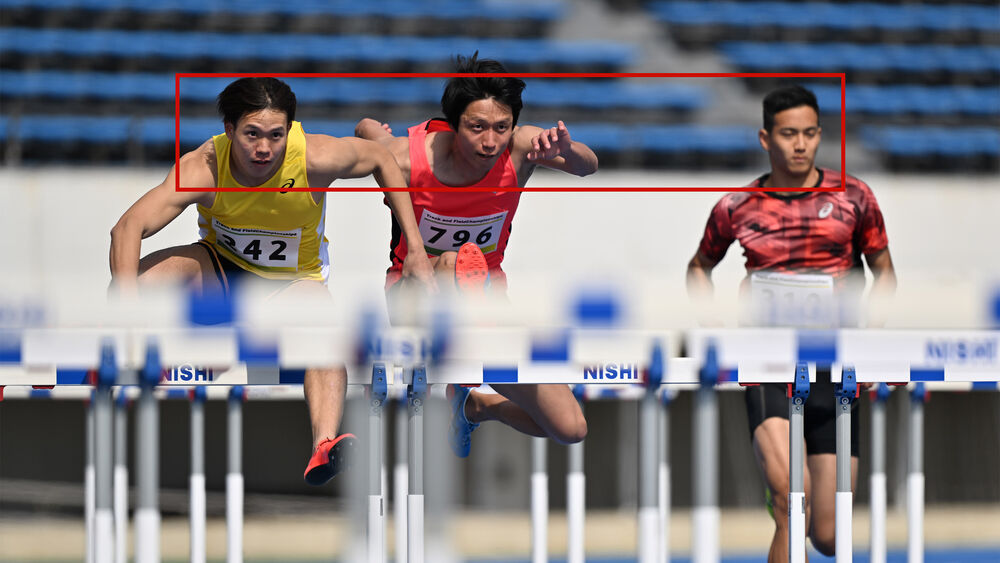
Nikon Z9 Custom Wide Area Modes
The Z9 also sees the debut of the 3D Tracking mode in a Nikon mirrorless camera. This popular focusing mode from Nikon's DSLRs pairs with subject detection to lock onto fast, erratically moving subjects that move parallel and perpendicular to the camera. Additionally, there are three Dynamic-Area AF modes, with a range of focus area sizes, for capturing a broad variety of moving subject types.

Firmware 2.0 has also introduced 20 types of custom Wide-Area AF selection patterns, 12 of which are supported during video recording, for more precise AF and subject detection within a given area of the frame.
8K and 4K Video Recording
Up to 8K Recording Supported
Matching the high-end photo attributes, the Z9 is Nikon's most capable video camera as well, with a variety of resolutions and frame rates available up to 8K. Using full pixel readout, UHD 8K 30p video can be recorded with continuous shooting possible for approximately 2 hours 5 minutes.

Full-frame 4K recording is available, too, up to 120p for slow-motion playback. Using an 8K area, oversampled UHD 4K recording is possible at up to 60p for increased sharpness and detail. Also, high-resolution frame grabs can be recorded in camera from 8K and 4K videos, for producing 33MP or 11MP stills, respectively.
Internal N-RAW and ProRes RAW Video
Added with Firmware 2.0, the Z9 is capable of internal 12-bit raw recording at up to 8.3K 60p in the N-RAW format, as well as support for ProRes RAW recording. Raw recording offers greater tonal and color latitude and can improve dynamic range, benefitting color grading needs and post-production flexibility.
  • N-RAW is Nikon's own raw recording format that offers impressively small file sizes compared to other raw formats as well as the ability to create MP4 proxies for more efficient previewing or transferring.
  • N-RAW recording is available at up to 8.3K at 60p or 24p; 4.1K at up to 120p; 5.3K at up to 60p with a 1.5x crop; and 3.8K at 120p with a 2.3x crop.
  • ProRes RAW recording is also available at up to 4.1K and 60p.
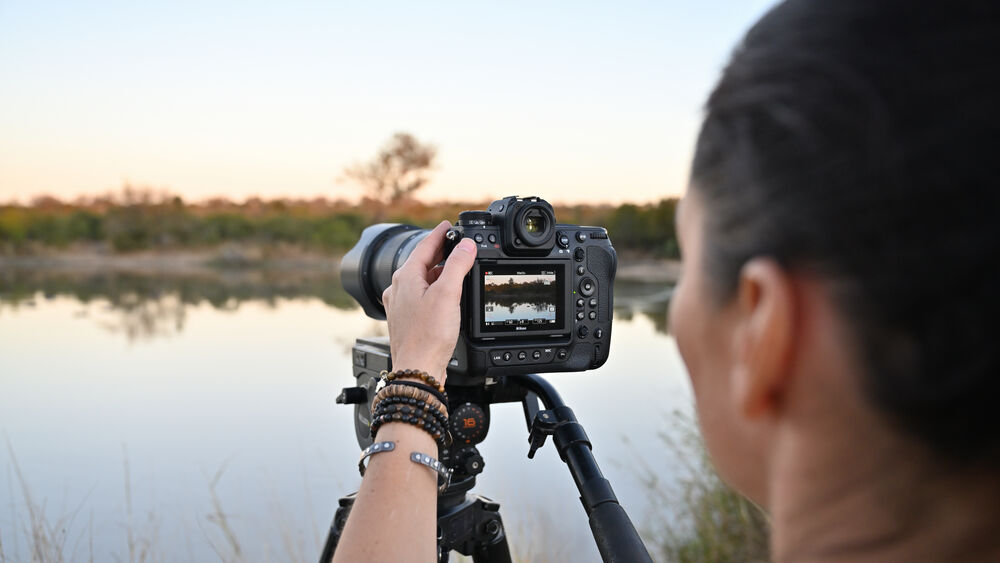
ProRes and H.265 10-Bit Internal Recording
Internal recording with 10-bit color and 4:2:2 sampling is possible in the ProRes 422 HQ and H.265 codecs, and H.264 and 4:2:0 color can be used depending on workflow needs. For more latitude when color grading in post, there is also a 10-bit N-Log setting as well as a Flat color profile. Additionally, HLG (Hybrid Log Gamma) can be used for creating HDR-ready content straight from the camera.
Firmware 2.0 Video Upgrades
Elevating the cinema capabilities of the Z9, Firmware 2.0 introduced a series of production-related updates for the camera:
  • Red REC frame indicator on EVF and LCD during recording to easily recognize when recording is being captured.
  • Waveform monitor for realtime exposure analysis.
  • Dedicated video info display indicates various recording settings, such as frame size, frame rate, audio settings, codec, bit depth, and HDMI output settings. Some of these settings will also be visible on the camera's top control panel.
  • Fine ISO control in Manual mode for adjusting exposure in 1/6-stop increments.
  • Fast AF-ON function can be assigned to Fn buttons; it is now possible to assign two different AF speeds to different buttons.
  • Slow shutter speed video is supported, slower than 1/frame rate, for working in extreme low-light conditions or for creating intentionally blurred effects.
Professional Body Design
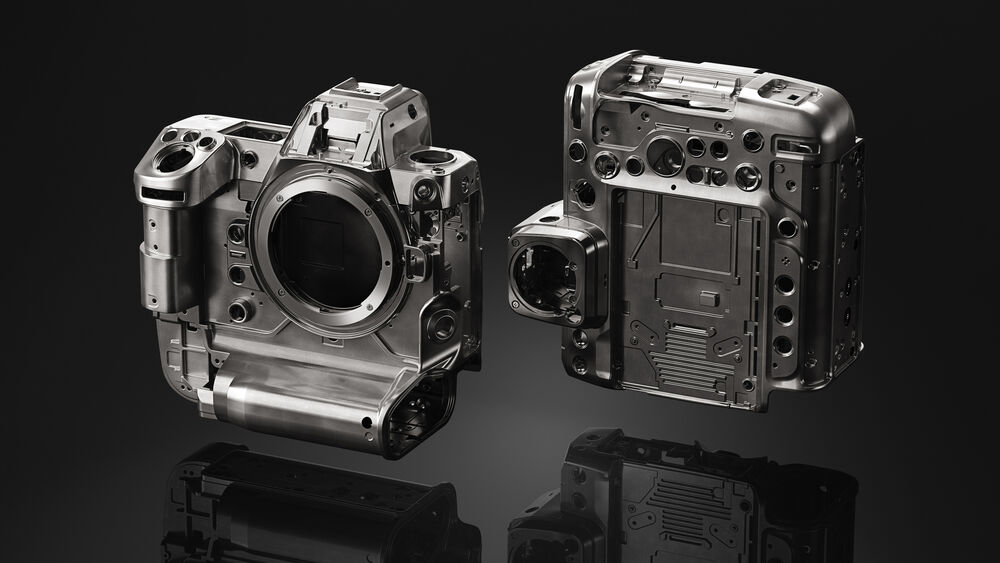
mag_body_front_back
Real-Live Viewfinder
  • Real-Live Viewfinder is a an advanced EVF utilizing a 3.69m-dot OLED panel with adjustable luminance up to 3000 cd/m2 for clear visibility in bright conditions. This EVF also works in conjunction with dual-stream technology for blackout-free viewing when shooting continuously. Firmware 2.0 has further improved the finder's performance with a high fps function, which ups the EVF's refresh rate to 120 fps for even smoother, lifelike viewing.
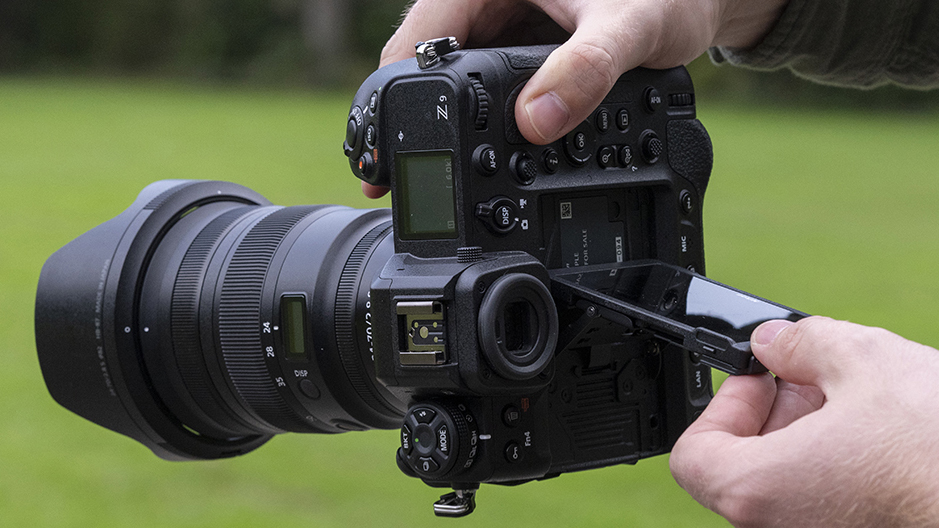
tilty-screen
Four-Axis Tilting LCD
  • A first for Nikon, the Z9 incorporates a 3.2" 2.1m-dot four-axis tilting touchscreen LCD that better supports working from high and low angles, regardless if shooting in the horizontal or vertical orientation. This screen's four-way tilting design allows for easier viewing from a variety of positions and the user interface orientation will also shift depending on how the camera is held.
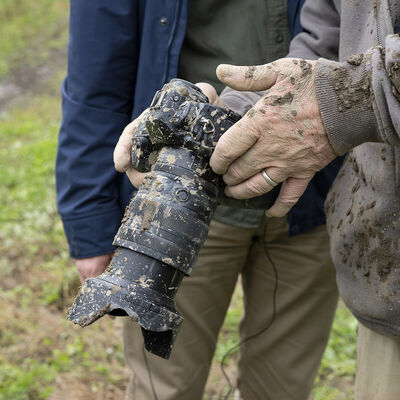
dirt
Tough, Durable Construction
  • Dual CFexpress Type B memory card slots allow for flexible file saving and promote high-speed reading and writing to keep up with the fast continuous shooting and high-resolution 8K video recording. Both slots are also compatible with XQD memory cards.
  • Optimized for a professional workflow, the Z9 is characterized by its ergonomic form factor and inclusion of a vertical grip for easy switching between horizontal and vertical shooting orientations.
  • Built to the same dust and moisture resistance standards as the D6, the Z9 has a highly durable and rigid magnesium alloy chassis that manages to be 20% smaller than the former flagship DSLR body.
  • Included EN-EL18d battery offers approximately 700 frames per charge. The Z9 is also compatible with other EN-EL18-series batteries.
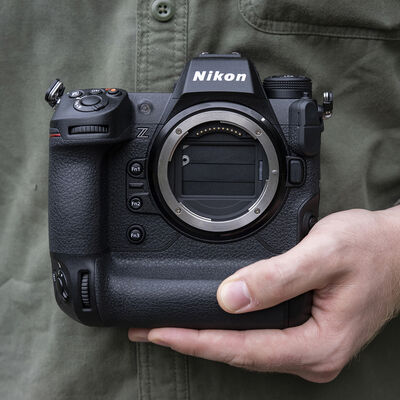
shutter-sheild
  • In-body Vibration Reduction now supports Synchro VR to achieve up to 6 stops of camera shake compensation when used with select Z lenses.
  • VR safety lock secures the sensor and VR mechanism in place to prevent damage caused by movement while traveling.
  • Helping to cut down on dust reaching the sensor, the Z9 incorporates a sensor shield that protects the sensor surface when changing lenses. For additional dust prevention, there is also a dual electro-conductive and fluorine coating on the optical filter covering the sensor.
  • Kensington security slot helps protect against theft when the camera is left unattended.
  • Backlit buttons offer easier navigation and button recognition when working in low-light conditions.
  • Voice memo function for recording short spoken notes while shooting.
Versatile Connectivity
Matching the professional build quality, the Z9 is fitted with a variety of connectivity options to suit various workflow needs:
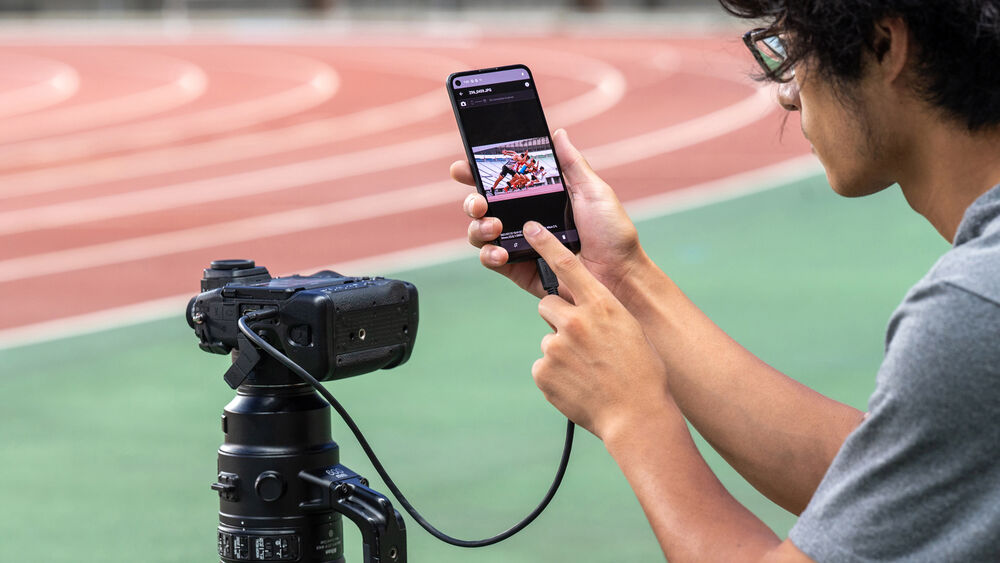
mobile-app
  • Full-size HDMI port for outputting video to an external recorder or monitor
  • USB 3.2 Gen 2 Type-C port supports tethering, data transfer, and in-camera battery charging
  • Ethernet port supports 1000BASE-T wired LAN connection for transferring files over FTP
  • 10-pin port offers wide accessories and remote connectivity
  • PC sync port for flash sync
  • Bluetooth and Wi-Fi (2.4 and 5 GHz) permit wireless transferring of files, remote camera control via a mobile device, and works in conjunction with the NX Mobile Air app for file management
  • GNSS for in-camera geotagging and recording of location info while shooting

Nikon Z9 Mirrorless Camera
$2,100.00
Nikon Z8 Mirrorless Camera (Nikon Z8 Mirrorless Camera )
Imaging
Lens MountNikon Z
Sensor ResolutionActual: 52.37 Megapixel
Effective: 45.7 Megapixel (8256 x 5504)
Image Sensor35.9 x 23.9 mm (Full-Frame) CMOS
Image StabilizationSensor-Shift, 5-Axis
Built-In ND FilterNone
Capture TypeStills & Video
Exposure Control
Shutter TypeElectronic Shutter
Shutter SpeedElectronic Shutter
1/32000 to 30 Seconds
0 to 900 Seconds in Manual Mode
Bulb/Time ModeBulb Mode
ISO SensitivityPhoto/Video
64 to 25,600 (Extended: 32 to 102,400)
Metering MethodCenter-Weighted Average, Highlight Weighted, Matrix, Spot
Exposure ModesAperture Priority, Manual, Program, Shutter Priority
Exposure Compensation-5 to +5 EV (1/3, 1/2 EV Steps)
Metering Range-3 to 17 EV
White Balance2500 to 10,000K
Presets: Auto, Cloudy, Custom, Direct Sunlight, Flash, Fluorescent, Incandescent, Preset Manual, Shade
Continuous ShootingElectronic Shutter
Up to 20 fps at 45.7 MP for up to 1000 Frames (Raw)
Up to 30 fps at 45.7 MP for Unlimited Frames (JPEG)
Up to 60 fps at 19 MP
Up to 120 fps at 11 MP
Interval RecordingYes
Self-Timer2/5/10/20-Second Delay
Still Image Capture
Image Sizes3:2
8256 x 5504
6192 x 4128
4128 x 2752
Aspect Ratio1:1, 3:2, 16:9
Image File FormatJPEG, Raw
Bit Depth14-Bit
Video Capture
Internal Recording ModesH.265 4:2:2 10-Bit
UHD 8K (7680 x 4320) at 23.98/25/29.97 fps
UHD 4K (3840 x 2160) at 23.98/25/29.97/50/59.94/100 fps
ProRes 422 HQ 4:2:2 10-Bit
UHD 4K (3840 x 2160) at 23.98/25/29.97 fps
H.265 4:2:0 8-Bit
UHD 4K (3840 x 2160) at 23.98/25/29.97 fps
H.264 4:2:0 8-Bit
UHD 4K (3840 x 2160) at 23.98/25/29.97 fps
1920 x 1080p at 23.98/25/29.97/50/59.94/100 fps
Raw 12-Bit
7680 x 4320 at 23.98/25/29.97/50/59.94 fps
External Recording ModesHDMI
UHD 8K (7680 x 4320) up to 29.97 fps
UHD 4K (3840 x 2160)
Sensor Crop ModesSuper35 / APS-C
4K (3840 x 2160)
1080p (1920 x 1080)
Fast-/Slow-Motion SupportNo
Gamma CurveHDR-HLG
Recording LimitNone
Broadcast OutputNTSC/PAL
IP StreamingNone
Built-In Microphone TypeStereo
Audio Recording2-Channel 24-Bit 48 kHz LPCM Audio
Interface
Media/Memory Card SlotSlot 1: CFexpress Type B / XQD
Slot 2: SD/SDHC/SDXC (UHS-II)
Video I/O1 x HDMI Output
Audio I/O1 x 1/8" / 3.5 mm TRS Stereo Headphone Input
1 x 1/8" / 3.5 mm TRS Stereo Microphone Input/Output
Power I/O1 x USB-C Input
Other I/O1 x USB-C Data Output
1 x Nikon 10-Pin Control Input
Wireless2.4 / 5 GHz Wi-Fi (802.11b/g), Wi-Fi 4 (802.11n), Wi-Fi 5 (802.11ac)
Bluetooth
Mobile App CompatibleYes: Android & iOS
App Name: SnapBridge
*As of May, 2023: Check with manufacturer for the most up-to-date compatibility
Global Positioning (GPS, GLONASS, etc.)None
Monitor
Size3.2"
Resolution2,100,000 Dot
Display Type4-Axis Tilting Touchscreen LCD
Secondary DisplayTop: Status Display
Viewfinder
TypeBuilt-In Electronic (OLED)
Size0.5"
Resolution3,690,000 Dot
Eye Point23 mm
Coverage100%
MagnificationApprox. 0.8x
Diopter Adjustment-4 to +3
Focus
Focus TypeAuto and Manual Focus
Focus ModeContinuous-Servo AF, Manual Focus, Single-Servo AF
Autofocus PointsPhoto, Video
Phase Detection: 493
Autofocus Sensitivity-9 to +19 EV
Flash
Built-In FlashNo
Flash ModesFirst-Curtain Sync, Off, Rear Sync, Red-Eye Reduction, Slow Sync, Slow Sync/Red-Eye Reduction
Maximum Sync Speed1/200 Second
Flash Compensation-3 to +1 EV (1/3, 1/2 EV Steps)
Dedicated Flash SystemiTTL
External Flash ConnectionHot Shoe
Environmental
Operating Temperature14 to 104°F / -10 to 40°C
Operating Humidity0 to 85%
General
Battery Type1 x EN-EL15c Rechargeable Lithium-Ion, 7 VDC, 2280 mAh (Approx. 340 Shots)
Tripod Mounting Thread1 x 1/4"-20 Female (Bottom)
Accessory Mount1 x Hot Shoe Mount on Camera Body
Material of ConstructionMagnesium Alloy
Dimensions (W x H x D)5.7 x 4.7 x 3.3" / 144 x 118.5 x 83 mm
Weight1.8 lb / 820 g (Body Only)
2.0 lb / 910 g (With Battery, Recording Media)
Packaging Info
Package Weight3.565 lb
Box Dimensions (LxWxH)9.55 x 8.3 x 6.05"

Nikon NIKKOR Z 24-120mm F/4 S Lens (Nikon Z) Specs

Focal Length24 to 120mm
Maximum Aperturef/4
Minimum Aperturef/22
Lens MountNikon Z
Lens Format CoverageFull-Frame
Angle of View84° to 20° 20'
Minimum Focus Distance1.1' / 35 cm
Maximum Magnification0.39x
Optical Design16 Elements in 13 Groups
Diaphragm Blades9, Rounded
Focus TypeAutofocus
Image StabilizationNo
Filter Size77 mm (Front)
Dimensions (ø x L)3.3 x 4.6" / 84 x 118 mm
Weight1.4 lb / 630 g
Packaging Info
Package Weight2.29 lb
Box Dimensions (LxWxH)11.8 x 5.2 x 5.2"

Nikon FTZ II Mount Adapter Specs

Adapter
Camera MountNikon Z
Lens MountNikon F
Nikon Lens CompatibilityE-Type Lens
Electronic CommunicationYes
DisplayNo
Physical
MaterialMagnesium
Weight4.4 oz / 125 g
Packaging Info
Package Weight0.6 lb
Box Dimensions (LxWxH)11.5 x 8.2 x 5.7"


Nikon Z8 Mirrorless Camera
Compact, Lightweight, Powerful
Built using flagship DNA, the Nikon Z8 is a compact, lightweight camera housing much of the technology from the Z9 but in a sleeker, more portable package. Dubbed the ultimate hybrid camera, the Z8 features the same proven sensor, processing, and AF capabilities of the flagship with a new body design that better suits gimbal use, event shooting, and other handheld applications.
Flagship Sensor and Processing
45.7MP Stacked BSI CMOS Sensor
Featuring the same sensor that debuted in the Z9, the FX-format 45.7MP BSI stacked CMOS sensor offers a useful combination of resolution, fast readout speeds, impressive clarity, and minimal noise. The stacked design contributes to reduced rolling shutter while the BSI designation ensures improved noise levels when working at the top end of the extended ISO 32-102400 range. Also, the 45.7MP resolution and full-frame sensor size hit a sweet spot that benefits photographers working in detail-oriented genres as well as enables recording video at resolutions up to 8K.
EXPEED 7 Image Processor
Complementing the sensor is the EXPEED 7 processing engine, which offers speeds approximately 10x faster than a Z7 II. This engine works in conjunction with the stacked sensor design to realize impressively fast AF speeds, burst shooting rates, a high buffer capacity, fluid video performance, and quick all-around handling.
  • Top continuous shooting speeds of 20 fps when shooting in raw, 30 fps when shooting in JPEG, 60 fps when shooting 19MP JPEGs using a DX area, and an impressive 120 fps shooting rate when recording 11MP stills, with all rates supporting full AF/AE performance.
  • Able to buffer over 1000 raw images in a burst, meaning raw image sequences can be recorded for approximately 50 seconds continuously. Also, during playback, you can skip to the first shot of a given burst to expedite the on-camera review process.
  • Pre-Release Capture helps make decisive moment shots easier by recording frames in a burst for up a second prior to actually releasing the shutter. When this feature is activated, burst shooting will commence when the shutter is half-pressed and the buffer will retain up to a second's worth of frames prior to fully pressing the shutter.
  • Electronic shutter affords a top shutter speed of 1/32,000 sec for working in the brightest conditions with wider apertures.
  • Stacked sensor design reduces rolling shutter distortion so fast-moving subjects, like a golf club, tennis racket, or baseball bat, do not appear distorted when working with shutter speeds up to 1/32,000 sec.
  • AF calculations are done at a 120 fps rate to keep up with fast continuous shooting speeds.
  • High Efficiency RAW file format maintains image quality akin to uncompressed raw files but with file sizes approximately 30% smaller for faster reading/writing to the memory card.
  • Stills can also be saved in the HEIF file format; a useful evolution from JPEG, this 10-bit format offers 1 billion more colors for greater realism and dynamic range when viewed on HLG-compatible displays while still retaining the small file size as a JPEG.
  • Motion Blend Retouch feature can be used to produce an in-camera composite that depicts a series of subject movements within a single frame.
  • Long Exposure display includes a live exposure timer on the rear LCD, along with the ability to dim the viewfinder to better preserve your night-adjusted vision.
Electronic Shutter-Only Design
Relying on the speed and stacked design of the sensor, the Z8 completely forgoes a mechanical shutter and uses just an electronic shutter for all capture modes. The speed of the sensor enables recording at up to 1/32,000 sec and the stacked structure reduces motion distortion for accurate depiction of fast-moving subjects, like golf clubs, baseball bats, and automobiles. Also, despite the absence of a mechanical shutter, flash sync up to 1/200 sec. is still supported as well as high speed sync functions.

By removing the mechanical shutter, the Z8 can also operate completely silently and there is no worry over mechanical shutter wear or breakdown. A shutter release sound can be added for awareness when a photo is being taken, and the volume can be adjusted to suit different working scenarios.
More Beautiful Portraits
Perfect for portraits, the Z8 improves on the sensor's inherent capabilities with a series of processing tools and shooting functions to improve portraits:
  • Fine-tune hue and brightness while shooting for more precise control while shooting.
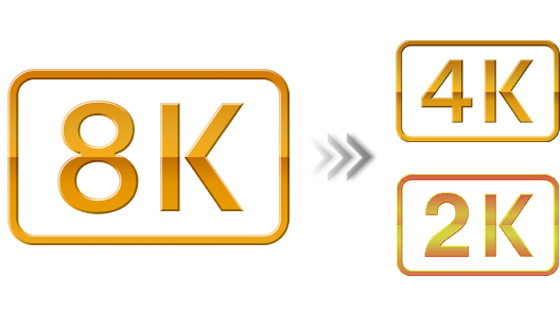
  • Skin softening can be used on up to three subjects in a shot and slightly blurs the skin for a more pleasing texture while still retaining essential sharpness on eyes and hair.
  • Manual white balance control is more intuitive when making adjustments and Auto WB has also been optimized for human subjects.
Fast and Intelligent AF
493-Point Phase-Detection AF
Covering the full sensor area, the Z8 uses the flagship 493-point phase-detection AF system to realize fast and accurate focusing performance. This system is benefitted by the high-speed communication of the Z interface along with the speed of the sensor that enables AF readings to occur at up to 120 fps.
This focusing system also supports working in low-light conditions with a Starlight mode that permits focusing down to -9 EV to greatly benefit astrophotography, concert, and other nighttime shooting applications. Also useful for working in difficult lighting conditions, Backlit AF uses separate pixels on the sensor for AF, allowing these areas to intentionally overexpose for focusing accuracy purposes without impacting the actual exposure of the recorded image.
A mainstay focusing mode in DSLRs, which debuted for mirrorless with the Z9, the Z8 also includes 3D Tracking AF that pairs with subject detection to lock onto fast, erratically moving subjects that move parallel and perpendicular to the camera. Additionally, there are three Dynamic-Area AF modes, with a range of focus area sizes, for capturing a broad variety of moving subject types.
Subject Detection with Deep Learning Technology
Utilizing inherited algorithms and deep learning technology from the Z9, including sophisticated Subject Detection, the Z8 can recognize a variety of distinct subject types, ranging from humans to animals to airplanes to bicycles. When working in Auto-Area AF, these subjects will automatically be detected, focused on, and tracked to ensure sharp focus when the subject is moving across the frame.

Eye-Detection AF, specifically, has been tuned for improved accuracy and refined recognition of eyes in the scene, regardless of how small or large they are within the image frame, and can also be used in conjunction with custom Wide-Area AF for different subject shapes and sizes.
Video Powerhouse
Internal 8K60 and 4K 120 Recording
Equally capable for video, the Z8 matches the Z9's recording capabilities here, as well, with a variety of resolutions and frame rates available up to 8K. Using full pixel readout, UHD 8K 30p video can be recorded with continuous shooting possible for approximately 2 hours 5 minutes.

UHD 4K and Full HD recording is also possible in a variety of frame rates, including full-frame 4K recording at up to 120p for slow-motion playback. Using an 8K area, oversampled UHD 4K recording is possible at up to 60p for increased sharpness and detail. Also, high-resolution frame grabs can be recorded in camera from 8K and 4K videos, for producing 33MP or 11MP stills, respectively.
12-Bit N-RAW and ProRes RAW Video
Internal 12-bit raw recording at up to 8.3K 60p in the N-RAW format is supported along with internal ProRES RAW HQ. Raw recording offers greater tonal and color latitude and can improve dynamic range, benefitting color grading needs and post-production flexibility.
  • N-RAW is Nikon's own raw recording format that offers impressively small file sizes compared to other raw formats as well as the ability to create MP4 proxies for more efficient previewing or transferring.
  • N-RAW recording is available at up to 8.3K at 60p or 24p; 4.1K at up to 120p; 5.3K at up to 60p with a 1.5x crop; and 3.8K at 120p with a 2.3x crop.
  • ProRes RAW recording is also available at up to 4.1K and 60p.
ProRes and H.265 10-Bit Recording
Internal recording is also supported with 10-bit color and 4:2:2 sampling in the ProRes 422 HQ and H.265 codecs, and H.264 and 4:2:0 color can be used depending on workflow needs. For more latitude when color grading in post, there is also a 10-bit N-Log setting as well as a Flat color profile. Additionally, HLG (Hybrid Log Gamma) can be used for creating HDR-ready content straight from the camera.
Recording Support
Aiding the impressive recording specs, the Z8 also incorporates a variety of useful recording tools and functions for use in productions:
  • Red REC frame indicator on EVF and LCD during recording to easily recognize when recording is being captured.
  • Dedicated video info display indicates various recording settings, such as frame size, frame rate, audio settings, codec, bit depth, and HDMI output settings. Some of these settings will also be visible on the camera's top control panel.
  • Focus peaking and zebra stripes are visual aids to help achieve sharp focus and accurate exposure.
  • Waveform monitor for realtime exposure analysis.
  • Fine ISO control in Manual mode for adjusting exposure in 1/6-stop increments.
  • Fast AF-ON function can be assigned to Fn buttons; it is now possible to assign two different AF speeds to different buttons.
  • Slow shutter speed video is supported, slower than 1/frame rate, for working in extreme low-light conditions or for creating intentionally blurred effects.
  • Timecode linking is possible when working with an optional timecode generator.
  • Complementing the video capabilities, the Z8 also supports 24-bit linear PCM sound recording and offers compatibility with external XLR microphones via the optional Tascam CA-XLR2d-AN digital adapter.
A Smaller Professional Body Design
Sleek, Modular, and Durable Construction
  • Deemed the true successor to the D850 DSLR and the smaller follow-up to the flagship Z9, the Z8 hits a sweet spot in terms of size and performance. It is 30% smaller than the Z9 and 15% smaller than the D850.
  • Compared to the Z9, with its built-in vertical grip, the Z8 takes on a more modular design, allowing you to keep it small for day-to-day shooting or pair it with the optional MB-N12 Power Battery Pack grip for improved ergonomics when shooting vertical and better battery life. Also, the smaller, lighter design makes the Z8 an ideal candidate for rigging or use on a gimbal for video use.
  • Dual card slots—one CFexpress Type B slot and one UHS-II SD slot—allow for flexible file saving. The CFx slot is suitable for data-intensive applications, like 8K recording and high-speed burst shooting, while the SD slot retains compatibility with the popular storage format. Additionally, the CFx B slot is also compatible with XQD memory cards.
  • Built using eco-friendly Seerebo carbon fiber and robust magnesium alloy, the Z8 manages to be both durable and lightweight, weighing just 2 lb.
  • Premium weather sealing protects against dust and moisture for confident use in harsh climates.
  • Included EN-EL15c battery offers approximately 340 frames per charge when primarily using the viewfinder or 370 shots per charge when primarily using the LCD monitor. The Z8 is also compatible with other EN-EL15-series batteries.
  • In-body Vibration Reduction now supports Synchro VR to achieve up to 6 stops of camera shake compensation when used with select Z lenses.
  • Helping to cut down on dust reaching the sensor, the Z8 incorporates a sensor shield that protects the sensor surface when changing lenses. For additional dust prevention, there is also a dual electro-conductive and fluorine coating on the optical filter covering the sensor.
  • Backlit buttons offer easier navigation and button recognition when working in low-light conditions.
Real-Live Viewfinder
  • Real-Live Viewfinder is an advanced EVF utilizing a 3.69m-dot OLED panel with adjustable luminance up to 3000 cd/m2 for clear visibility in bright conditions. This EVF also works in conjunction with dual-stream technology for blackout-free viewing when shooting continuously and it features a high fps function, which ups the EVF's refresh rate to 120 fps for smoother, lifelike viewing.
Four-Axis Tilting LCD
  • Like the Z9, the Z8 incorporates a unique 3.2" 2.1m-dot four-axis tilting touchscreen LCD that better supports working from high and low angles, regardless if shooting in the horizontal or vertical orientation. This screen's four-way tilting design allows for easier viewing from a variety of positions and the user interface orientation will also shift depending on how the camera is held.
Versatile Connectivity
Matching the professional build quality, the Z8 is fitted with a variety of connectivity options to suit various workflow needs:
  • Full-size HDMI port for outputting video to an external recorder or monitor
  • 3.5mm headphone and microphone ports for attaching an external microphone and for on-board audio monitoring
  • Two USB-C ports: one supports file transfers and tethering and the second is dedicated to power delivery and battery charging
  • USB-C communication terminal supports USB-LAN connectivity when paired with an optional USB-C to Ethernet adapter. This enables a 1000BASE-T wired LAN connection for transferring files over FTP
  • 10-pin port offers wide accessories and remote connectivity
  • Bluetooth and Wi-Fi (2.4 and 5 GHz) permit wireless transferring of files, remote camera control via a mobile device, and works in conjunction with the NX Mobile Air app for file management
Nikon NIKKOR Z 24-120mm f/4 S Lens (Nikon Z)
All-in-One Versatility
A truly versatile everyday lens, the NIKKOR Z 24-120mm f/4 S, from Nikon, is a wide-angle to short-telephoto zoom covering an extremely useful range of focal lengths to benefit a variety of applications from landscape to portraiture. The constant f/4 maximum aperture offers consistent performance throughout the zoom range and the lens features an advanced optical design for high sharpness and clarity. As a go-to lens for a majority of needs, this lens also sports a relatively compact and lightweight design.
Optical Design
  • Featuring a combination of three ED elements, one aspherical ED element, and three aspherical elements, both chromatic and spherical aberrations are effectively eliminated throughout the zoom range for notable sharpness and clarity.
  • ARNEO and Nano Crystal Coats are used to prevent ghosting, reflections, and flare in order to realize improved contrast and clarity when working in strong lighting and backlit conditions. The Nano Crystal Coat controls incidental light from a diagonal direction while the ARNEO Coat controls incidental light from a vertical direction.
Sample Photo
Autofocus
  • Multi-focus system incorporates two separate AF drive units, which are synchronized, to deliver especially fast and accurate focusing throughout the zoom range. This system uses stepping motors, which offer impressively smooth and quiet autofocus performance that is well-suited to both stills and video applications.
  • Full-time manual focus override is also possible and an internal focusing design is used, where only the internal lens groups are moved during focusing, to maintain the overall length of the lens during use and to promote faster focusing speeds.
  • Dedicated manual focus ring at the rear of the lens for tactile and precise control over the focus position.
  • Minimum focusing distance of 1.1', along with a maximum magnification of 0.39x, benefits working with close-up subjects.
Sample Photo
Handling and Design
  • Programmable Control Ring can be used to control aperture, ISO, or exposure compensation.
  • Assignable L.Fn button works in conjunction with camera-based Fn buttons to provide seamless points for quickly changing exposure settings and other functions.
  • Dust- and moisture-resistant lens barrel, along with a front fluorine coating, benefits the lens' use in inclement conditions.
Nikon FTZ II Mount Adapter

Featuring a streamlined design with minimal projections, the Nikon FTZ II Mount Adapter offers the same functionality as the original FTZ but with a sleeker design to suit its use on cameras featuring a battery grip. This adapter removes the tripod mount and has a reduced overall size for more comfort when shooting with cameras with a built-in or attached grip or wireless transmitter.

As an adapter, the FTZ II enables the use of nearly any F-mount lens on Z-mount mirrorless camera bodies. While compatible with approximately 360 distinct F-mount lenses, this adapter is especially ideal for use with over 90 AF-S and AF-P type D, E, and G-type lenses, where it fully maintains autofocus and auto-exposure capabilities for seamless use of the SLR lenses on the mirrorless body. The adapter is built from magnesium alloy and is weather-sealed.

Lens Compatibility
Autofocus Lenses
  • AF-S Type G, E, and D; AF-P Type G and E; AF-I Type D: Full support of autofocus, MF (with electronic rangefinder support), full auto-exposure modes, and exposure metering
  • AF Type G and D: Manual focus only (with electronic rangefinder support), full auto-exposure modes, and exposure metering
  • Other AF Lenses: Manual focus only, full auto-exposure modes, and exposure metering
Manual Focus Lenses
  • PC-E NIKKOR Series and PC NIKKOR 19mm f/4E ED: Manual focus only, full auto-exposure modes, and exposure metering
  • PC Micro 85mm f/2.8D: Manual focus only, manual exposure only, and exposure metering
  • AI-P: Manual focus only, full auto-exposure modes, and exposure metering
  • Non-CPU AI-, AI-Modified NIKKOR, or Nikon Series E Lenses: Manual focus only, aperture-priority and manual exposure modes, and all exposure metering modes except for highlight-weighted metering
Nikon Z8 Mirrorless Camera
$1,950.00
Leica SL2-S Mirrorless Camera (Leica SL2-S Mirrorless Camera)

Mixing Leica's traditional aesthetic with contemporary, hybrid functionality, the SL2-S is a well-rounded full-frame mirrorless camera with apt photo and video capabilities. Revolving around Leica's first BSI CMOS sensor, the 24.6MP sensor offers DCI/UHD 4K 10-bit video recording, broad sensitivity from ISO 50-100,000, and vivid image quality with low noise.

The sensor is complemented by the refined Maestro III image processor, which avails high-speed performance and versatility throughout the camera system. Full-res DNG continuous shooting at up to 25 fps is possible along with 4K video at up to 60p or Full HD at up to 180 fps. And, emphasizing the hybrid ethos, Leica has also implemented separate Photo and Video menu systems for more intuitive navigation and settings control when working in either mode.

Complementing both photo and video applications, a 5-axis sensor-shift image stabilization system minimizes the appearance of camera shake for sharper handheld shooting. Also, the sensor's design incorporates a Leica Object Detection AF system, which uses 225 selectable AF areas for fast and accurate performance.

Beyond updated imaging, the SL2-S also features durable, weather-sealed body design that includes a 5.76m-dot EyeRes OLED EVF and a large 3.2" 2.1m-dot touchscreen LCD. A top status LCD is also featured for quick recognition of shooting settings and dual UHS-II-compatible SD memory card slots offer file-saving flexibility. Additionally, built-in Wi-Fi and Bluetooth work in conjunction with the Leica FOTOs app for wireless file transferring and remote camera control.

24.6MP Full-Frame BSI CMOS Sensor and Maestro III Processor
Featuring a highly versatile full-frame 24.6MP BSI CMOS sensor, the SL2-S has apt imaging capabilities for both stills and video applications. Coupled with the Maestro III image processor, fast performance is ensured along with a wide ISO 50-100,000 sensitivity range. The sensor's BSI design also promotes especially clean and smooth color and tonal rendering, along with reduced noise when working at higher ISO settings. The sensor's design also omits a low-pass filter in order to maintain the highest degree of sharpness and resolution. Additionally, beyond sheer image quality, the processing power affords quick continuous shooting, up to 25 fps with an electronic shutter or 9 fps with a mechanical shutter, and a 4GB buffer enables near limitless burst shooting of full-resolution DNG or JPEG files.
DCI/UHD 4K 10-Bit Video Recording
An immensely capable video camera, the SL2-S offers both DCI and UHD 4K recording at up to 60p using either the full-frame sensor area or an APS-C/Super 35mm crop. Internal 10-bit 4:2:2 recording is supported for frame rates up to 30p, and 60p is available at 8-bit 4:2:0. When recording externally via the full-size HDMI port, 10-bit output is available at all frame rates for DCI and UHD 4K. Full HD recording is also supported with high-speed frame rates up to 180 fps for slow-motion playback. Additionally, there is no imposed recording limit at any resolution or frame rate, allowing for extended recording times.

Complementing the video quality, a dedicated Hybrid Log Gamma (HLG) mode and L-Log gamma profile can be used to for in-camera HDR output or for expand highlight and shadow detail and greater flexibility when color grading during post-production. There are also integrated viewing LUTs for improved color control and accuracy. Video recording can be split into 1-minute segments to avoid data loss, and a color bar provides reference for correct color grading and sound control in postproduction. Additionally, benefitting audio quality, support for an external microphone and headphones are also available via dedicated 3.5mm jacks. Video recording can be split into 1-minute segments to avoid data loss.
Body Design
  • Used in conjunction with other members of the L-Mount Alliance, the L lens mount is a versatile interface with a mount diameter of 51.6mm and a flange distance of 20mm for working with a broad range of optics.
  • The impressive EyeRes EVF is a high-resolution 5.76m-dot OLED finder offering a clear 0.78x configurable viewing magnification along with a smooth 120 fps refresh rate and 0.005 sec lag.
  • Large 3.2" 2.1m-dot touchscreen LCD is a bright, clear means for live view shooting as well as playback and menu navigation. This screen also uses Gorilla Glass for a highly durable design.
  • Separate photo and video menu systems eliminate the need to readjust settings when switching from photo to video modes, resulting in a more intuitive workflow, especially when mixing content types in a single shoot.
  • In addition to the rear LCD, a 1.28" top status LCD can also be used for quickly reviewing shooting settings, even when the camera is powered off.
  • Durable, weather-sealed magnesium-alloy construction is splash, dust, and freezeproof (IP54-rated) to accommodate working in harsh weather conditions and trying environments.
  • Dual UHS-II-compatible SD memory card slots offer flexible image storage, allowing you to segregate raw and JPEG files to different cards, save duplicate files to both cards, or simply double your storage space with overflow recording.
  • A USB Type-C port allows for fast file transferring; tethering, with full support for Capture One 21 and Adobe Photoshop Lightroom; and high-speed in-camera battery charging. Additionally, a full-size HDMI Type-A port benefits video applications, and 3.5mm microphone and headphone jacks suit advanced audio recording needs.
  • BP-SCL4 rechargeable lithium-ion battery is rated for approximately 510 shots per charge.
  • Built-in Wi-Fi, when used in conjunction with the Leica FOTOS app for iOS and Android, permits sharing imagery directly to a linked mobile device and also enables remote control over the camera and remote shooting via a live view image. Additionally, Bluetooth LE helps to maintain a permanent connection between the mobile device and the camera, enabling remote waking of the camera and automatic connection anytime within range.
Sensor-Shift Image Stabilization
Helping to achieve the utmost sharpness when photographing handheld, 5-axis sensor-shift image stabilization compensates for a broad range of movement types to render sharper, clearer imagery.

Using sensor-shift stabilization technology, the SL2-S also features a Multishot mode to capture and compile eight separate exposure to create a single 96MP file. Suitable for static subjects and when working on a tripod, this mode creates a more highly detailed and color accurate image than a single shot alone can produce and produces an image with a 12000 x 8000-pixel resolution.
Object Detection Autofocus System
For accelerated autofocus performance, a Leica Object Detection AF system quickly calculates the distance to subjects and adjusts the focusing position with sensor and lens communication occurring at rates up to 480 fps. This contrast-detection type focus method benefits both still and video recording modes, as well as subject tracking applications through the use of a Body Detection mode. It also features 225 selectable AF areas, which provide excellent control over where the camera will focus, and Automatic Follow Focus offers three focus points for automatic focus shift during video recording.
Leica SL2-S Mirrorless Camera
$2,850.00
Canon EOS 5D Mark IV DSLR Camera (Canon EOS 5D Mark IV DSLR Camera)

Continuing on in their legacy of powerful workhorse cameras, Canon has released the 5D Mark IV DSLR which is an outstanding still photography option and an able 4K-capable video machine. This multimedia maven offers a newly developed 30.4MP full-frame CMOS sensor paired with the DIGIC 6+ image processor in order to balance fine detail and resolution with low-light performance and sensitivity. It is able to work within a native range of ISO 100-32000, which can then be expanded to an impressive ISO 50-102400, for sharp, low-noise images in a variety of conditions. Along with these improvements to image quality, users will enjoy a performance boost across the board with an enhanced AF system, built-in Wi-Fi, NFC, and GPS, and much more.

In order to deliver detailed images quickly and effectively the 5D Mark IV leverages the power of the DIGIC 6+ image processor, which can handle up to 7 frames per second during continuous shooting. It also uses a 150,000-pixel RGB+IR metering sensor to evaluate the scene and subjects for accurate exposures under a variety of different lighting conditions. An improved 61-point High Density Reticular AF furthers the camera's speed by tracking and locking onto subjects quickly and accurately for tack sharp photos. A new AF area select button is now available as well for near immediate access to this setting.

Video benefits from the addition of Dual Pixel CMOS AF and Movie Servo AF to smoothly rack focus during a shot. Shooters can even make use of the 3.2" 1.62m-dot touchscreen LCD to simply tap to adjust the focus point. Furthermore, now that the camera has DCI 4K (4096 x 2160) video recording at up to 30 fps, users can snag 8.8MP stills from the video for an even faster capture option. Tied into the Dual Pixel sensor architecture is a brand new feature for Canon: Dual Pixel RAW, which allows for fine tuning of certain image parameters, including bokeh shift and focus micro adjustment, after the image is taken.

The body has been further refined for comfort and ease of access, as well as durability and weather resistance. The Canon N3 remote port has been relocated to the front of the camera body and they have added both GPS and Wi-Fi with NFC to make this model a connected camera.

30.4MP Full-Frame CMOS Sensor and DIGIC 6+ Image Processor
In line with previous members of the main 5D series, the Mark IV attempts to balance high resolution with low-light performance with a newly developed 30.4MP full-frame CMOS sensor. This provides a beneficial increase in overall resolution without compromising on sensitivity. Additionally, thanks to the DIGIC 6+ image processor it is paired with, it offers impressive performance within a native range of ISO 100-32000, which can be expanded to ISO 50-102400.

Versatility is key with the 5D, as it needs to be able to tackle landscapes and weddings with equal ease. By using a 150,000-pixel RGB+IR metering sensor shooters will be able to more comfortably rely on the camera to capture difficult scenes. This sensor also has face detection as well as flicker detection which can ensure proper exposure in less-than-ideal lighting situations. Along with this, the camera offers an improved continuous shooting rate of 7 fps, making it a great option for events and action.
High Density Reticular AF and Dual Pixel CMOS AF Systems
Ensuring your subject is tack sharp, the 5D Mark IV incorporates an enhanced High Density Reticular AF system, which offers 61 phase-detect points, with all points sensitive to f/8 and 41 of which are cross-type. The center point can function down to -3 EV for working in extremely dim lighting. Compared to previous versions, this sensor has expanded vertical coverage of 24% on the peripherals and 8% in the center in order to better track and locate subjects in the frame.

In addition to advanced tracking and focusing while using the optical finder for stills, Live View and video can now use Dual Pixel CMOS AF on the actual imaging sensor. This offers about 80% coverage of phase-detection autofocus for faster and more accurate focusing in these modes. It is ideal for video as users will enjoy smoother rack focusing without the downsides normally encountered with contrast-based systems. Also, this works well with the touchscreen functions, allowing shooters to just tap to adjust focus.
DCI 4K Video Recording
Designed for both professional stills shooting and video recording, the 5D Mark IV supports DCI 4K (4096 x 2160) resolution recording at up to 30 fps at 500 Mbps, along with Full HD 1080p shooting at 60 fps and HD 720p at 120 fps for slow motion playback. When recording in-camera, 4K video has 4:2:2 sampling and 8-bit color depth, while Full HD 1080p footage has 4:2:0 sampling. Uncompressed Full HD 1080p video can also be saved via HDMI to an optional external recorder with 4:2:2 color sampling. 4K video is recorded using a central 4096 x 2160 area of the sensor at a 1.74x crop in order to record video with an ideal 1:1 pixel sampling ratio, while Full HD recording makes use of the entire full frame.

Audio can be recorded using the on-board stereo microphone or an optional external mic can also be used via the 3.5mm mic jack. Real time audio monitoring is possible, too, via the 3.5mm headphone jack. The 4K video recording also avails the ability to take 8.8MP still frame grabs during playback on the rear touchscreen and save them as single images.
Dual Pixel RAW
First implemented here on the 5D Mark IV, Dual Pixel RAW allows photographers to record all the information the sensor's unique pixel architecture can deliver, providing a way for fine adjustments to be made after the image is taken. These adjustments include focus fine tuning that can help you ever-so-slightly adjust the focus point to bring out extra details, shift bokeh around for improved composition, and reduce the impact of ghosting on your photos. This requires the use of Canon's Digital Photo Professional 4.5 software.
Body Design
  • A large 3.2" 1.62m-dot Clear View II LCD monitor is available and features an anti-reflective design for bright, vivid image playback and live view shooting, and its touchscreen interface can be used for intuitive touch-to-focus control and adjusting settings in the menus.
  • A dedicated AF mode selection button located beneath the rear joystick offers another avenue for accessing settings, allowing for fast, intuitive access to commonly changed options.
  • Dual CompactFlash and SD memory card slots allow you to extend your file saving capabilities by permitting overflow recording or in-camera file type separation while shooting.
  • An Intelligent Viewfinder II uses a pentaprism design and offers a bright means for viewing. When using the viewfinder, AF points are highlighted in red for greater visibility in low-light conditions, and the finder can also be configured to display a range of other shooting aids, such as an electronic level, grid, flicker detection, white balance, metering mode, AF information, and other settings.
  • A Mirror Vibration Control System helps to minimize mechanical vibrations in order to better ensure sharpness during long exposures or fast continuous shooting bursts.
  • A robust magnesium alloy body design is both dust- and weather-sealed to permit working in harsh environments.
Other Camera Features
  • A built-in GPS module allows you to geotag imagery in-camera as well as auto time sync with the Universal Time Code via satellites. This module is compatible with American GPS, Russian GLONASS, and Japanese quasi-zenith Michibiki satellites for a wide coverage of support.
  • Digital Lens Optimizer technology compensates for a range of optical defects from various lenses, including chromatic aberration, distortion, peripheral brightness, and diffraction, and the camera can store lens data in order to avoid having to re-register lenses prior to each use. The camera can handle this process in real time, delivering JPEGs with the corrections already applied.
  • A built-in intervalometer permits the creation of time-lapse imagery and supports recording 1-99 consecutive frames in pre-selected intervals from 1 second to 99 hours 59 minutes and 59 seconds. Users can also choose to set the camera to unlimited frames.
  • Built-in Wi-Fi and NFC connectivity enable wireless sharing, control, and image transfer with a compatible smart device as well as the CS100 Connect Station.
Canon EOS 5D Mark IV DSLR Camera
$1,550.00
Canon EOS R5 Mirrorless Camera (Canon EOS R5 Mirrorless Camera)

For the professional image-maker who needs resolution, speed, and video capabilities, the Canon EOS R5 full-frame mirrorless camera features a newly developed 45MP CMOS sensor, which offers 8K raw video recording, 12 fps continuous shooting with a mechanical shutter, and is the first EOS camera to feature 5-axis sensor-shift image stabilization.

Beyond just resolution, the sensor also pairs with the refined DIGIC X image processor to usher in a new generation of Dual Pixel CMOS AF for quick, smooth, and intelligent focusing performance using 1053 selectable points that cover the entire field of view. This focusing system has also been updated to make use of Deep Learning technology for improved subject tracking as well as precise eye, face, and head-detection for both people and animals.

Complementing the imaging assets, the R5, while sporting a new design, also feels familiar to EOS 5-series users. An especially high-resolution 0.5" 5.76m-dot electronic viewfinder provides a realistic 120 fps refresh rate while the 3.2" rear touchscreen LCD monitor sports a vari-angle design to accommodate vlogging needs as well as benefit working from high and low angles. A top status LCD makes for an intuitive workflow and the camera also incorporates dual memory card slots—one CFexpress Type B, one SD UHS-II—along with Bluetooth and Wi-Fi wireless connectivity.

45MP Full-Frame Sensor and DIGIC X Processor
Built around a newly developed 45MP full-frame CMOS sensor, the EOS R5 offers both high-resolution stills and video output and the fine-tuned DIGIC X image processor complements this with a wealth of speed. Sensitivity from ISO 100-51200, which can be expanded to ISO 102400, suits working in a variety of lighting conditions while quick continuous shooting up to 12 fps with a mechanical shutter, or silent 20 fps with an electronic shutter, is ideal for working with moving subjects.
8K30 Raw and 4K120 Video Recording
Benefitting more than just stills, the 45MP full-frame sensor also enables impressively high-resolution DCI 8K 30 fps raw video recording internally along with 4K recording up to 120 fps in 4:2:2 10-bit with Canon Log. HDR-PQ recording is possible, too, in-camera HDR production and external recording, via the HDMI port supports a clean 4K output at up to 60 fps. Both All-I and IPB compression options are available, along with the ability to use Dual Pixel CMOS AF when shooting at up to 8K raw.
HDMI 8K Raw Output to Atomos Ninja V+
Firmware update 1.4.0 adds the ability to output 8K30, 10-bit video for ProRes raw recording to the Atomos Ninja V+ recorder over an optional HDMI cable. (Please note, the recorder may become hot.)
Dual Pixel CMOS AF II
An updated Dual Pixel CMOS AF II features 1053 selectable focusing points, which cover approximately 100% of the image frame for wide and even coverage. This focusing system offers smooth and fast focusing performance in a similar manner to how a camcorder acquires focus. This system integrates two separate photodiodes within each pixel to provide a broad and dense network of phase-detection gathering elements across a majority of the image sensor to reduce focus hunting for faster, more direct control of focus placement. When working with still imagery, this focusing system works to acquire focus quickly and accurately, making it ideally suited to shooting and tracking moving subjects so that critical focus is attained with each shot. When shooting video, a Movie Servo AF mode offers smooth and natural focusing when changing from different subjects or different distances within the scene, as well as the ability to specify tracking sensitivity, AF speed, and Face Tracking priority. Benefited by the Touch AF system, rack focus is possible simply by touching elements within the scene on the touchscreen in order to change focus in an intuitive manner. Subject tracking in movies is also heightened due to the Dual Pixel CMOS AF system's ability to recognize subjects and maintain focus when working within changing or cluttered scenery.

Subject tracking has also been benefitted through the use of Deep Learning technology, which helps to gradually refine the focusing system's ability to quickly and accurately recognize both people and animal subjects. This technology also supports the more refined eye, face, and head detection functions, for both people and animals, that are well-suited for portraiture applications.
Sensor-Shift Image Stabilizer
A first for EOS cameras, the R5 incorporates five-axis sensor-shift image stabilization that compensates for up to an impressive eight stops of camera shake for truly effective compensation of camera shake to suit handheld shooting with slower shutter speeds. This stabilization system also works in concert with lens-based optical image stabilization for both native RF lenses and adapted EF lenses.
Body Design and Wireless Connectivity
  • High-resolution 5.67m-dot 0.5" electronic viewfinder provides a bright and detailed means for eye-level viewing and the quick 120 fps refresh rate offers natural motion rendering for a more realistic viewfinder experience.
  • Rear 3.2" 2.1m-dot LCD touchscreen features a vari-angle design that benefits front-facing recording, such as for vlogging needs, as well as working from high and low shooting angles.
  • Top status LCD can be used to quickly review camera and shooting settings.
  • CFexpress Type B and SD UHS-II memory card slots are featured for flexible storage needs; the CFexpress slot is ideal for 8K video and high-speed, high-resolution burst shooting needs while the SD card slot retains a familiar form factor for wide compatibility.
  • Both a 3.5mm headphone and a 3.5mm external microphone port are featured for improved audio monitoring and recording capabilities.
  • Refined body design incorporates four distinct control dials across the body for intuitive tactile control and a joystick controller is used on the back of the camera for fast and intuitive focus point selection and menu navigation.
  • Durable, weather-sealed body design is built to handle tough working conditions and inclement weather.
  • Both 5 GHz and 2.4 GHz Wi-Fi bands are available for fast file transferring to a mobile device and Bluetooth is also available to provide constant device connection via the Canon Camera Connect app.
Canon EOS R5 Mirrorless Camera
$1,950.00
Canon EOS R5 C Mirrorless Cinema Camera (Canon EOS R5 C Mirrorless Cinema Camera)
For all the wedding videographers, drone camera operators, and multimedia journalists who have professional photo still and cinema video production needs, get ready for a new type of shooting experience with the EOS R5 C Mirrorless Cinema Camera from Canon. With a simple switch, the R5 C is a full featured still photo camera with all the settings of the R5 EOS mirrorless camera. When switched in the other direction, it becomes a full-frame 8K60 Cinema EOS camera that internally records 12-bit Cinema RAW Light footage. There's no more need to carry a second camera with you to your production when stills and video are available within a single compact design.

The R5 C enhances a number of features in comparison to its siblings the R5 and C70, including 4K120 recording, HDMI RAW output, Canon Log 3 HLG/PQ support, unlimited recording time, a timecode port, Dual Pixel CMOS AF with eye detection, an active cooling system, a high-power LP-E6NH battery, 13 reassignable buttons, and a multi-function shoe for XLR adapters. The camera also retains the reliable features of those cameras such as Wi-Fi/Bluetooth, footage compatibility with DaVinci Resolve and Canon apps, an electronic RF mount, CFexpress/SD card slots, a similar button layout, and more. The EOS R5 C is also moisture and dustproof to the same level as its cinema cousin, the EOS C70. And all this is packed into a tiny 1.7 lb body that is just asking to become your go-to drone camera.

Common Features & Technology as the EOS R5
Canon's 45MP full-frame CMOS imaging sensor is at the heart of the EOS R5 C camera's superb image quality, which also leads the way for impressive 8K60 RAW cinematic video shooting.
  • Focus and speed are paramount in the EOS R5 C camera, providing impressive still-image continuous capture at speeds of up to 20 fps
  • Dual Pixel CMOS AF II capability, to track split second movements of even the most elusive subjects
  • With 1053 Automatic AF zones, it is easy to photograph people with the use of Eye, Face, and Head Detection AF, or intuitively track the whole body, face, or eyes of cats, dogs, or birds with Animal Detection AF
  • For those with the need for speed, Canon has also included still-image vehicle subject detection to assist with accurate tracking of cars and motorcycles
  • Connectivity like 5 and 2.4GHz Wi-Fi and Bluetooth is also included for the transfer of still images
internal-cinema-raw-light-up-to-8k-60p
Video Control for the Dedicated Video Professional
As soon as the EOS R5 C's main switch is moved to the "video" position, the familiar Cinema EOS menu system and interface take over. Expected high-level video features such as waveform monitors, video codec options, and extensive audio control become available, greatly expanding the EOS R5 C's video potential for the experienced camera operator or video content creator. During "photo" operation, menus are nearly the same as they are on the EOS R5 camera.
Ergonomic EOS Design
The EOS R5 C camera's body design is incredibly compact and lightweight. When paired with a Canon RF lens (or EF lens using the Mount Adapter EF-EOS R), it offers outstanding performance that fits easily and comfortably in your hand, making handheld shooting a breeze whether shooting video or still images. Its electronic viewfinder is optically extended, for eye-level viewing similar to the conventional EOS R5 camera, and it uses the same ergonomic grip design.
common-features-technology-eos-r5
CMOS Sensor and DIGIC X Processor
The 8K CMOS sensor and DIGIC X processor produce high-quality video at up to 8K60 resolution. Use of the Cinema RAW Light format with its high-efficiency mode enables internal card recording without an external recorder. The EOS R5 C camera supports HDR recording in Hybrid Log Gamma (HLG) and Perceptual Quantization (PQ) format, which helps ensure full color rendition and wide latitude with a great range from black to pure white, outstanding for the delivery of livestreams, broadcasts, and post-production projects.
supports-8K-60P-Internal-raw- recording
8K60 RAW Recording
Cinema RAW Light in 8K is amazing for post-production grading and archiving, or MP4, which is optimized for faster online use. 5.9K in Super 35mm mode and 2.9K in Super 16mm mode are also available for internal recording to CFexpress cards. Cinema RAW Light video files have been optimized for better efficiency to achieve 12-bit recording in all frame rates. Thanks to three newly developed Cinema RAW Light modes (High-quality RAW HQ, standard-quality RAW ST, and Light recording RAW LT), users can select the RAW video mode according to their shooting needs. Lighter, smaller proxy video files can also be recorded while shooting 8K.

The EOS R5 C camera supports RAW output via HDMI and ProRes RAW recording with compatible external recorders such as Atomos devices. By connecting the EOS R5 C camera with a supported external recorder, users can shoot in Apple ProRes RAW at up to 8K30. Proxy data can also be simultaneously recorded to an SD card in-camera, providing efficient post-production operations.
Note:
Only Atomos NINJA V+ is supported as of January 2022. A separate HDMI cable is required to connect to the NINJA V+.
supports-8k-hdr-recording-hlg-pq-01
Different File Formats and Simultaneous Recording
Along with Cinema RAW Light, which provides light data sizes for RAW recording, the EOS R5 C camera supports MXF-based XF-AVC as well as the highly versatile MP4. The EOS R5 C camera is also capable of recording two independent video files simultaneously, such as Cinema RAW Light and MP4 at various resolutions including 4K and HD, as well as lightweight proxy files for various professional workflows. XF-AVC offers robust 10-bit 4:2:2 files in a .MXF wrapper for simple compatibility with non-linear editing systems (NLEs) and existing workflows.
internal-cooling-fan-enables-non-stop-8k-60p recording
Internal Cooling Fan Enables Nonstop 8K60 Recording
The EOS R5 C camera features a cooling fan built into the body, forcing out the heat from inside, enabling continuous and virtually limitless shooting of high-definition 8K60 video without interruption.
expanded-interface-for-professional-needs
Expanded Interface for Professional Needs
The EOS R5 C camera provides a timecode input/output terminal for easy synchronization when shooting with multiple cameras and other interfaces. A cable protector is also included as standard to prevent cable disconnection or damage to the terminal if strong force is applied when connecting interface or HDMI cables.
Multi-Function Shoe for Audio Recording
Canon's multi-function shoe with digital audio interface supports the optional TASCAM CA-XLR2d-C professional audio XLR microphone adapter for up to 4-channel audio. This optional accessory adds two full-sized XLR terminals with phantom power and shotgun mic mount, enabling digital 4-channel and 24-bit audio recording to meet professional video production needs.
Multiple Power Options
The addition of Cinema RAW Light recording at higher resolutions and frame rates demands additional power for full lens functionality. In full-frame 8K60, Super 35 5.9K60, and Super 16 2.9K120 with Cinema RAW Light recording, standard LP-E6NH, LP-E6, or LP-E6N battery packs will not be able to power the electronics of RF lenses or EF lenses attached via an adapter. You can use purely mechanical lenses without issue at these settings.

To gain full electronic lens functionality with all Cinema RAW Light resolutions and frame rates, you can use utilize the CA-946 power adapter with the new DR-E6C DC coupler for mains or pro D-Tap battery power sources, or you can use a power bank such as the Anker PowerCode 26800mAh PD or omnicharge Omni Mobile 25600mAh.

13 Full-Featured Assignable Buttons
The EOS R5 C camera is designed with operational flexibility in mind, conforming to each individual professional workflow, including 13 marked, assignable buttons that allow for user-friendly customized operation.
4k-and-2k-oversampling
4K and 2K Oversampling
The EOS R5 C camera reads out signals for all effective pixels from its full-frame 8K sensor, enabling 4:2:2 10-bit high-definition recording through oversampling during 4K and 2K video recording. A high-definition debayer algorithm has been included and the 4K generated from the abundant RGB data of the 8K sensor enables more refined imaging capabilities with less incidence of moiré, false colors, "jaggies", and noise.
up-to-4k-120p-slow-fast-motion-recording-mode-4-2-2-10-bit
Up to 4K120 Slow and Fast Motion Recording Mode in 4:2:2 10-Bit
The EOS R5 C camera can record High Frame Rate (HFR) movies at up to 120p at DCI/UHD 4K resolutions (4096 x 2160/3840 x 2160) in 4:2:2 10-bit without cropping the sensor. Great for shooting scenes full of fast-paced action, the EOS R5 C camera's fast and intuitive autofocus remains enabled even during HFR recording, making it ideal when shooting from a gimbal or drone, delivering outstanding focus accuracy at HFR or at common frame rates.
Simultaneous Audio Recording Enabled with HFR
Unlike some other cameras where audio is not recorded during HFR shooting, the EOS R5 C camera can record .WAV audio as a separate file from video, virtually eliminating the need for separate audio recording and delivering HFR video and audio files in one convenient device when shooting slow motion or fast motion video.
Canon Log 3 Expands Expressive Possibilities
The EOS R5 C camera features Canon Log 3, which is found in many Canon cameras and works with multiple Canon EOS and Cinema EOS cameras. The wide dynamic range can be used for a wider range of grading after shooting. Canon Log 3 is a gamma that is designed for simple grading, such as tightening dark areas and adjusting tones. It carries on Canon Log's ease of use with less noticeable noise. It can also be used when shooting with other Cinema EOS system cameras such as the EOS C300 Mark III and EOS C70 cameras.
Enhanced Image Stabilization
Enhanced image stabilization is achieved through coordinated control when Canon's RF lenses with optical IS are combined with the EOS R5 C camera's electronic IS when shooting XF-AVC or MP4 formats. With an RF lens that has optical IS and the electronic IS in the EOS R5 C camera, coordinated control helps achieve the optimum hand-shake correction effects. This helps achieve better anti-vibration performance than with conventional IS-equipped EF lenses (using optional Mount Adapter EF-EOS R) and electronic IS together.
Canon VR with RF5.2mm F2.8 L Dual Fisheye Lens Support and Workflow
The EOS R5 C camera is an excellent camera pairing with Canon's RF5.2mm F2.8 L Dual Fisheye Lens to achieve stereoscopic 3D 180° VR video (viewing in 3D requires the use of a compatible Head Mount Display). A plug-in for Adobe Premiere Pro and Canon's EOS VR Utility are available to streamline the workflow from shooting to editing.
dual-pixel-cmos-af-itr-af-x-01
Dual Pixel CMOS AF with iTR AF X
Canon's Dual Pixel CMOS AF technology uses every pixel on the imaging sensor to detect focus, and also to capture actual image information achieving both high precision focusing and high image quality. With most Canon RF and EF lenses, AF for video can be carried out over approximately 80% of the vertical and horizontal area of the screen.
  • Touch AF allows positioning an AF point by simply touching the LCD screen, in addition to quick manual positioning with the 8-way multi-controller on the rear of the camera.
  • The camera features Eye AF/Head Detection AF, developed with the use of deep learning technology to improve subject tracking.
  • It also provides human detection (eyes/face/head), allowing it to track subjects accurately even when AF control is not available.
  • Users can track focusing as desired depending on their subject or shooting situation. A wide variety of AF modes enable autofocus shooting that flexibly responds to the subject's movement.
  • Users can leave focusing to the camera and concentrate on their camera work.


Still Imaging Features
High Still-Image Quality Featuring a 45MP Full-Frame CMOS Sensor & DIGIC X Processor.
Still-imaging features and operation are nearly identical to Canon's EOS R5 camera. The EOS R5 C camera features the same Canon-developed CMOS sensor with approx. 45 effective megapixels, and a DIGIC X Image Processor to enhance the speed of operations across the board. This means fast, efficient performance and phenomenal image quality for big prints, impressive video, and more.
DIGIC X Image Processor with an ISO Range of 100-51200; Expandable to 102400
Delivering high standard and expanded ISOs (for still images), and a broad range of options to help enhance shooting in varied and fast-changing lighting situations, the EOS R5 C camera can shoot at expanded sensitivities down to ISO 50 (L) and up to 102400 (H).
High-Speed Continuous Shooting
  • High-speed continuous shooting of up to 12 fps with Mechanical Shutter and up to 20 fps Electronic (Silent) Shutter
  • High-speed continuous shooting with full AF subject detection and tracking, at all still-image quality settings
  • A high-precision Dual Pixel CMOS AF system allows the EOS R5 C camera to reliably capture approximately 100% of the still-image area, with most Canon lenses
Same Subject Detection and Tracking AF as the Canon EOS R5
The same subject detection and tracking AF as the Canon EOS R5 Camera, even at shooting speeds as fast as 20 fps.
dual-pixel-cmos-af-itr-af-x-02
Head and Eye Detection
Select "People" as the EOS R5 C's "subjects to detect," and like the EOS R5, it can focus on a detected person's eyes, face, head (if a face is obscured), or even entire body if a head cannot be detected.
Animal Detection
For still images, the same revolutionary Animal Detection AF as the EOS R5 can identify and focus upon eyes, faces, or bodies of birds, cats, and dogs, and can do so over virtually the entire image area with many Canon lenses. This opens up game-changing possibilities for wildlife images, even with subjects as challenging as birds in flight.
Vehicle Detection
Carried over from the high-performance Canon EOS R3 camera, the EOS R5 C adds Vehicle Detection AF as a subject detection option, during still-image shooting. Cars and motorcycles, especially in racing applications, can be identified and tracked, even at high speeds. User-selectable Spot Detection lets the R5 C's AF detect the helmets of an exposed rider or driver, and put focus upon them, instead of the leading edge of the vehicle.
AF Area Flexibility
Select the size of the active AF area from a precise single AF point to the entire available AF area and rapidly move a user-selected area via the 8-way multi-controller on the back of the camera. The EOS R5 C has the same range of choices for still-image AF method selection as the EOS R5 camera.
AF Area Coverage of Approx. 100% x 100% for Still Images
The EOS R5 C camera features an expansive focus area of approximately 100% horizontal and 100% vertical when working with select RF and EF lenses, during still-image shooting. With older EF lenses, or with EF Extender types I and II, the EOS R5 C focuses on approx. 80% horizontally and 80% vertically of the image. This means fast and impressive focusing even when composing your subject far from the center of the frame.
EV -6 Low-Light Autofocus
Great for night photography or in very low-light settings, the EOS R5 C camera's brilliant AF can operate for still images in light as dim as a light rating of EV -6 where other AF systems may fail or search. Still-image AF is possible with lens + Canon RF tele extender combinations having maximum effective apertures as slow as f/22 - meaning AF is still possible with the RF 800mm f/11 IS STM + RF 2x Extender.
Canon EOS R5 C Mirrorless Cinema Camera
$2,150.00
Hasselblad X1D II 50C Medium Format Mirrorless Camera (Hasselblad X1D II 50C Medium Format Mirrorless Camera)

Continuing to take medium format out of the studio, the Hasselblad X1D II 50C is a sleek and exceptionally capable mirrorless camera, characterized by its thoughtful design and powerful imaging capabilities. This second-generation X System camera shows a revised and enhanced feature-set designed to quicken performance and make overall operation even more intuitive and streamlined. At the core of the X1D II remains the large 43.8 x 32.9mm 50MP CMOS sensor, which yields high-resolution imagery with a wide 14-stop dynamic range, 16-bit color depth, and an ISO 100-25600 sensitivity range. This sensor utilizes Hasselblad's Natural Color Solution, too, which delivers realistic, pleasing color tones for great consistency and smooth tonal transitions. An updated electronic platform also enables a faster 2.7 fps continuous shooting rate as well as a faster startup time, reduced shutter lag and blackout times, and more responsive autofocus performance.

Balancing the imaging capabilities, the X1D II is also distinguished by an updated body with a larger 3.6" 2.36m-dot touchscreen LCD and a 0.87x-magnification 3.39m-dot OLED electronic viewfinder. These work in concert to provide more comfortable and easy viewing means for shooting in a variety of conditions. The X1D II also retains the signature physical design, with an especially deep right-hand grip and smooth aluminum alloy body. The svelte overall form factor is due in part to the leaf shutter design of the XCD lenses, which obviates the need for a camera-based shutter system and affords full flash sync throughout the shutter speed range up to 1/2000 sec. Additionally, built-in Wi-Fi permits wireless remote control and file transferring via Phocus Mobile 2 and an integrated GPS module enables recording location data for geotagging.

50MP CMOS Sensor and Hasselblad Natural Color Solution
Revolving around a large 50MP CMOS sensor, measuring 43.8 x 32.9mm, the X1D-50c is capable of capturing an extremely wide dynamic range of up to 14 stops along with vivid 16-bit color depth. When combined with the Hasselblad Natural Color Solution, tonal transitions and skin tones show immense depth, detail, and clarity for lifelike image quality, even in dark shadow and bright highlight regions. To suit working in a variety of lighting conditions, a sensitivity range of ISO 100-25600 is available, and still files are saved in the Hasselblad 3FR raw file format or as JPEGs.

Working with the spectacular image quality of the 50MP CMOS sensor, the Hasselblad Natural Color Solution is designed to deliver images with the most natural color without needing to delve into a variety of presets. This system is also capable of creating imagery with exceptionally smooth tonal transitions that are reminiscent of analog film capture, which is thanks in part to the X1D II's 16-bit color depth.
Body Design
  • Large 3.6" 2.36m-dot (1024 x 768) rear LCD features a touchscreen design for intuitive control, menu navigation, and playback. The updated screen also has a fast 60 fps refresh rate for more fluid playback and the screen also supports autofocus point drag and drop placement and autofocus point size changes with pinch/spread finger movement.
  • Enhanced 3.69m-dot (1280 x 960) OLED electronic viewfinder features a high 0.87x magnification for bright and clear eye-level viewing. The increased resolution benefits manual focus accuracy and the menu system can also be viewed through the EVF for more intuitive adjustment when working in bright conditions.
  • Dual SD memory card slots both support the UHS-II protocol for faster read/write speeds.
  • Built-in Wi-Fi permits wireless sharing of files as well as remote camera control. Additionally, Phocus Mobile 2 allows for a rich tethered shooting experience from an iPad Pro or iPad Air (2019).
  • USB 3.0 Type-C connector can be used for file transfer, tethered shooting from an iPad, or for in-camera battery charging via a computer, charger, or power bank.
  • Integrated GPS module can be used for recording location details to image files for geotagging applications.
  • Distinctly ergonomic and stylish body design uses a milled aluminum alloy chassis with a clean surface finish and minimal number of buttons and dials for a more streamlined user interface. Additionally, due to the inclusion leaf shutters within the lenses, the overall body's design can be significantly reduced for a more compact and lightweight form factor.
Other Camera Features
  • Updated electronic platform realizes faster overall performance, including a 46% faster startup time, reduced shutter lag and blackout times, as well as more responsive autofocus compared to the first generation X1D.
  • Optimized for use with XCD series of lenses, which offer an integrated central shutter system, capable of sync speeds up to 1/2000 sec.
  • Phocus Mobile 2, available for iPad Pro and iPad Air (2019), permits importing, editing, and rating of raw images as well as importing and rating full-resolution JPEG images directly on a tablet. Additionally, Phocus Mobile 2 supports full-resolution image export, tethered shooting, and direct camera control.
  • Conventional computer-based tethered shooting is supported via the desktop version of Phocus.
Hasselblad X1D II 50C Medium Format Mirrorless Camera
$3,200.00
Nikon D850 DSLR Camera (Nikon D850 DSLR Camera)

Proving that speed and resolution can indeed coexist, the Nikon D850 is a multimedia DSLR that brings together robust stills capabilities along with apt movie and time-lapse recording. Revolving around a newly designed 45.7MP BSI CMOS sensor and proven EXPEED 5 image processor, the D850 is clearly distinguished by its high resolution for recording detailed imagery. The back-illuminated design of the sensor is able to acquire greater detail and clarity when working in low-light conditions, and the sensor also forgoes an optical low-pass filter for improved sharpness. Working in conjunction with the sensor is the EXPEED 5 image processor, which together afford a 7 fps continuous shooting rate for up to 51 consecutive frames, an expandable sensitivity range from ISO 32 to 102400, and 4K UHD video recording using either a DX crop or the entire area of the full-frame sensor. An 8K time-lapse recording mode is also available, as well as additional specialized recording modes for digitizing film negatives and for focus stacking applications. Benefitting the imaging capabilities is an advanced Multi-CAM 20K 153-point AF system, which debuted with the flagship D5 and offers 99 cross-type sensors for refined focusing accuracy in a variety of lighting conditions. Checking off a number of boxes for multimedia image-makers, the D850 positions itself as not only a high-resolution DSLR but also as a camera for speed, movies, and low-light shooting needs.

Balancing the versatile imaging features, the D850 is also equally refined in its physical design. A large optical pentaprism offering a wide field of view and 0.75x magnification affords photographers a bright, clear, and realistic view for critical shooting needs. Conversely, a 3.2" 2.36m-dot LCD touchscreen is also available for live view shooting, playback, and menu navigation, and features a tilting design to suit working from high and low angles. A weather-sealed design is also employed, to suit working in a variety of environmental conditions, and the optional MB-D18 grip can be added to boost overall shooting times and continuous shooting rates. Additionally, built-in SnapBridge allows for wireless sharing of low-resolution imagery and remote live view use on a linked mobile device, and an optional WT-7a Wireless Transmitter can also be used for faster wireless transferring of files.

45.7MP FX-Format BSI CMOS Sensor and EXPEED 5 Processor
A first for Nikon DSLRs, a 45.7MP BSI CMOS sensor is used for high-resolution shooting, impressive low-light quality, and fast readout speeds to benefit continuous shooting, movies, and time-lapse recording. The back-illuminated design of the sensor affords noticeably cleaner high-sensitivity output for reduced noise when working at high ISO values, up to a native ISO 25600, as well as vivid and smooth quality at sensitivities as low as ISO 64. The sensor's design also omits the conventional optical low-pass filter in order to achieve the greatest sharpness and resolution from the sensor.

Benefitting the sensor is the apt EXPEED 5 image processor, which affords a wealth of speed throughout the camera system, including the ability to shoot continuously at 7 fps for up to 51 consecutive 14-bit lossless compressed raw files in a single burst. When working with the optional MB-D18 grip and EN-EL18a/b battery, this shooting rate can be increased to 9 fps, and up to 30 fps shooting is possible when working in a DX crop mode during Silent Live View.
153-Point Multi-CAM 20K Autofocus System
Complementing the rendering capabilities and speed of the image sensor is the robust Multi-CAM 20K AF system, which features 153 total phase-detection points, including 99 cross-type sensors for improved subject recognition, and 55 of the points are selectable for greater compositional freedom. Benefitting the use of super telephoto lenses and teleconverters, 15 of the points, including nine selectable points, are compatible with an effective aperture of f/8, and all 153 points support working with effective aperture of f/5.6 or brighter.

Managing the abundance of focusing points is a dedicated AF engine, which offers quick response times to benefit tracking fast and randomly moving subjects, even at the top 7 fps shooting rate. The AF engine also contributes to enhanced focusing sensitivity, with all points capable of focusing -4 EV for working in very dark, low-contrast situations.

Furthering the versatility of the focusing system, different AF-area modes can be selected to support varying types of subject matter:
  • Single-Point AF: The camera uses a single point to find focus.
  • Dynamic-Area AF: Available with 25, 72, or 153-point selections, this mode uses a primary single focus point to lock onto focus, and then makes use of the surrounding points for maintaining focus while tracking erratically-moving subjects.
  • Group-Area AF: This mode treats smaller groups of AF points as a single point for a wider field of recognition, and is well-suited to tracking faces or other detailed subjects.
  • 3D-Tracking: Using a subject's color information, this mode utilizes all 153 points to maintain focus on a moving subject while half-pressing the shutter button.
  • Auto-Area AF: This mode makes use of all 153 points to quickly identify the main subject, and then prioritizes recognized faces as portrait subjects in any AF servo mode.

Lastly, a unique auto AF fine-tune function can be employed to ensure the best possible focus for each mounted lens. Rather than relying on photographing distance charts, this function lets you achieve precise focus manually in live view, and then have the AF system calibrate itself to the fine-tuned focus position in order to alleviate front- and back-focusing issues.
4K UHD Video Recording and 8K Time-Lapse
Utilizing the sensor and processor attributes for more than just still imagery, the D850 is also a more-than-capable multimedia camera. Video recording is possible at 4K UHD (3840 x 2160) using either the full-frame area or a DX crop area in 30p, 25, or 24p frame rates. Full HD 1080p video recording is also supported at up to 120p for slow motion playback, and video files can be saved to the in-camera memory cards or as an uncompressed file to an optional external recorder via HDMI out.

Benefitting video recording, a dedicated power aperture button (Pv) makes it possible to achieve smooth, continuous exposure transitions when switching from light to dark areas, and Auto ISO can also be used to maintain a consistent brightness when working in changing lighting situations. Focus Peaking can be used to benefit manual focus control and a Zebra Stripes option is also available to help detect over-exposed areas within the frame. Audio recording can be handled using the built-in stereo microphone or an optional external mic can be added via the 3.5mm stereo jack for greater control over quality, and live monitoring is possible via the headphone jack.

The D850 also blends both still and video capabilities with the ability to produce 8K time-lapses using the Interval Timer Mode or in-camera 4K time-lapse movies, with the ability to record up to 9999 exposures for either method. This system also makes use of a silent interval timer, which produces no shutter noise, does not contribute to wear on the shutter mechanism, and is energy efficient to maximize battery life.
Body Design
  • A large 3.2" 2.359m-dot LCD screen is available for bright, clear, and vivid image playback and live view shooting. The screen has a tilting design to benefit working from both high and low angles, and it is also a touchscreen for more intuitive operation, navigation, and settings control.
  • The bright optical pentaprism viewfinder offers a large 0.75x magnification and a wide field of view for comfortable and accurate use.
  • Configured with one CFexpress Type B/XQD memory card slot and one UHS-II-compliant SD memory card slot, which allows you to extend file saving capabilities by permitting overflow recording, in-camera file-duplicating, or the ability to segregate raw and JPEG files between the two cards.
  • A robust magnesium alloy chassis is both dust- and weather-resistant to benefit working in harsh climates and inclement conditions.
  • The ergonomic grip and overall form factor is shaped to benefit handling for extended periods of time and is further accentuated by an anti-slip material and a joystick for seamless settings and focus point selection. Additionally, most of the rear buttons are illuminated for greater visibility when working in dim lighting conditions.
  • The included EN-EL15a rechargeable lithium-ion battery is CIPA-rated to last for approximately 1840 shots per charge. If paired with the optional MB-D18 grip and EN-EL18a/b battery, you can record approximately 5140 shots per charge.
Scene Recognition System and Exposure Metering
The intelligent Scene Recognition System with 3D Color Matrix Metering III utilizes a 180,000-pixel RGB sensor to evaluate and analyze all aspects within a scene, including brightness, contrast, subject distance, and the scene colors, to quickly determine an accurate exposure and white balance setting to best render the scene at hand. The information gathered is also checked against onboard reference images to ensure consistency from image to image in regard to exposure, white balance, i-TTL flash settings, and subject-tracking AF performance.
Other Camera Features
  • Built-in SnapBridge connectivity to enable seamless transfer of low-resolution imagery as well as remote shooting capabilities. BLE (Bluetooth Low Energy) and Wi-Fi enables communication between the camera and a smart device and, additionally, the mobile device can remotely trigger the shutter and display a live view image from the camera to enable working from a distance.
  • Faster wireless transfer is possible using the optional WT-7a Wireless Transmitter.
  • A Negative Digitizer mode is specifically designed for photographing film negatives and slides to convert them to high-resolution digital files. This mode is intended to be used with the optional AF-S Micro NIKKOR 60mm f/2.8G ED lens and the ES-2 Slide Copying Adapter.
  • Focus Shift Mode benefits working with focus stacking techniques by automatically recording a series of images at up to 10 different focus steps. Up to 300 individual frames can be recorded within these 10 steps, with the D850 automatically shifting focus between each shot to achieve an extended depth of field. The sequential images will be saved within a unique folder on the memory card in order to keep each series of exposures segregated for a faster and easier post-production workflow.
  • In-camera shooting in the 1:1 square format and classic 4:5 format is possible, and the viewfinder will be automatically shaded during shooting in order to aid in more accurate composition.
  • Raw files can be recorded in three separate sizes for expedited post-production, and in-camera raw file batch processing is also possible.
  • The D850 is compatible with the radio-controlled Advanced Wireless Lighting system, which permits working with the optional WR-R10 Controller and WR-A10 Receiver, along with the SB-5000, for intuitive, controllable wireless flash shooting.
  • Picture Control modes allow you to set predefined looks to imagery in-camera and include Flat, Landscape, Monochrome, Neutral, Portrait, Standard, Vivid, and auto settings.
  • Language support: Arabic, Bengali, Brazilian Portuguese, Bulgarian, Chinese (Simplified and Traditional), Czech, Danish, Dutch, English, Finnish, French, German, Greek, Hindi, Hungarian, Indonesian, Italian, Japanese, Korean, Marathi, Norwegian, Persian, Polish, Portuguese, Romanian, Russian, Serbian, Spanish, Swedish, Tamil, Telugu, Thai, Turkish, Ukrainian, and Vietnamese.
Nikon D850 DSLR Camera
$1,450.00
Nikon D780 DSLR Camera (Nikon D780 DSLR Camera)

Mixing a contemporary imaging approach with traditional form and function, the Nikon D780 is a versatile DSLR excelling in both photography and video applications. Featuring a 24.5MP full-frame CMOS sensor, high-resolution stills and video recording are possible, and the sensor features a BSI design for heightened clarity and reduced noise levels to suit working in a variety of lighting conditions. This sensor also enables a wide sensitivity range from ISO 100-51200, which can be expanded to ISO 50-204800, along with a quick 7 fps shooting rate with the viewfinder or 12 fps in live view. This sensor also permits UHD 4K video recording up to 30 fps using either full-frame or cropped areas. Full HD recording up to 120 fps is available, too, along with integrated N-Log Gamma and HLG settings for refined color control.

Complementing the imaging, when working with the viewfinder, a 51-point phase-detection autofocus system is available, which includes 15 cross-type points for greater accuracy in low-light conditions. When working in live view or recording video, a 273-point Hybrid AF system is used that blends on-sensor phase-detection points and a contrast-detection system for quick performance and excellent subject tracking, including support for Eye-Detection AF.

At its core, the D780 relies on the familiarity and tradition of a DSLR, including a 0.7x-magnification pentaprism optical viewfinder, along with a large 3.2" 2.36m-dot tilting touchscreen LCD. Dual UHS-II SD memory card slots offer flexible storage and built-in Wi-Fi and Bluetooth also enable wireless file transferring along with remote camera control from a mobile device.

24.5MP FX-Format BSI CMOS Sensor and EXPEED 6 Processor
Chosen for its versatility, the full-frame 24.5MP CMOS sensor provides apt resolution, fast readout speeds, and impressive low-light performance. Its BSI (back-illuminated) design, along with the EXPEED 6 image processor, help to achieve especially clear results with reduced noise levels to suit working with the full native sensitivity range of ISO 100-51200, which can be extended to ISO 50-204800. For working with moving subjects, a 7 fps continuous shooting rate is available when using the optical viewfinder, but when working in Silent Live View mode, up to 12 fps shooting is possible in raw or JPEG.
51-Point Multi-CAM 3500 II AF Sensor
When working with the optical viewfinder, the Multi-CAM 3500 II AF sensor utilizes 51 phase-detection points to quickly and accurately acquire focus on subjects. This system is sensitive down to -3 EV and also features 15 cross-type points for even greater accuracy in low-contrast situations. Benefitting the use of telephoto lenses and teleconverters, 11 of the focus points are also sensitive down to an aperture value of f/8. 3D Tracking, a part of the intelligent Scene Recognition System, also works to benefit maintained focusing on moving subjects for greater accuracy when shooting at high continuous shooting speeds.
UHD 4K Video Recording
In addition to stills, the D780 utilizes the sensor and processor combination to also realize highly capable video performance. UHD 4K recording is possible using either the full-frame area or a DX crop area in 30p, 25, or 24p frame rates and Full HD 1080p video recording is also supported at up to 120p for slow motion playback. Files can be saved to the in-camera memory cards or as an uncompressed file to an optional external recorder via HDMI out.

Rounding out the video capabilities, the D780 also integrates the N-Log gamma for capturing flat-looking footage that maximizes dynamic range and color grading control during post-production. HLG (Hybrid Log Gamma) can also be used to produce HDR content. Other additions are the ability to output high-quality 10-bit data over HDMI and an Electronic VR function for smooth handheld shooting. Focus Peaking can be used to benefit manual focus control and a Zebra Stripes option is also available to help detect over-exposed areas within the frame. Audio recording can be handled using the built-in stereo microphone or an optional external mic can be added via the 3.5mm stereo jack for greater control over quality, and live monitoring is possible via the headphone jack.

Additionally, beyond video recording, in-camera time lapse recording is also possible, with the ability to record sequential 2MP stills at 120 fps.
273-Point Hybrid AF System
When working in live view or when recording video, a Hybrid AF system is used that features 273 phase-detection points on the sensor, which cover approximately 90% of the imaging area. This helps to achieve fast and accurate focusing performance for both stills and video and also avails sophisticated subject tracking technologies, including Eye-Detection AF. This focusing system works in low-light down to -4 EV, or down to -6 EV in the dedicated Low-Light AF mode for stills.
Body Design
  • A bright pentaprism optical viewfinder covers 100% of the frame with a 0.7x magnification.
  • Large 3.2" 2.36m-dot rear LCD screen features a tilting design to suit working from high and low angles. It is also a touchscreen, and affords intuitive control over playback, menu navigation, and touch AF and touch shutter functions.
  • Built-in Wi-Fi and Bluetooth enable wireless transferring of files and remote camera control from linked mobile devices via the Nikon SnapBridge app.
  • Dual SD memory card slots both support the UHS-II standard for fast read/write speeds and enable more flexible file storage, such as overflow recording and in-camera file duplication.
  • EN-EL15b lithium-ion battery provides approximately 2260 shots per charge.
Scene Recognition System and Exposure Metering
The intelligent Scene Recognition System with 3D Color Matrix Metering III utilizes a 180,000-pixel RGB sensor to evaluate and analyze all aspects within a scene, including brightness, contrast, subject distance, and the scene colors, to quickly determine an accurate exposure and white balance setting to best render the scene at hand. The information gathered is also checked against onboard reference images to ensure consistency from image to image in regard to exposure, white balance, i-TTL flash settings, and subject-tracking AF performance.
Nikon D780 DSLR Camera
$1,250.00
Canon EOS-1D X Mark III DSLR Camera (Body Only) (EOS-1D X Mark III DSLR)

Built for speed, sensitivity, and precision, the Canon EOS-1D X Mark III is a powerful DSLR designed for sports, wildlife, and other trying and dynamic imaging applications. Designed as the flagship of the EOS system, the 1D X Mark III is characterized by its refined processing capabilities and distinct speed to suit both photo and video applications. Featuring a newly designed 20.1MP full-frame CMOS sensor and updated DIGIC X image processor, this camera is capable of continuous shooting rates up to 16 fps with the optical viewfinder or 20 fps in live view, with a 1000-shot buffer when shooting raw+JPEG. Complementing this speed is an impressive native sensitivity range from ISO 100-102400, that can be expanded to ISO 50-819200, to suit working in a variety of lighting conditions. Also benefitting the speed is the EOS iTR AF X autofocus system, which uses 191 points for quickly and accurately acquiring focus. It also enables Face Tracking and Head Detection AF functions, which use Deep Learning Technology, to maintain critical focus on moving subjects. Additionally, when working in live view, Dual Pixel CMOS AF uses 3869 manually selectable points and provides a smooth, natural focusing quality akin to the way a camcorder acquires focus.

In addition to high performance stills shooting, the 1D X Mark III is also highly competent for video, with the ability to record DCI 4K content internally at up to 60 fps with 10-bit, 4:2:2 color, as well as Full HD at 120 fps and raw 5.5K (5472 x 2886) at 60 fps. Complementing recording is Movie Digital IS, manual focus peaking, and Focus Guide, and, also, Canon Log Gamma can be used for greater color grading control in post.

Complementing the imaging capabilities is one of the key features of 1D-series cameras: a durable and robust body design. This camera uses a magnesium alloy construction that is weather sealed to guard against dust and moisture for working in especially trying environments. The body also incorporates dual CFexpress memory card slots to support the fast-continuous shooting rates and high-resolution video capabilities. The optical pentaprism viewfinder is benefitted by an updated mirror drive mechanism for reduced blackout and the 3.2" 2.1m-dot touchscreen LCD is available for intuitive playback and menu navigation. Additionally, built-in Wi-Fi, Bluetooth, and GPS permit seamless wireless connectivity and a built-in Ethernet port allows for faster wired LAN file transferring.

20.1MP Full-Frame Sensor and DIGIC X Image Processor
Redesigned 20.1MP full-frame CMOS sensor and DIGIC X image processor yield impressive image quality along with notable speed and sensitivity. The sensor itself is paired with a newly designed low pass filter, which helps to eliminate moiré and other aliasing for an overall clean image quality. The sensor and processor work together to enable up to 20 fps continuous shooting in live view or 16 fps with the viewfinder, and the buffer allows raw+JPEG bursts of up to 1000 frame sequences. Beyond speed, the sensor-processor combination also affords a broad native sensitivity range of ISO 100-102400, which can be expanded to ISO 50-819200 to support working in a wide variety of lighting conditions.
EOS iTR AF X Autofocus and Dual Pixel CMOS AF
Working in conjunction with the redeveloped imaging system, a refined autofocus system, EOS iTR AF X, uses 191 points to quickly and accurately acquire focus on subjects. Of the 191 points, 155 are cross-type points that excel in various lighting conditions and provide increased accuracy on a variety of subject types. This AF system also utilizes Deep Learning Technology to enable refined tracking capabilities, such as Head and Face Detection, for accurate subject recognition.

When recording video or shooting in live view, a Dual Pixel CMOS AF system is employed that features 3869 manually selectable autofocus points, with 525 automatic positions. This focusing system offers smooth and fast focusing performance in a similar manner to how a camcorder acquires focus. Dual Pixel CMOS AF integrates two separate photodiodes within each pixel to provide a broad and dense network of phase-detection gathering elements across a majority of the image sensor to reduce focus hunting for faster, more direct control of focus placement. When working with still imagery, this focusing system works to acquire focus quickly and accurately, making it ideally suited to shooting and tracking moving subjects so that critical focus is attained with each shot. When shooting video, a Movie Servo AF mode offers smooth and natural focusing when changing from different subjects or different distances within the scene, as well as the ability to specify tracking sensitivity, AF speed, and Face Tracking priority. Benefited by the Touch AF system, rack focus is possible simply by touching elements within the scene on the touchscreen in order to change focus in an intuitive manner. Subject tracking in movies is also heightened due to the Dual Pixel CMOS AF system's ability to recognize subjects and maintain focus when working within changing or cluttered scenery.
DCI 4K and 5.5K Raw Video
Beyond stills, the 1D X Mark III is capable of internally recording DCI 4K video at 60 fps with 10-bit 4:2:2 color as well as raw 5.5K video. DCI 4K recording is possible using both the full sensor area or with a cropped portion, and the Canon Log Gamma also provides increased color grading control. Additionally, Full HD recording up to 120 fps is also possible for slow motion playback.

Both All-I and IPB compression options are available, along with the ability to autofocus when shooting at up to 5.5K raw at 30 fps or cropped DCI 4K at 60 fps. When using the full-frame area, 4K autofocus is limited to 30 fps. Also, Movie Digital IS, peaking, and a focus guide can be used to further complement making stable and sharp recordings.
Body Design
  • Enhanced optical pentaprism viewfinder works in conjunction with an updated mirror drive mechanism for reduced blackout.
  • Rear 3.2" 2.1m-dot LCD has a touchscreen design for intuitive control over playback and menu navigation.
  • Dual CFexpress memory card slots cater to the fast-continuous shooting rates and high-resolution video recording and also offer a flexible means for storing and sorting file types.
  • Smart Controller on the rear of the body is a touch-sensitive button for quick and intuitive focus point selection while shooting. LP-E19 rechargeable lithium-ion battery offers improved performance compared to previous generation 1D cameras.
  • Built-in Wi-Fi, Bluetooth, and GPS offer flexible wireless control and geotagging capabilities, along with the ability to apply IPTC tags to files.
  • For physical, wired connectivity, there are integrated USB Type-C, mini HDMI, headphone, microphone, N3 remote, and Ethernet ports. Compatible with optional WFT-E9A Wireless File Transmitter for faster file transferring over wireless LANs.
  • Magnesium alloy body design is dust- and weather-resistant for working in inclement conditions.
$3,050.00
Sony a1 II Mirrorless Camera (Sony a1 II Mirrorless Camera)
The Sony a1 II is their most versatile camera yet, offering the best overall mixture of speed, video capabilities, high-resolution stills, and a robust, professional-worthy body design. It pulls much of the original a1's well-rounded feature-set into an a9 III body and adds the AF and IBIS technologies introduced with the a7R V. It's a camera meant for working professionals, whether they are sports, editorial, product, fashion, or advertising shooters, and it's equally appealing to landscape, portrait, wedding, and event photographers, too. And, beyond photography, it has the video tools the a1-series is known for, including 8K recording, along with useful stabilization and framing aids borrowed from the ZV class of cameras.

The a1 II brings Sony's best technology from every lineup into one all-encompassing camera body making it the do-anything camera solution for professionals.

Upgraded Features and Functions
The original a1 was a standout camera within Sony's lineup, meshing high-end photo and high-end video features within a single, powerful camera body. Version two takes this theme and runs with it, improving on a number of key features to further benefit the professional hybrid image-maker.
  • AI Processing Unit-The addition of this key piece of tech greatly improves autofocus, subject detection, and subject tracking accuracy, speed, and reliability. These new processing capabilities allow the camera to more accurately and intelligently recognize subjects, predict their movements, and generally retain critical focus on them as they move.
  • Pre-Capture and Speed Boost Functions-These two features are dedicated to continuous burst-style shooting and make the a1 II an even better option for action photographers looking to use this camera in high-end sports, wildlife, and birding situations.
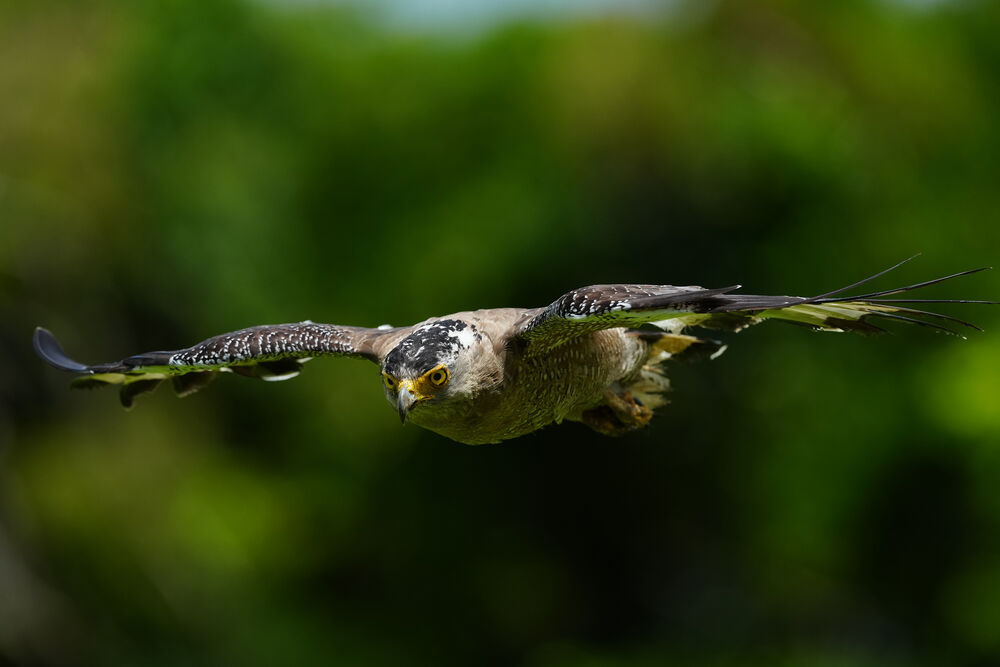
  • 8.5-Stop IBIS-It's typical for cameras to have better IBIS figures with each new generation, but the a1 II adds a whopping 3 extra stops to its predecessor's performance, meaning it's possible to use the camera handheld in noticeably dimmer lighting conditions and with slower shutter speeds, opening even more shooting versatility.
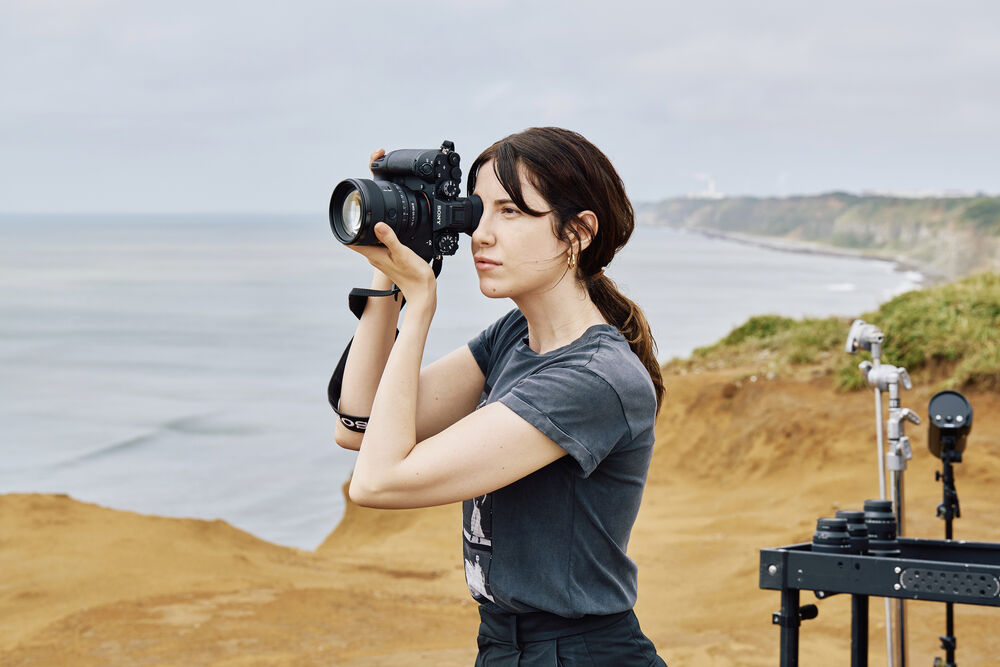
  • Video Improvements-The core video specs remain the same between the generations, but the a1 II gains some asked-for features to make it even more of a video powerhouse: Dynamic Active Mode Stabilizer, Framing Stabilizer, and Breathing Compensation are all welcomed additions for content creators.
  • Overhauled Body Design-The a1 II inherits the a9 III's body design, making it more comfortable to use, more robust in terms of weather-sealing, compatibility with the latest VG-C5 Vertical Grip, and an improved LCD and EVF.
Sensor and Processing Improvements
Portrait Example
The original a1 was already known for its strong imaging performance and the a1 II improves on this with upgraded BIONZ XR processing, an AI processing unit, more powerful 8.5-stop IBIS, and the impressive 50MP stacked BSI CMOS sensor from its predecessor. The sensor and processor still afford a top 30-fps shooting rate, expandable sensitivity from ISO 50-102400, and an impressive 15-stop dynamic range. Additionally, on the speed front, the a1 II gains the Pre-Capture and Speed Boost functions that debuted on the a9 III.

Blue Jay
  • Up to 30 fps continuous shooting with an electronic shutter, or 10 fps with the mechanical shutter, with AF and AE supported.

  • Pre-Capture Shooting records at up to 30 fps for up to 1 second prior to fully pressing the shutter, helping to ensure you don't miss fleeting moments.

  • Speed Boost lets you vary your continuous shooting speed mid-burst; when the C5 button is depressed while burst shooting, you can switch from the chosen continuous shooting speed to a faster or slower one to suit the pace of action you're photographing.
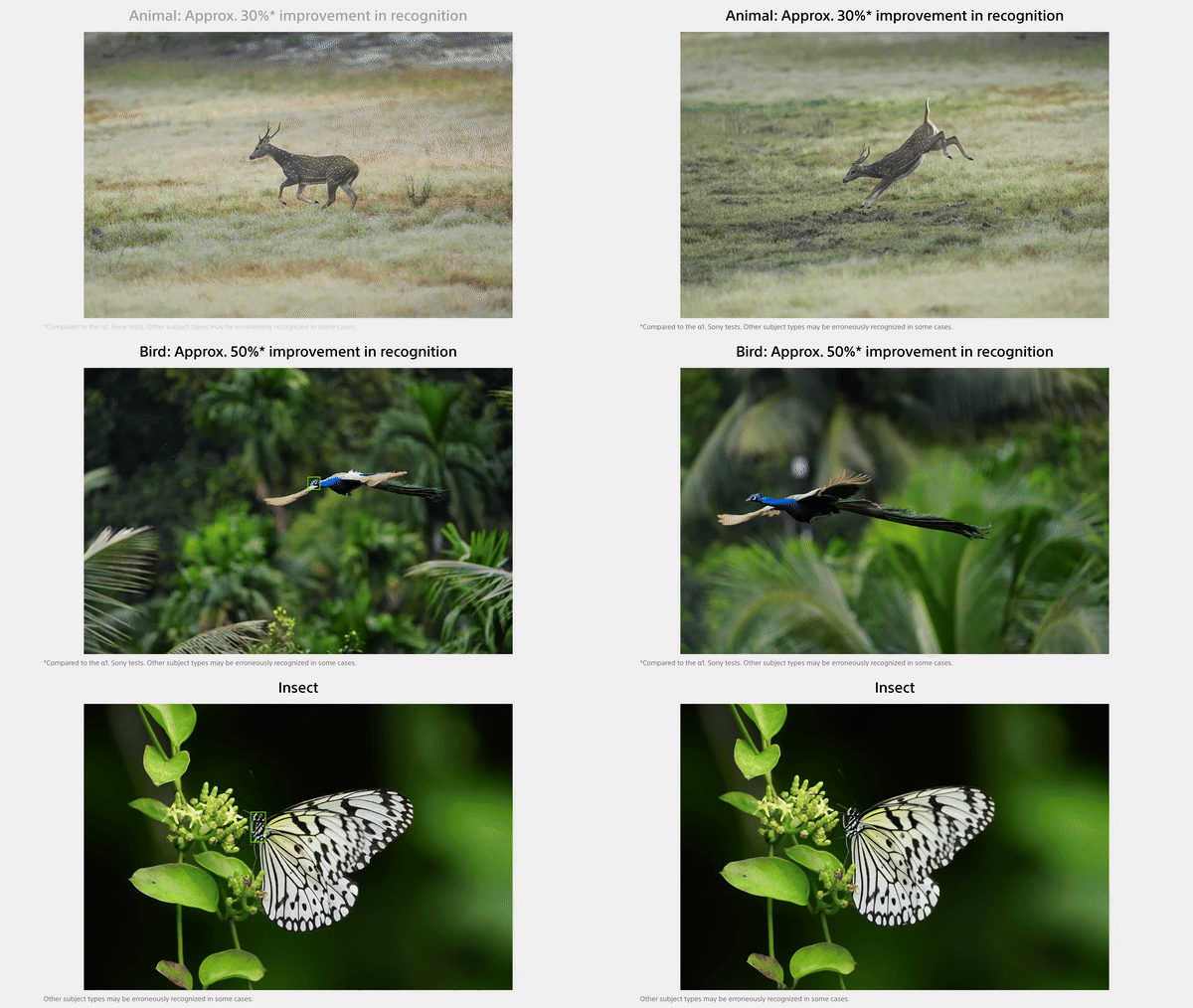

  • Refined 5-axis in-body image stabilization compensates for up to 8.5 stops of camera shake at the center of the frame and 7 stops at the periphery; an improvement of 3 stops of shake control compared to the original a1.
  • Same full-frame 50MP stacked BSI CMOS sensor as the a1, mixing high resolution with the speed and reduced rolling shutter of a stacked design to suit both meticulous and quick-working shooters.
Smarter, Faster Autofocus and Subject Tracking
The a1 II's focusing system received similarly significant upgrades from its predecessor, now sporting an AI Processing Unit and refined subject detection and tracking. The phase-detection AF system itself still comprises 759 points, which cover about 92% of the sensor area, and support focusing down to -4 EV at f/2. Subject tracking and subject detection is improved, too, specifically how the camera is 30% faster at detect human eyes and 50% faster with animal eyes.
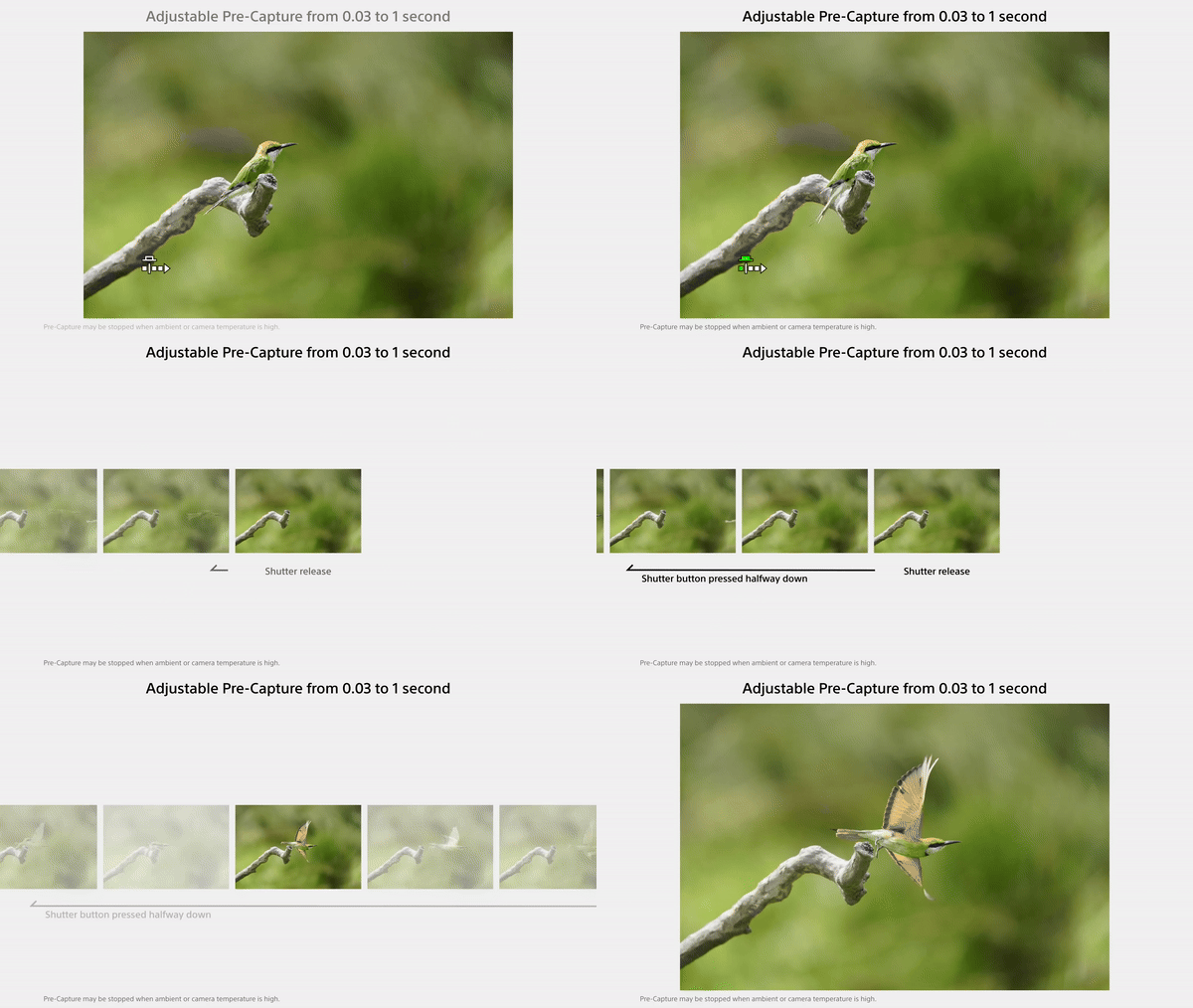
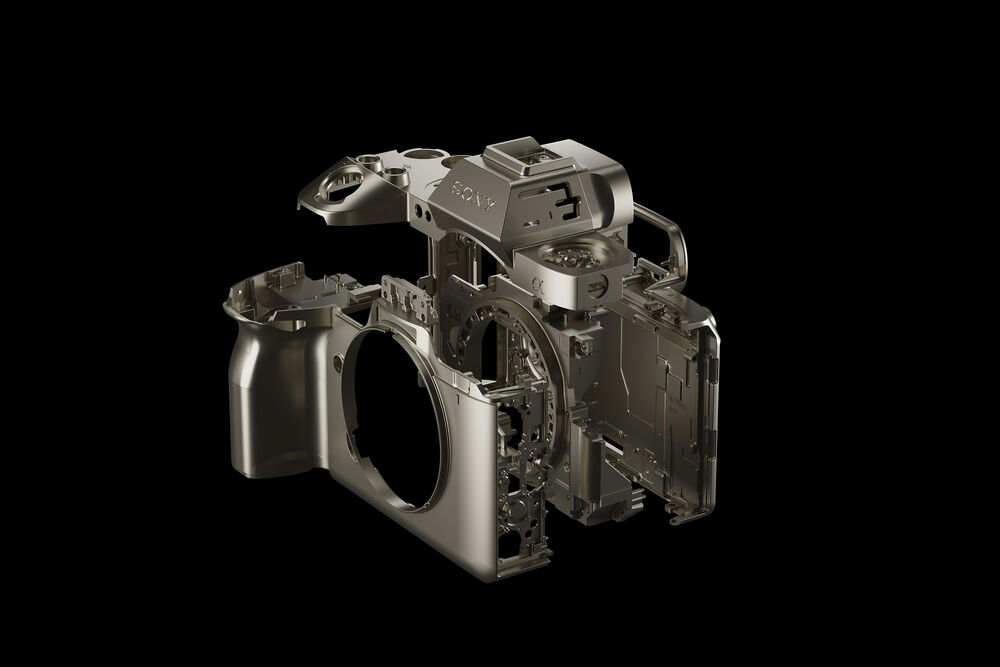
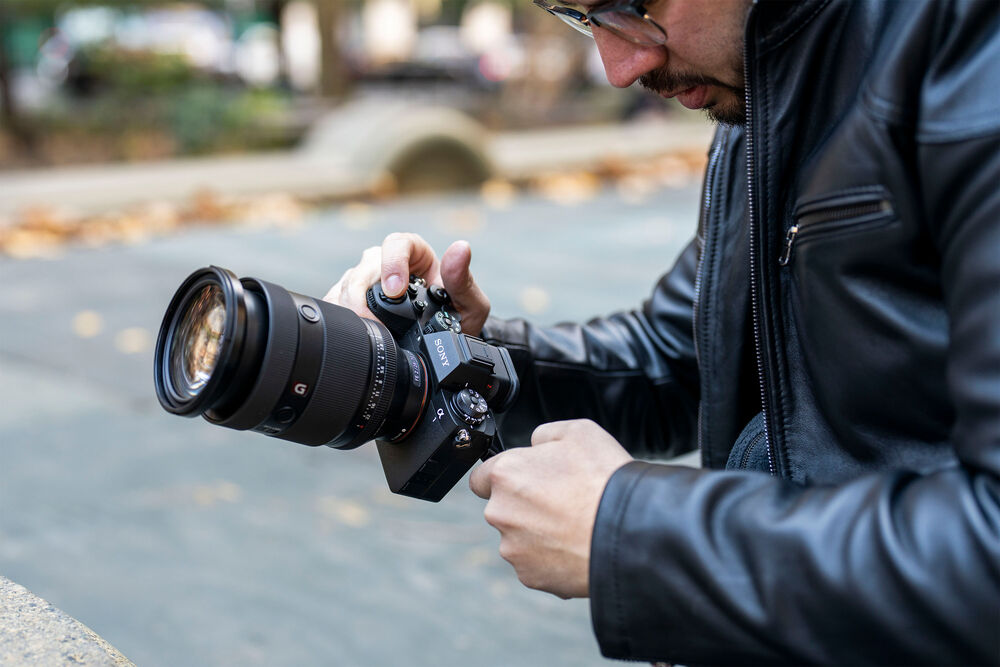
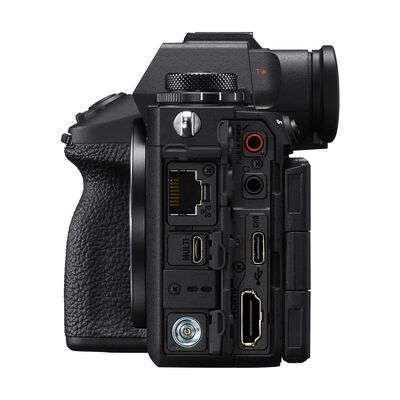
  • First seen in the a7R V and a9 III, the a1 II sports a dedicated AI Processing Unit for refined, responsive, and intelligent subject tracking and detection of humans, animals, birds, insects, cars, trains, and airplanes.
  • Human pose estimation tracks body and head positions for accurate focus in portraiture and sports settings and Real-time Eye AF performance has been improved by 30%.
  • Additionally, human pose estimation can distinguish between multiple people and maintain focus on the targeted subject; even if someone crosses in front, the camera maintains focus on the key person.
  • Real-time Tracking benefits from AI-based subject recognition for following moving subjects, making it particularly well-suited to sports and action subjects.
  • Auto Subject Recognition modes no longer necessitate selecting a subject type, letting the camera detect and track the intended subject.
  • XS and XL focus area spot sizes have been added for more versatility or you can customize AF focus areas to suit uniquely sized or shaped subjects.
  • Full-time DMF (Direct Manual Focus) enables using the lens's focus ring for manual focus control at any time, making it easier to switch focus to a different subject even when working with AF.
Alpha's Alpha in Video Capabilities
The core video specs of the original a1 were ahead of their time, and in many ways, still are. The a1 II keeps many of the core resolutions and frame rates but refines the video recording capabilities with more supportive modes and features, including access to Dynamic Area Stabilization and timecode input with an optional adapter. This makes the a1 II just as capable on a professional film set as it is in a photography studio.

  • Familiar recording formats: 8K 30p with 10-bit 4:2:0 sampling and 4K 120p with 10-bit 4:2:2 sampling. When using a Super 35 recording area, 4K footage can use 5.8K oversampling for improved detail and the full-frame area offers 8.6K oversampling for the 8K footage.
  • AI subject recognition, gained from the AI Processing Unit, benefits the Framing Stabilizer mode, which can be used to automatically crop and recompose so the subject remains centered in the image.
  • Dynamic Active Mode Stabilization also helps retain accurate framing while filming, especially when recording while walking or moving.
  • Included S-Cinetone profile, ProRes RAW output over HDMI, and the ability to import LUTs all point to the great amount of color control the a1 II offers.
  • Support for Breathing Compensation mode, which reduces the effects of focus breathing when using select lenses.
Pre-Capture & Speed Boost-Never Miss a Moment
Along with the key technology delivered by the sensor, the a1 II brings additional features to unlock the camera's full potential.
  • Pre-Capture: The a1 II can be configured to begin recording images to the buffer when the shutter button is half-pressed. Users can set this between 0.03-1.0 second. Upon pressing the shutter these images will be saved to the memory card.
  • Speed Boost: With Speed Boost and the C5 button, which is conveniently placed near the grip on the front of the camera, users can instantly switch their camera from their usual continuous shooting frame rate to a faster one to make sure their next shot is just right. Photographers will be able to select various frame rates up to 30 fps.
Professional Body Design and Connectivity
The a1-series has always been a top-of-the-line model for Sony and, as such, had one of the most durable and refined physical designs within the system. The a1 II, though, gains a bit of an upgrade to bring it in line with the a9 III in terms of button layout, screen and EVF implementation, and durability. It's a camera built for professional use and has the strongest, most reliable design in Sony's lineup.
Versatile and Durable Design
  • The a1 II gains the latest Sony mirrorless body design first seen on the a9 III which includes a C5 custom button on the front of camera body and an enhanced grip.
  • For transferring, an upgraded 2.5GBASE-T wired LAN port offers faster transfer speeds to suit high-profile tethered shooting applications. There is also a USB-C port and a full-size HDMI port.
  • USB-C port offers fast USB 3.2 Gen 2 speeds of up to 10 Gb/s.
  • Dual memory card slots both accept either CFexpress Type A or SD-type memory cards. The dual slot design allows for flexible file saving and handling and can be configured to partition file types or can be used for overflow recording. Additionally, both of the card slots are rated to support UHS-II memory cards for faster transfer speeds.
Tru-Finder EVF and Tilting Touchscreen LCD
  • An impressive QXGA OLED Tru-Finder EVF features a high 9.44m-dot resolution and 0.9x magnification for exceptionally bright, clear, and detailed eye-level viewing. There is also a 120-fps option that maintains the higher resolution for a better mixture of clarity and motion fluidity.
  • 3.2" 2.1m-dot 4-axis multi-angle touchscreen LCD-first seen on the a7R V. This screen has a wide color gamut covering the DCI-P3 space.
  • Intuitive menu structure that complements having different workflows with different settings selections for movie recording and stills shooting. The menu system also works in conjunction with the touchscreen design of the rear LCD.
Enhanced Functionality and Usability
Sony has continued to improve the workflows of their professional cameras with upgraded and additional features:
  • A voice memo function promises clearer recording with a microphone located close to the user. These memos can be transferred via FTP and can be converted to text using Sony's Transfer & Tagging application.
  • IPTC metadata can be automatically added to images and up to 20 presets can be saved.
  • Built-in Wi-Fi and Ethernet can be used for fast networked data transfer during shooting.
Composite Shooting Modes
By capturing multiple images and combining them in post-production, users can achieve image quality and resolutions not possible with just the core sensor technology. The a1 II offers two different options for composite shooting:
  • Pixel Shift Multi Shooting: This unique compositing mode allows you to achieve even greater resolution than the 50.1MP sensor affords. Working in conjunction with the sensor-shift image stabilization, this mode shifts the sensor while making 16 consecutive exposures in order to acquire approximately 199MP of information for greater color accuracy and detail than possible with a single exposure. These files can then be merged together during post-production by using the Sony Imaging software suite.
  • Noise Reduction: This method uses multiple images to reduce the noise in an image without sacrificing sharpness and detail. By leveraging the information of several frames, users will be able to improve the legibility of details and minimize the impact of noise without the smoothing effect common with more conventional noise reduction techniques.
Sony a1 II Mirrorless Camera
$3,625.00
Per Page      21 - 40 of 43